
The Law Bytes podcast returns after a brief hiatus in late summer and early fall by turning to the debate on data and digital sovereignty. Last week, I was pleased to deliver the dinner keynote speech at the NREN Assembly, an annual gathering hosted by CANARIE that brings together staff and leadership from CANARIE and all thirteen provincial and territorial partners of Canada’s National Research and Education Network. With their kind permission, this week’s episode features the keynote in full, titled Digital Sovereignty: Control, Choice, and Connection.
Post Tagged with: "lawbytespod"

The Law Bytes Podcast, Episode 278: Ben Waldman on Gander Social and the Challenges of Building a Sovereign Social Network
Sovereignty, whether digital sovereignty, data sovereignty, or AI sovereignty, has been the hot-button issue in Canada for months. Governments have shifted policies in hopes of addressing the issue, the public has expressed interest in Canadian alternatives, and the business community has rushed to meet that interest. But what does it actually take to create a true, sovereign alternative? We now have a live experiment with Gander, a new social network that looks a bit like X or BlueSky, but with data sovereignty. The company has worked to ensure that data remains in Canadian control and developed identity systems that may offer a preview of what’s to come if the social media ban takes hold. Leading the way has been Ben Waldman, Gander’s co-founder and CEO. He joins the Law Bytes podcast this week to talk about Gander’s origin story and to walk through the real-world challenges of creating a sovereign social network.

The Law Bytes Podcast, Episode 277: Kate Robertson on the Risks That Lie Behind Canada’s Unexpected Signing of the UN Cybercrime Convention
The Canadian government’s surprise decision to sign the UN Cybercrime Convention has sparked many questions about the convention, its risks, and what changed over the past nine months between Canada no-showing the signing in Vietnam and this month’s reversal. To help answer those questions, there is no one better than Kate Robertson, a senior research associate at the Citizen Lab, who has been vocal on the convention since negotiations began years ago. She joins the Law Bytes podcast to discuss her concerns and how the Convention fits within the broader global political and policing frameworks.
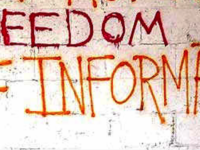
The Law Bytes Podcast, Episode 276: Information Commissioner Caroline Maynard on Canada’s Access to Information Failures and Why Access Delayed is Access Denied
Despite repeated studies and promises for reform, Canada’s access to information system has long been plagued by long delays, overbroad exclusions, insufficient resources, and an Information Commissioner without the resources and powers needed to fully ensure compliance.
The government is currently undertaking yet another reform process as the Treasury Board has released proposed changes. They’ve left Caroline Maynard, Canada’s Information Commissioner, largely unimpressed. She is relieved the government is open to change, but warns that the approaches “lack ambition” and, more pointedly, that the review “must not become a justification for further secrecy.” Commissioner Maynard joins the Law Bytes podcast to walk through her concerns with the government’s plans and her proposals for improving Canada’s access to information law.

The Law Bytes Podcast, Episode 275: David Loukidelis on Why Stripping Privacy Enforcement from Canada’s Privacy Commissioner in Bill C-36 is Unnecessarily Risky Policy
he government’s privacy reform bill was supposed to earn applause for its effort to modernize outdated rules and provide Canadians with stronger privacy protections. Yet the decision to strip the Privacy Commissioner of Canada of responsibility for private-sector privacy law and shift that responsibility to the Digital Safety Commission has sparked widespread concern among Canadian privacy experts.
This week’s Law Bytes podcast features David Loukidelis, one of Canada’s best-regarded former privacy commissioners. Loukidelis served as BC’s Information and Privacy Commissioner from 1999 to 2010, where he was responsible for the enforcement of BC’s Freedom of Information and Protection of Privacy Act and Personal Information Protection Act, which came into force in 2004. He joins me on the podcast to share his thoughts on the enforcement changes in the bill and what it may mean for privacy in Canada.

Recent Posts
 The Wrong Ban: The Heritage Committee Backed a Targeted Ad Ban for Kids and Stopped Short of a Social Media Ban, Yet the Government Chose the Reverse
  Regulator First, Rules Later: Bill C-34 Debate Shows the Government Wants a Digital Safety Commission Before It Figures Out What It Will Do
  Making the Case Against Its Own Bill: What the Government’s Bill C-34 Charter Statement Reveals About the Constitutional Vulnerability of the Social Media Ban
  “Position Has Not Changed”: The Canadian Government Reaffirms That Antisemitism Includes Anti-Zionism
  The Law Bytes Podcast, Episode 279: My Keynote on Digital Sovereignty: Control, Choice, and Connection
