
The CRTC was long perceived by many Canadians as a captured regulator, largely inaccessible to the public as it dispensed decisions that safeguarded incumbents from disruptive competition. That reputation was buttressed by initial decisions on regulating Internet telephony, permitting Bell to engage in Internet throttling, and supporting a usage based billing approach that hampered competition. In recent years, some policies changed with the adoption of net neutrality regulations and the efforts of former chair Jean-Pierre Blais to prioritize consumer interests. Yet over the past few months, the CRTC under new chair Ian Scott seems determined to turn back the clock with a commission more comfortable with industry stakeholders and their priorities than consumer groups and facilitating competition.
Post Tagged with: "telecom"
Not So Fast: Digging into MEI’s Report on the State of Canadian Wireless Services
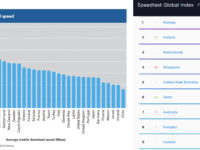
The release this week of the Montreal Economic Institute’s telecommunications report has the feel of a last gasp for a dying argument about the state of Canadian wireless. Gone are the days of telecom companies and their supporters denying that Canadian wireless prices are high relative to other countries. In its place are arguments seeking to justify high prices on the basis of claims that Canada has better networks and challenging geography. What is striking about the latest report is how these arguments fail upon closer inspection with the MEI resorting to creating incomplete data charts on network quality and failing to grapple with countries that have better networks, better pricing, and less wireless density.

Putting the Internet at the Centre: Taking Stock of Jean-Pierre Blais’ Term as CRTC Chair
Barring a last minute extension, CRTC Chair Jean-Pierre Blais’ term will come to an end this week. For those new to the CRTC, it is difficult to overstate just how much changed both procedurally and substantively during his five years as chair. For some context, consider a 2006 invitation I received to participate on a panel at the Telecommunications Invitational Summit, a by-invitation-only event that brought together many in the industry for off-the-record, Chatham House Rules discussions on issues of the day. I was grateful for the invitation – I was there to defend the then-emerging issue of net neutrality – but recall being shocked walking into the venue to see senior telecom executives shooting billiards and having a drink with CRTC commissioners.
It is fair to say that those off-the-record bonding-style events between the regulator and the regulated became a thing of the past under Blais. In fact, weeks after he was named chair of the CRTC, I was called into his office in one of several meetings he had with consumer and public interest voices as his first order of business. I had a mixed history with Blais to that point (he was the lead on copyright policy at Canadian Heritage for many years), but he left no doubt that bringing a public interest voice and perspective to the CRTC was his top priority.

The Internet as Cable: The Risk of Treating Telecommunications as Cultural Policy
Canadian Heritage Minister Mélanie Joly travels to California this week with an agenda that includes meetings with Internet giants such as Google and Facebook. Given the recent announcement in the budget that the government plans to “review and modernize” the Broadcasting Act and Telecommunications Act, the discussions may help shape an issue that could have a profound impact on the Internet in Canada as there are concerns the government may attempt to shoehorn Canadian cultural policies into telecommunications law.
My Globe and Mail column notes that Ms. Joly’s consultation last year on Cancon in a digital world revealed there is a strong appetite within the traditional Canadian culture lobby for bringing policies such as cultural taxes and mandated Cancon requirements to the Internet. The groups claim the Internet is rapidly replacing the conventional broadcast system as a means of distributing cultural content and that the longstanding analog rules should be shifted into the digital environment.

Federal Court of Appeal Upholds CRTC Ruling That Bell Mobile TV Service Violated Telecom Law
In the fall of 2013, Ben Klass, a graduate student in telecommunications, filed a complaint with the CRTC over how Bell approach to its Mobile TV product. Klass noted that Bell was offering a $5 per month mobile TV service that allowed users to watch dozens of Bell-owned or licensed television channels for ten hours without affecting their data cap. By comparison, users accessing the same online video through a third-party service such as Netflix would be on the hook for a far more expensive data plan since all of the data usage would count against their monthly cap.
In January 2015, the CRTC released its decision in the case, siding with Klass. The Commission expressed concern that the service “may end up inhibiting the introduction and growth of other mobile TV services accessed over the Internet, which reduces innovation and consumer choice.” While Bell argued that the mobile TV service was subject to broadcast rather than telecom regulation, the CRTC ruled that mobile television services effectively invoked both broadcast and telecom regulation, since a data connection was required to access the service.

Recent Posts
 Years of Uncertainty: Bill C-22’s Missing Regulations and Secret Ministerial Orders
  The Missing Charter Statement: Why Hasn’t the Government Explained How Bill C-34’s Social Media Ban Complies with the Charter?
  Three Years After October 7th: Living With the Shockwaves
  What If the U.S. Demanded This? The Cloud Provider Conditions Behind Canada’s EU Digital Pivot
  Ontario is Done Waiting for Universities to Act on Campus Antisemitism
