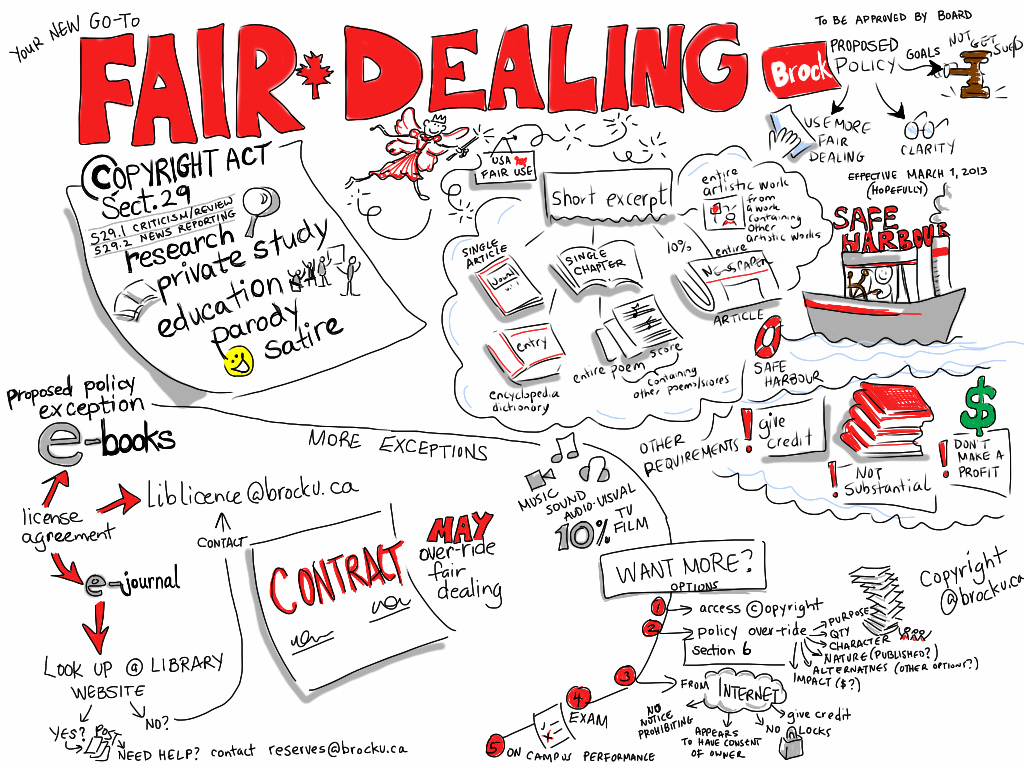
Fair Dealing by Giulia Forsythe (CC BY-NC-SA 2.0) https://flic.kr/p/dRkXwP
Copyright

The Law Bytes Podcast, Episode 253: Guy Rub on the Unconvincing Case for a New Canadian Artists’ Resale Right
The creation of an Artists’ Resale Right has been adopted in many countries to at best mixed reviews. They’re unsurprisingly widely supported by potential beneficiaries, but the data on who actually benefits raises real questions about the wisdom of the policy. Canada may be headed in the same policy direction as the government recently announced in its budget plans to introduce the measure. Professor Guy Rub is the Vincent J. Marella Professor of Law at Temple University’s Beasley School of Law and an expert in the intersection between intellectual property law, commercial law, the arts, and economic theory. Professor Rub has written critically about the Artists’ Resale Right including as part of a submission to a House of Commons committee that studied the issue several years ago. He joins the Law Bytes podcast to discuss the policy measure and its drawbacks, including his view that it primarily benefits artists who are wealthy, old, or dead.

The Most Unworkable Internet Law in the World: Quebec Opens the Door to Mandating Minimum French Content Quotas for User Generated Content on Social Media
The Quebec government has amended its Internet streaming legislation by removing an exemption for social media services, establishing the most unworkable social media regulation in the world with companies required to meet both French language minimum content quotas and discoverability requirements. I previously argued that Bill 109, which has now completed its clause-by-clause review, is unconstitutional, unnecessary, and unworkable. If enacted into law, it is sure to face a constitutional challenge and the prospect that streaming services such as Netflix and Spotify will either block the Quebec market or be forced to remove considerable English and foreign language content in order to comply. The result will mean less choice for Quebec-based subscribers without any requirements for more Quebec content (the law applies to French language content, not Quebec-based content).
Incredibly, the government, led on the file by Minister of Culture and Communications Mathieu Lacombe, has managed to make an awful bill even worse.

The Law Bytes Podcast, Episode 252: Len St-Aubin on the CRTC’s Plan To Modernize Canadian Content Rules
The CRTC recently released its much anticipated decision on Canadian content rules, the first of two decisions that could reshape broadcasting and film/TV production in Canada. The Commission promoted its Cancon approach as offering new flexibility into the system but the fine print matters as some changes may be more restrictive than they appear at first glance. To help make sense of the decision, Len St-Aubin, the former Director General of Telecommunications Policy at Industry Canada, joins the Law Bytes podcast. Len provided consulting services to Netflix until 2020 and has since been an active participant in the debate on Internet policy as part of the Canadian Internet Society.

We Need More Canada in the Training Data: My Appearance Before the Standing Committee on Canadian Heritage on AI and the Creative Sector
The government, led by AI Minister Evan Solomon, is currently conducting a short consultation on AI regulation that has attracted criticism for its short time frame. At the same time however, the Standing Committee on Canadian Heritage has been working through a study on AI and the creative sector that may be more limited in scope, but has featured a broader range of perspectives. I had the opportunity to appear before the committee yesterday where I lamented that too often debates on new technology is framed “as a threat, emphasizes cross-industry subsidies, and misses the opportunities new technology presents. We therefore need risk analysis that rejects entrenching the status quo and instead assesses the risks of both the technology and the policy response. I’ll post the full discussion (which ventured into AI transparency, copyright, the news sector, and much more) in a future Law Bytes podcast episode. In the meantime, my opening statement is embedded and posted below.

Privacy Lost: How the Government Deleted Bill C-11’s Key Privacy Principle Just Two Months After Passing it Into Law
The Online Streaming Act, the government controversial reform to the Broadcasting Act, continues to attract attention given an ongoing court challenge and backlash from the U.S. government. But there is another element of Bill C-11 that is deserving of attention. Due to what is likely a legislative error, the government deleted privacy safeguards that were included in the bill only two months after they were enacted. As a result, a provision stating that the Broadcasting Act “shall be construed and applied in a manner that is consistent with the right to privacy of individuals” was removed from the bill, leaving in its place two-near identical provisions related to official languages. The net effect is that with little notice (Monica Auer of FRPC spotted it), the Broadcasting Act has for the past two years included an interpretation clause that makes no sense and efforts to include privacy within in it are gone.

Recent Posts
 The Law Bytes Podcast, Episode 253: Guy Rub on the Unconvincing Case for a New Canadian Artists’ Resale Right
  The Most Unworkable Internet Law in the World: Quebec Opens the Door to Mandating Minimum French Content Quotas for User Generated Content on Social Media
  CRTC Says No Regulatory Action Planned Against Meta For Blocking News Links
  The Law Bytes Podcast, Episode 252: Len St-Aubin on the CRTC’s Plan To Modernize Canadian Content Rules
  Why Freedom of Expression Must Not Become a Right to Harass or Intimidate
