Articles by: Michael Geist

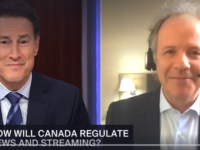
TVO, The Agenda screenshot, https://www.tvo.org/video/how-will-canada-regulate-news-and-streaming

The Law Bytes Podcast, Episode 150: How Will Canada Regulate News and Streaming – My Appearance on TVO’s The Agenda

The government’s two big Internet bills – Bill C-11 and Bill C-18, both made significant advances late last week. The Senate Transport and Communications committee concluded months of hearings on Bill C-11 by agreeing to about 25 amendments, notably including a change to the scope of user content regulation that is designed to limit the application to sound recordings as well as the removal of a provision that critics feared would limit CRTC independence. Meanwhile in the House, Bill C-18 cleared the Canadian Heritage committee with changes that invite legal challenges and make a showdown over blocking news content increasingly likely. 

Just prior to these committee meetings, I appeared on TVO’s the Agenda with Steve Paikin to discuss the bills and why they matter. The interview elicited very positive feedback and with the kind permission of TVO and the Agenda, I’m pleased to provide the audio version of that interview as this week’s Law Bytes podcast. 

Read more ›

December 12, 2022 4 comments Podcasts
Half Off by J Stimp (CC BY 2.0) https://flic.kr/p/XtBCyj

Big Cost, Smaller Benefit: Government Modelling Pegs Likely Bill C-18 Revenues at Less Than Half of Parliamentary Budget Officer Estimates

Canadian Heritage Minister Pablo Rodriguez has touted Bill C-18, the Online News Act, as critical for Canada’s media sector, but government’s internal modelling suggests there will be limited benefits for most news outlets. Earlier this fall, the Parliamentary Budget Officer estimated that it would generate $329 million per year, with over 75% of that revenue going to broadcasters such as Bell, Rogers, and the CBC. At the time, I noted that meant that “newspapers will receive less than 25% of the funding or about $81 million to split among hundreds of news outlets.” It turns out that the government believes that vastly overstates the benefit as its own modelling estimates about $150 million in total revenues, less than the 50% of the PBO’s estimate. Assuming a similar apportionment of revenues between broadcasters and newspapers, that would place the benefit at just over $37 million for the entire newspaper sector. In fact, as the government has expanded the eligibility to hundreds of additional outlets, the benefits for each organization shrinks even further.

Read more ›

December 8, 2022 4 comments News
YT Music app icon on smartphone screen by Ivan Radic https://flic.kr/p/2m1K5Zz (CC BY 2.0)

Scoping User Content Out of Bill C-11: Senate Committee Makes Much-Needed Change, But Will the Government Accept It?

The widespread concern over Bill C-11 has largely focused on the potential CRTC regulation of user content. Despite repeated assurances from the government that “users are out, platforms are in”, the reality is that the bill kept the door open to regulating such content. The language in the bill is clear: Section 4.2 grants the CRTC the power to establish regulations on programs (which includes audio and audiovisual content by users). The provision identifies three considerations for the Commission, most notably if the program “directly or indirectly generates revenues.” The revenue generation provision is what led many digital creators to argue they were caught by the bill and for TikTok to conclude that any video with music would also fall within the ambit of the legislation.

The Senate Standing Committee on Transport and Communications, which has conducted months of hearings on Bill C-11, was clearly convinced that the user content issue needed to be addressed. Last night (hours after the ill-advised addition of age verification to the bill), it agreed on an amendment that, with two key caveats, goes a long way to scoping out user content regulation.

Read more ›

December 7, 2022 8 comments News

The Agenda: How will Canada Regulate News and Streaming?

I appeared on The Agenda on December 6, 2022. There, I discussed Bills C-11 and C-18, the controversies surrounding regulation of online streaming and news, and what the legislation could mean for content creators and news organizations. The link to the video can be found here.

Read more ›

December 6, 2022 Comments are Disabled Video
Age Verification Station by Nock Forager (CC BY-NC 2.0) https://flic.kr/p/4H67D7

From Bad to Worse: Senate Committee Adds Age Verification Requirement for Online Undertakings to Bill C-11

The Senate committee studying Bill C-11 has ramped up the hours devoted to clause-by-clause review with amendments related to user generated content currently up for debate. However, earlier today, just prior to addressing the user content issue, the committee shockingly adopted an amendment that adds age verification for online undertakings to the Broadcasting Act. The amendment comes as a policy objective, meaning that it will fall to the CRTC to determine how to implement it. The implications are enormous since broadly defined the policy would require every online service that transmits or retransmits programs over the Internet (broadly defined to include all audio and audiovisual content) to establish age verification requirements to prevent child access to programs with explicit sexual activity. If the CRTC implements, the policy will surely be challenged as unconstitutional.

Read more ›

December 6, 2022 16 comments News