Blog

Ontario is Done Waiting for Universities to Act on Campus Antisemitism
Earlier this month, Jewish students at Wilfrid Laurier University returned to their residence after Rosh Hashanah, the Jewish New Year, to find that the mezuzahs affixed to their doors had been torn off and smashed. In the immediate aftermath, the campus Chabad rabbi joined the university’s dean of students to replace them, with Jewish and non-Jewish students gathering in support to send a unified response to the blatant antisemitism. My The Hub op-ed notes that the incident was yet another reminder of the escalation of harassment, discrimination, and vandalism targeting Jewish students and faculty on Canadian campuses. While repeated surveys and studies have left little doubt about the scale of the problem, not all universities have responded as decisively as Laurier. Indeed, too many have either ignored the issue or been reluctant to address it head-on.

Is Compromise on Encryption Possible? Why Bill C-22’s “Minor Opening” Leaves the Central Question Unanswered
Bill C-22, the government’s lawful access legislation, is awaiting Senate consideration this fall with the encryption provisions likely to be the centre of attention given diametrically opposing views from law enforcement and technology companies and experts. Public Safety Minister Gary Anandasangaree told the Toronto Star earlier this month that the bill strikes “the right balance” on encryption, claiming that cracking encryption is “off limits” except in “extenuating circumstances” where there is a “minor opening,” and that “everybody has had to have some water in their wine.” The government’s approach follows the typical legislative playbook of seeking a middle ground that stakeholders can (sometimes reluctantly) live with. Yet the past few weeks have produced an unusual situation in which both sides say no viable middle ground exists. Police claim the bill’s encryption provisions do little to change what they can obtain under existing law. Nearly two dozen technology companies and industry groups argue the same provisions leave every user at risk since even partial weakening of encryption undermines its effectiveness.

The Wrong Target: Why the CBC Should Be Asking About the Yom Kippur Protesters, Not the Journalist Who Reported on Them
Last week, CBC journalist Neil Herland was reportedly pulled from the air and brought before a disciplinary hearing after posting a tweet thread about being taunted on his way to the Song Shul’s Yom Kippur services at the Meridian Arts Centre in Toronto. The thread included video of the protesters shouting “Zionist alert,” “you’re going to hell” and “baby killer” at people walking in to pray as well as context on the rise in antisemitism, the terror attack at the Sons of Jacob synagogue in Belleville the night before, and the presence of a guest speaker at the service. Herland’s tweet thread sparked opposition, with some defending the protesters on the grounds that the location is a public facility and not a full-time synagogue and that the speaker was Mark Regev, who once served as a spokesperson for the Israeli government. I tweeted about the response last week, noting that the thread was accurate and that I did not understand the concern. That tweet has been viewed over 280,000 times, leading to plenty of angry responses. This post unpacks the arguments and explains why I still don’t see the issue with the tweet thread. If anything, the focus should be protesters who may have violated the Criminal Code.
Buried in Bill C-39: The Enabling Digital Trade Act Brings Canada Its First Federal Electronic Trade Documents Law
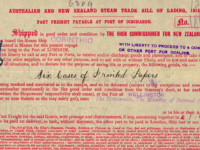
The government introduced Bill C-39, the Building Canada Strong Act, last week, and while it emphasized faster project approvals, public discussion has focused almost entirely on the implications for collective bargaining rights. Given those twin issues, it is perhaps unsurprising that the creation of an entirely new digital trade statute has gone unnoticed. Buried toward the end of a 232-page bill, the Enabling Digital Trade Act would be the first federal law on electronic trade documents such as bills of lading, an issue with real implications for bringing digital technologies to shipping and supply chains. Because these digital issues are unlikely to attract much attention, this post unpacks the provisions and their implications.

A Definition That Meets the Moment: Federal Government Recognizes Antisemitism Includes Anti-Zionism
Public Safety Canada released its summer progress report on the National Commitments to Combat Antisemitism yesterday, days after the Yom Kippur attack on the Sons of Jacob synagogue in Belleville. Most of the report tracks activities related to police training, funding programs, and provincial initiatives. But what makes the report consequential is the government’s clear recognition in a pair of statements that antisemitism includes anti-Zionism. The statements are sure to attract criticism in some quarters, but anti-Zionism is too often thinly veiled antisemitism, as if substituting the word Zionist for Jew renders the unacceptable acceptable. Given the rising antisemitic violence, culminating in this week’s terror attack, combatting antisemitism requires definitions that safeguard the Jewish community while remaining consistent with protecting freedom of expression. The government’s approach, which relies on a definition of antisemitism based on the lived reality of the Jewish community, does just that.

Recent Posts
 Ontario is Done Waiting for Universities to Act on Campus Antisemitism
  Is Compromise on Encryption Possible? Why Bill C-22’s “Minor Opening” Leaves the Central Question Unanswered
  The Wrong Target: Why the CBC Should Be Asking About the Yom Kippur Protesters, Not the Journalist Who Reported on Them
  Buried in Bill C-39: The Enabling Digital Trade Act Brings Canada Its First Federal Electronic Trade Documents Law
  A Definition That Meets the Moment: Federal Government Recognizes Antisemitism Includes Anti-Zionism
