
The return of lawful access in Bill C-22 has unsurprisingly focused on the government’s significant shift on warrantless access to subscriber information, which was the headline concern with Bill C-2, the previous lawful access proposal. As noted in my initial summary of the bill, Bill C-22 establishes court oversight for subscriber information with the warrantless access piece limited to requiring telecom companies to confirm whether they provide service to a given individual. That is a positive step, but there is a tradeoff, namely that the evidentiary standard needed to obtain an order for access to subscriber information is actually being lowered.
Blog

The Lawful Access Privacy Risks: Unpacking Bill C-22’s Expansive Metadata Retention Requirements
Much of the discussion around the new lawful access bill (Bill C-22) has focused on provisions that improved upon Bill C-2, notably the decision to scrap the warrantless information demand power by requiring judicial oversight for access to subscriber information. Yet despite that improvement, there remain serious privacy concerns with the government’s latest iteration of lawful access. Buried in the second half of Bill C-22 is a provision granting the government the power to require “core providers” to retain categories of metadata, including transmission data, for up to one year. This is mandatory metadata retention that would require telecom and electronic service providers to store information about the communications of all their users, regardless of whether those users are suspected of anything. It is one of the most privacy invasive tools a government can deploy and the international experience suggests that there are major privacy risks.

Government Enacts Political Party Anti-Privacy Rules With Bill C-4 Royal Assent Sprint
I’ve written extensively about Bill C-4 and the government’s effort to bury political party privacy rules that largely eliminate privacy obligations for federal political parties and apply the new rules retroactively to May 2000. This past week’s Law Bytes podcast featured Senate hearings on the bill, which ultimately resulted in an amendment to require the government to establish actual privacy obligations within three years. The government yesterday rejected the amendment and the bill received royal assent in a lightning-fast process.
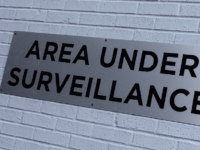
A Tale of Two Bills: Lawful Access Returns With Changes to Warrantless Access But Dangerous Backdoor Surveillance Risks Remain
The decades-long battle over lawful access entered a new phase yesterday with the introduction of Bill C-22, the Lawful Access Act. This bill follows the attempt last spring to bury lawful access provisions in Bill C-2, a border measures bill that was the new government’s first piece of substantive legislation. The lawful access elements of the bill faced an immediate backlash given the inclusion of unprecedented rules permitting widespread warrantless access to personal information. Those rules were on very shaky constitutional ground and the government ultimately decided to hit the reset button on lawful access by proceeding with the border measures in a different bill.
Lawful access never dies, however. Bill C-22 cover the two main aspects of lawful access: law enforcement access to personal information held by communication service providers such as ISPs and wireless providers and the development of surveillance and monitoring capabilities within Canadian networks. In fact, the bill is separated into two with the first half dealing with “timely access to data and information” and the second establishing the Supporting Authorized Access to Information Act (SAAIA).

Words Are Not Enough: Countering Relentless Antisemitic Violence in Canada With Action
On a hot August day nearly 32 years ago, I was married at the Shaarei Shomayim synagogue in Toronto. My Globe and Mail op-ed notes that I leafed through my wedding album this weekend as I grappled with the news that gunfire targeted the synagogue on Friday night, the third such attack on a synagogue in Toronto in a matter of days. The photos of my grandparents – Holocaust survivors who rebuilt their lives in Canada – looked back at me as if to warn that the risks are real.
The gun violence sparked the usual political tweets denouncing the shooting, pledging support, and unconvincingly stating that antisemitism has no place in Canada. Yet the predominant emotion that would have once greeted this news – shock – is no more. Over the past two-and-a-half years, Canadian Jewish communities from coast to coast have faced relentless antisemitic incidents: schools hit with gunfire, synagogues firebombed, community centres and old-age homes vandalized, hospitals protested, summer camps threatened, Jewish students and campus groups vilified, and Jewish-owned businesses boycotted.

Recent Posts
 Scoping in the Tech Giants: Bill C-22’s International Production Order and the Shift to a Less Privacy-Protective Cross-Border Disclosure System
  The Law Bytes Podcast, Episode 263: The Lawful Access Act Roundtable With David Fraser and Robert Diab
  When Writing About Antisemitism Proves the Point: What the Replies Reveal
  Acting on Antisemitism: If This Was Always Possible, Why Didn’t It Happen Sooner?
  Setting Canada’s AI Policy Priorities: My Appearance Before the Standing Committee on Industry, Science and Technology
