The release of the much-anticipated Broadcast and Telecommunications Legislative Review Panel report late last month sparked a torrent of discussion and debate. The 235 page report – often referred to as the BTLR or Yale Report – features 97 recommendations that covers telecom, broadcast, the future of the CBC, online harms, digital taxation, and a myriad of other issues. Janet Yale, the panel chair, joins the podcast this week to talk about the report. Our wide ranging conversation touches on the policy objectives of the panel, the news regulation concerns, net neutrality, consumer costs, and what may lie ahead for communications law reform.

Episode 37: The Future of Privacy in Canada – A Conversation with Privacy Commissioner of Canada Daniel Therrien
The Lawbytes podcast resumes for another season with a special episode on privacy as I’m joined on the podcast by Daniel Therrien, the Privacy Commissioner of Canada. Commissioner Therrien recently used Data Privacy Day to deliver a speech at the University of Ottawa focused on privacy reforms and a new consultation on AI and privacy. He joined me on the podcast to talk about his term as commissioner, the major challenges he’s faced, the state of Canadian privacy law, and the prospect for reform. Following our conversation, the podcast features audio of the Commissioner’s bilingual speech at the law school.

The LawBytes Podcast, Episode 36: The Year in Canadian Digital Law and Policy
The past year has been an incredibly active one for Canadian digital law and policy with important Supreme Court cases, legislative proposals, committee reports, expert panels, and political promises to reform existing laws and regulation. For this final Lawbytes podcast of 2019, I go solo without a guest to talk about the most significant trends and developments in Canadian digital policy from the past year and think a bit about what may lie ahead next year. I focus on five issues: the “euro-fication” of Canadian digital policy, the debate over the competitiveness of the Canadian wireless market, the many calls for privacy law reform, the future of Canadian copyright reform, and the review of Canadian broadcast and telecom law.

Episode 35: Allen Mendelsohn on Canada’s Copyright Site Blocking Saga
Site blocking has been on the policy and regulatory radar screen for several years in Canada, starting with the Bell-led Fairplay proposal to the CRTC and demands for site blocking as part of the copyright review. With both the CRTC and elected officials rejecting site blocking proposals, rights holders have turned to the courts. Last month, a Federal Court of Canada judge issued a major website blocking decision granting a request from Bell, Rogers, and Groupe TVA to block access to a series of GoldTV streaming websites.
The case is an important one, representing the first extensive website blocking order in Canada. I’ve argued that it is also deeply flawed from both a policy and legal perspective, substituting the views of one judge over Parliament’s judgment and relying on a foreign copyright case that was rendered under markedly different legal rules than those found in Canada. Allen Mendelsohn, a Montreal based Internet lawyer and sessional lecturer at McGill University joins the podcast this week to help sort through the issues.
Episode 34: The Fight to Save the Dot-Org
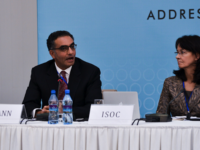
The dot-org domain extension was established as one of the first top-level domains in 1985 alongside dot-com, dot-net and a handful of others. In 2002, administration over the domain was awarded to the Public Interest Registry (PIR), a non-profit established by the Internet Society (ISOC), to run the extension. PIR recently announced that it was being purchased by Ethos Capital, a private equity firm that includes a former CEO of ICANN among its founders. With a rumoured purchase price of over $1 billion dollars, there is big money for ISOC but the deal has left the non-profit community worried about potential price increases and policy changes to the domain that could impact online speech. Elliot Harmon, Activism Director with the Electronic Frontier Foundation, recently wrote about the issue and has been working on a campaign with NGOs around the world opposed to the deal. He joined on the podcast to discuss the background behind dot-org, the concerns with the sale, and what can be done about it.

Recent Posts
 Regulator First, Rules Later: Bill C-34 Debate Shows the Government Wants a Digital Safety Commission Before It Figures Out What It Will Do
  Making the Case Against Its Own Bill: What the Government’s Bill C-34 Charter Statement Reveals About the Constitutional Vulnerability of the Social Media Ban
  “Position Has Not Changed”: The Canadian Government Reaffirms That Antisemitism Includes Anti-Zionism
  The Law Bytes Podcast, Episode 279: My Keynote on Digital Sovereignty: Control, Choice, and Connection
  The What, Me Worry? Consultation: Media Quietly Tells Government It Wants Even More Funding With Little Concern for Independence Risks
