The Supreme Court of Canada recently released its much anticipated Uber Technologies v. Heller decision, a landmark ruling with significant implications for the validity of online contracts and for employment relations in the gig economy. The court rejected an arbitration clause in an Uber contract with its drivers, finding the clause unconscionable.
The decision unsurprisingly quickly caught the attention of many in the legal, technology, business, and consumer advocacy communities. Professor Marina Pavlovic is a friend and colleague at the University of Ottawa, who appeared before the Supreme Court representing the Samuelson-Glushko Canadian Internet Policy and Public Interest Clinic as an intervener in the case. She joined me on the podcast to discuss the decision and to explain why she believes it is an earth shattering ruling for online contracts in Canada.
Read more ›
Canadian Heritage Minister Steven Guilbeault recently suggested that the government’s support for news media should be replaced by copyright rules that would open the door to payments from internet companies such as Google and Facebook. Guilbeault indicated that a legislative package was being prepared for the fall that would include a press publishers’ right is that is commonly referred to as an internet link tax.
Julia Reda is a former Member of the European Parliament who for several years was the most active and visible politician in Europe when it came to copyright reform. That multi-year debate ultimately led to the adoption of a link tax and upload filters with a European directive. She joins me on the podcast to talk about that experience, why she believes a link tax harms freedom of expression and diversity of media, and what lessons Canada should draw from the European experience.
Read more ›
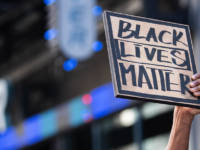
The world has been focused for the past several weeks on racial justice and the Black Lives Matter movement, with millions around the world taking to the streets to speak out against inequality and racism. Technology and concerns about racism and bias have been part of the discussion, with some of the world’s leading technology companies changing longstanding policies and practices. IBM has put an end all research, development and production of facial recognition technologies, while both Amazon and Microsoft said they would no longer sell the technology to local police departments.
Mutale Nkonde is an artificial intelligence policy analyst and a fellow at both the Berkman Klein Center for Internet & Society at Harvard University and at Stanford University’s Digital Civil Society Lab. She joins me on the podcast this week from a busy home in Brooklyn, NY to talk about this moment in racial justice and technology, racial literacy, and the concerns about bias in artificial intelligence
Read more ›

The U.S. approach to Internet platform liability has been characterized as the single most important legal protection for free speech on the Internet. Over the past two decades, every major Internet service has turned to the rules to ensure that liability for third party content posted on their sites rests with the poster, not the site or service. Those rules have proven increasingly controversial, however, with mounting calls for the companies to take on greater responsibility for content posted on their sites. The issue captured international attention last month when U.S. President Donald Trump issued an Executive Order that heightens the pressure for change.
Eric Goldman is a Professor of Law at Santa Clara University School of Law in the Silicon Valley where he co-directs the High Tech Law Institute. He has written extensively about Internet liability and appeared before the US Congress to testify on the issue. He joins me on the podcast to discuss the history behind the U.S. approach, its impact, and the implications of the Trump Executive Order.
Read more ›

Last month, Facebook revealed the names of the first 20 members of the Facebook Oversight Board, a body charged with conducting independent reviews of content removals. The group includes many well-known experts in the fields of human rights, journalism, law, and social media. The announcement received at best a mixed greeting – some welcomed the experiment in content moderation, while others argued that the board “will have no influence over anything that really matters in the world.”
Professor Nicolas Suzor of the Queensland University of Technology in Australia was named as one of the first 20 members. The author of Lawless: The Secret Rules that Govern our Digital Lives, Nicolas has been critical of Facebook and other Internet platforms and raised concerns about the oversight board when it was first announced. He joins me on the podcast to discuss the oversight board, the initial criticisms, and his views on how the board can have a positive impact in addressing complex issues that strive to balance freedom of expression with concerns about online harms. Note that our conversation was recorded before President Donald Trump issued an executive order targeting Internet platforms after Twitter fact-checked one of his tweets and issued a warning on another. The podcast will examine those latest developments in a future episode.
Read more ›