University of Toronto, TIP Conference link
Search Results for "Law Bytes" : 862

Still Not a Privacy Law: Bill C-25’s Political Party Privacy Provisions Fall Short Again
The government’s treatment of political party privacy has been one of the most dispiriting digital policy stories in recent memory. Last year, it buried political party privacy provisions in Bill C-4, an “affordability measures” bill, that required far less of political parties than of virtually any other type of organization in Canada. The rules were designed primarily to shut down litigation in British Columbia that opened the door to applying the provincial privacy law to federal political parties. Bill C-4 ensured that provincial law would not apply and, for good measure, added a clause making the new rule retroactive to the year 2000. The Senate found the bill so outrageous that it sent it back to the House with a sunset clause that would give the government three years to develop something better. But the government rejected that too and rushed the bill to royal assent in a matter of hours with virtually no debate.
Two weeks later, the government introduced Bill C-25, an Elections Act reform bill that includes updated privacy provisions for political parties and which dropped just before Parliament took a holiday break.
Could Bill C-22 Make Canadians Less Safe? The Systemic Vulnerability Gap in Canada’s New Surveillance Law
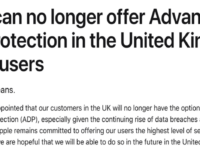
The lawful access debate in Canada has to date focused on privacy concerns such as access to subscriber information, mandatory metadata retention, and international production orders. But there is another dimension to Bill C-22 that has received less attention and may matter even more to the daily security of Canadians: the risk that the bill’s surveillance-capability requirements and lack of clarity about systemic vulnerabilities will make Canadians less secure. The international experience with similar laws is not reassuring, as it points to risks of hacking, removal of security features that protect users, and reduced investment and innovation. Bill C-22 heads in much the same direction.

The Hidden Lawful Access Tradeoff: How Bill C-22 Lowers the Evidentiary Standards for Police Access to Subscriber Information
The return of lawful access in Bill C-22 has unsurprisingly focused on the government’s significant shift on warrantless access to subscriber information, which was the headline concern with Bill C-2, the previous lawful access proposal. As noted in my initial summary of the bill, Bill C-22 establishes court oversight for subscriber information with the warrantless access piece limited to requiring telecom companies to confirm whether they provide service to a given individual. That is a positive step, but there is a tradeoff, namely that the evidentiary standard needed to obtain an order for access to subscriber information is actually being lowered.

The Lawful Access Privacy Risks: Unpacking Bill C-22’s Expansive Metadata Retention Requirements
Much of the discussion around the new lawful access bill (Bill C-22) has focused on provisions that improved upon Bill C-2, notably the decision to scrap the warrantless information demand power by requiring judicial oversight for access to subscriber information. Yet despite that improvement, there remain serious privacy concerns with the government’s latest iteration of lawful access. Buried in the second half of Bill C-22 is a provision granting the government the power to require “core providers” to retain categories of metadata, including transmission data, for up to one year. This is mandatory metadata retention that would require telecom and electronic service providers to store information about the communications of all their users, regardless of whether those users are suspected of anything. It is one of the most privacy invasive tools a government can deploy and the international experience suggests that there are major privacy risks.

Recent Posts
 Going Through the Motions: How Parliament Is Shutting Down Study and Debate on Political Party Privacy
  Why The Senate Got Antisemitism Only Half-Right
  The Government Doubles Down on News Sector Support: Fiscal Update Opens the Door to Tens of Millions in Tax Credits for Bell, Rogers and Corus
  The Illusion of Protection: Why Canada’s Growing Push to Ban Social Media for Kids Won’t Work
  The Law Bytes Podcast, Episode 266: Justin Safayeni on the Ontario Government’s Overnight Evisceration of Access to Information
