The Reality of Bytes: Regulating Economic Activity in the Age of the Internet, 73 Washington Law Review 521- 74 (1998)
Search Results for "Law Bytes" : 862
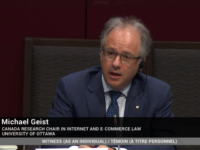
Addressing the AI Policy Challenge: My Appearance before the Standing Senate Committee on Transport and Communications
Earlier this week, I appeared before the Standing Senate Committee on Transport and Communications as part of its study on AI regulation. This follows earlier appearances before the House of Commons Heritage and Industry committees on the same issue. The hearing led to robust exchanges with multiple Senators on the intersection of AI policy with issues such as privacy, copyright, online harms, and sovereignty. I plan to post clips from the hearing in a future Law Bytes podcast, but in the meantime, my opening statement provides a good sense of my views on AI regulation with respect to privacy, copyright, and the need for an AI Transparency Act. A video of the opening statement is embedded below, followed by the text.

Government Enacts Political Party Anti-Privacy Rules With Bill C-4 Royal Assent Sprint
I’ve written extensively about Bill C-4 and the government’s effort to bury political party privacy rules that largely eliminate privacy obligations for federal political parties and apply the new rules retroactively to May 2000. This past week’s Law Bytes podcast featured Senate hearings on the bill, which ultimately resulted in an amendment to require the government to establish actual privacy obligations within three years. The government yesterday rejected the amendment and the bill received royal assent in a lightning-fast process.

The Year in Review: Top Ten Posts
This week’s Law Bytes podcast featured a look at the year in review in digital law and policy. Before wrapping up for the year, the next three posts over the holidays will highlight my most popular posts, podcast episodes, and Substacks of the past year. Today’s post starts with the top posts, in which two issues dominated: lawful access and antisemitism. While most of the top ten involves those two issues, the top post of the year featured an analysis of the government’s approach to the digital services tax, which ultimately resulted in an embarrassing climbdown by the government.
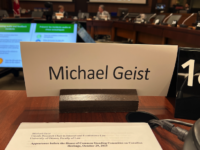
We Need More Canada in the Training Data: My Appearance Before the Standing Committee on Canadian Heritage on AI and the Creative Sector
The government, led by AI Minister Evan Solomon, is currently conducting a short consultation on AI regulation that has attracted criticism for its short time frame. At the same time however, the Standing Committee on Canadian Heritage has been working through a study on AI and the creative sector that may be more limited in scope, but has featured a broader range of perspectives. I had the opportunity to appear before the committee yesterday where I lamented that too often debates on new technology is framed “as a threat, emphasizes cross-industry subsidies, and misses the opportunities new technology presents. We therefore need risk analysis that rejects entrenching the status quo and instead assesses the risks of both the technology and the policy response. I’ll post the full discussion (which ventured into AI transparency, copyright, the news sector, and much more) in a future Law Bytes podcast episode. In the meantime, my opening statement is embedded and posted below.

Recent Posts
 Going Through the Motions: How Parliament Is Shutting Down Study and Debate on Political Party Privacy
  Why The Senate Got Antisemitism Only Half-Right
  The Government Doubles Down on News Sector Support: Fiscal Update Opens the Door to Tens of Millions in Tax Credits for Bell, Rogers and Corus
  The Illusion of Protection: Why Canada’s Growing Push to Ban Social Media for Kids Won’t Work
  The Law Bytes Podcast, Episode 266: Justin Safayeni on the Ontario Government’s Overnight Evisceration of Access to Information
