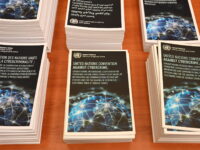
The Canadian government’s surprise decision to sign the UN Cybercrime Convention has sparked many questions about the convention, its risks, and what changed over the past nine months between Canada no-showing the signing in Vietnam and this month’s reversal. To help answer those questions, there is no one better than Kate Robertson, a senior research associate at the Citizen Lab, who has been vocal on the convention since negotiations began years ago. She joins the Law Bytes podcast to discuss her concerns and how the Convention fits within the broader global political and policing frameworks.
Post Tagged with: "human rights"

A Surveillance Treaty in Disguise: The Trouble With Canada’s Quiet Decision to Sign the UN Cybercrime Convention
Last week, the government announced that Canada has signed the United Nations Convention against Cybercrime, with Ministers Anita Anand, Gary Anandasangaree and Sean Fraser touting the treaty’s child protection provisions and human rights safeguards, which were described as “among the strongest found in an international criminal justice treaty.” The announcement, released in mid-July with few paying attention, left out much of the story. The reality is that the convention is not primarily a cybercrime treaty at all, but rather a sweeping cross-border surveillance and electronic evidence-sharing agreement that Canada originally opposed, that leading human rights groups and twenty Canadian organizations and experts urged the government to reject, and that key allies have thus far declined to sign. While signing the convention does not create binding obligations (that requires ratification), the decision to sign a treaty that the government declined to sign at the official ceremony less than a year ago raises troubling questions. This post seeks to answer three of them: what is this treaty, what are the risks, and what, if anything, changed in the last nine months?
The Case Against the Bell Coalition’s Website Blocking Plan, Part 10: Why It May Violate Human Rights Norms
The Bell coalition website blocking plan may violate more than just Canadian net neutrality rules. As currently framed, it may also violate human rights norms. Website blocking or other measures to limit access to the Internet raises obvious freedom of expression concerns that has sparked commentary from many international governmental organizations. Frank LaRue, the former U.N. Rapporteur on Freedom of Expression, was one of several experts on freedom of expression, including representatives from the Organization for Security and Co-operation in Europe, the Organization of American States, and the African Commission on Human and Peoples’ Rights, who issued a joint declaration in 2011 on freedom of expression and the Internet. It states the following on blocking:
Is Internet Access A Human Right?: The Implications for the Rules of Access
The report, written by Frank La Rue, the U.N. Special Rapporteur on the promotion and protection of the right to freedom of opinion and expression (an internationally regarded human rights expert who was once nominated for the Nobel Peace Prize), took the political world by storm when it was released several weeks ago.
The report explored the need to ensure that citizens have Internet connectivity and also the rules associated with that access. As a result, it was highly critical of policies that block access to content, threaten to cut off Internet access due to allegations of copyright infringement, and fail to safeguard online privacy.
Human Rights Groups Challenge USTR Special 301
A group of public interest organizations in the U.S. have filed a complaint alleging that the Obama administration’s trade policy reduces access to medicines in low and middle income nations, and therefore violates international human rights obligations.

Recent Posts
 “Position Has Not Changed”: The Canadian Government Reaffirms That Antisemitism Includes Anti-Zionism
  The Law Bytes Podcast, Episode 279: My Keynote on Digital Sovereignty: Control, Choice, and Connection
  The What, Me Worry? Consultation: Media Quietly Tells Government It Wants Even More Funding With Little Concern for Independence Risks
  Years of Uncertainty: Bill C-22’s Missing Regulations and Secret Ministerial Orders
  The Missing Charter Statement: Why Hasn’t the Government Explained How Bill C-34’s Social Media Ban Complies with the Charter?
