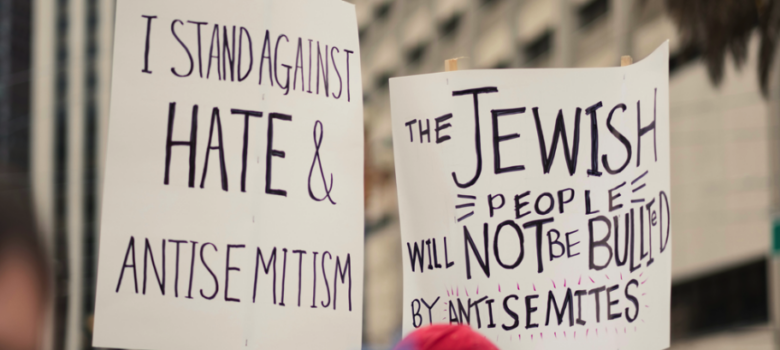
Public Safety Canada released its summer progress report on the National Commitments to Combat Antisemitism yesterday, days after the Yom Kippur attack on the Sons of Jacob synagogue in Belleville. Most of the report tracks activities related to police training, funding programs, and provincial initiatives. But what makes the report consequential is the government’s clear recognition in a pair of statements that antisemitism includes anti-Zionism. The statements are sure to attract criticism in some quarters, but anti-Zionism is too often thinly veiled antisemitism, as if substituting the word Zionist for Jew renders the unacceptable acceptable. Given the rising antisemitic violence, culminating in this week’s terror attack, combatting antisemitism requires definitions that safeguard the Jewish community while remaining consistent with protecting freedom of expression. The government’s approach, which relies on a definition of antisemitism based on the lived reality of the Jewish community, does just that.
There is little doubt that the report’s references to anti-Zionism are deliberate. Both fall within Pillar One of the report that focuses on understanding antisemitism. The inclusion is how many in the Jewish community understand and experience antisemitism, facing threats that go to their longstanding beliefs and identity as Jews. For identifying antisemitism, it is that experience that matters, not the intent of the speaker. The report first states that the intended outcome of the pillar is that “Institutions across Canada have increased access to tools, guidance, and training to support the recognition, understanding and response to contemporary manifestations of antisemitism, including anti-Zionism, as outlined in the Canadian Handbook on the IHRA Working Definition of Antisemitism.” The report says the definition and Handbook “will continue to serve as the foundation of the federal government’s engagement with Jewish communities and its work to fight antisemitism.” Second, in explaining why understanding antisemitism is important, it states:
Antisemitism, which includes anti-Zionism, is not always obvious. While some incidents involve explicit threats, violence, or hate speech, others may take the form of conspiracy theories, Holocaust denial, coded language, stereotypes, or the collective blaming of Jewish people. Recognizing antisemitism consistently is an essential first step toward responding effectively.
The two statements go out of their way to include anti-Zionism in their understanding of antisemitism, which the government rightly notes is essential to an effective response. The report also links antisemitism to national security, stating that “the Government of Canada recognizes that antisemitism can be a matter of national security” and describes antisemitism as “both an indicator and an accelerator of radicalization.” Given the events of the past week, the statements are both critical and self-evident.
The inclusion should have real-world impact. To be clear, the IHRA definition this analysis draws on “is not legally binding and does not criminalize any expression or behaviour.” Indeed, criticism of Israeli government policy remains protected expression. However, proper understanding of antisemitism is essential within government when developing policies, spending programs, and supporting public servants. The report notes that police “are increasingly using the IHRA definition as a practical guide to help personnel recognize and assess potential incidents of antisemitism,” with thousands of officers having undergone specialized training. Moreover, the government should also apply the definition to its own funding and anti-discrimination policies to ensure that public tax dollars do not go to groups that engage in antisemitism, including in its anti-Zionist form.
The government has too often been reticent to take a position on this issue. In fairness, Justin Trudeau declared that “no one in Canada should be afraid to call themselves a Zionist. I am a Zionist” at the March 2025 National Forum on Combatting Antisemitism, the same forum whose commitments this report tracks. But by contrast, Mark Carney’s antisemitism speech earlier this year was notable for not mentioning October 7th, Israel, or anti-Zionism. Many in the Jewish community (myself included) roundly criticized that speech for failing to meet the moment.
The government’s explicit recognition that antisemitism includes anti-Zionism is precisely the kind of modelling that has been missing in recent years. There is still much to do, but this report is a positive step forward that goes a long way toward settling the question of how the Canadian government views modern antisemitism.





Zionism is racism. The UN even passed a resolution stating such. Of course it was repealed because Israel refused to make peace (Oslo) unless it was repealed (and then Israel refused to implement Oslo) but everyone knows that was just cosmetic to try and please a bunch of bigoted land thieves.
Of course, the UN is anti-Israel, and you are an an anti-Israel bigot.
Plz show map of Israel.
https://www.reversecanarymission.org/person/sherril-labovich
💯
https://odysee.com/@defeatmodernism:c/zion:dc7
It’s ridiculous, insulting and wrong to call those who have issues with Zionism, antisemitic.
Just another form of woke weaponization of words to scare off debate.
Shame.
It’s what the Zionists want; no discussion of how vile their ethnonationalism is.
To talk about a nationalism that murders thousands of children as bad because Jewish people are doing it? That’s beyond the Pale!
It’s sad that antisemitism is on the rise but trying to paint antiZionism as antisemitism …. That just leads to more antisemitism!
Your name is Stop arab hate ?….who?…o am jewish and arab by the way . Who pray tell hates arabs so you want to claim there is hate of course there is general hate for arab groups muslim people but in the same breath deny or try to dicount jew hate. You have no credibility at all. And why are you acting all upset as if you have been wronged or something. Why are you even here?
Shame on YOU.
EXCUSE ME??
“Shame”…get a life whoever you are (if you even posted your real name). And don’t let us see you in a couple of days from today remaining silent about what day it is … that would expose you for NOT being knowledgable and just being full of it. You didn’t even read the article onviously. And you have a hyper obsession. Imagine telling Italians “I don’t have a problem with Italians I Just dont think that italy should be on the map anymore ” …what other group other than the jewish people (who are the least threatening group to worry about) is it tolerated to ignore antisemetic sentiment taking place, and tolerate the incentivizing of the expulsion of their people?. . Other than the jewish people ? What about the tearing down of posters of missing men woman and children that you would not even do to missing animals! What about that you accuse them for how they react against a group which is part of the Irgc that’s how you measure them not by how they treat their own people? You think Hamas and Pa treat their people well? They have been unforgivable. How dare you not recognize what is happening. And political religious systems whom you defend have been at the forfront globally of antisemetism for centuries, and you deny this history?
I’ve followed your work for years and I appreciate what you do on Canadian issues. We need more voices like yours. But on this one, I think you may be too close to the issue.
You write that “it is that experience that matters, not the intent of the speaker.” The report doesn’t say that, and the law it praises says the opposite: the Combatting Hate Act’s offences only apply to statements made with intent to promote hatred or antisemitism.
The report’s strongest example, R v Amor, involved “Zionists” used as a stand-in for Jews, and Jews blamed collectively for Israel’s actions. That is antisemitism, full stop. But it supports a narrow claim: some people use “Zionist” as code for “Jew.” It doesn’t support the sentence the government built on top of it, that antisemitism “includes anti-Zionism.” Your own wording shows the gap. You say anti-Zionism is “too often” veiled antisemitism, which means sometimes, and then endorse a definition that treats it as always.
What boggles my mind most is that anyone thinks this will do anything but exacerbate antisemitism in Canada. The old Protocols-style conspiracy theory, that Jews secretly control the world, has been resurfacing alarmingly fast, and this throws fuel on that fire. With regard to this one report I can understand how someone who is already inclined to that conspiracy theory sees this incapatory evidence to support it. I’m already seeing that hot take on social media. I don’t know what the answer is, but I can tell you it isn’t the state deciding which political positions count as hate, not unless we want to drift toward authoritarianism. And frankly, I’m surprised you don’t see that as well.
Antizionism is a HATE movement which operates, not based on facts, but on the endless repetition of 3 main BLOOD LIBELS against Israel. Unchecked antizionism, especially the genocide blood libel, is fueling rampant antisemitism worldwide. Canada’s recognition of antizionism as hatred is a positive step in the fight against Jew-hatred. // Historically, antisemites have always blamed Jews for antisemitism. Your implication that this recognition by Canada causes antisemitism sounds suspiciously like Jew-blaming. Remember, antisemitism is caused by antisemites, not by Jews.
depends what zionism is.
if its just living in an area which you feel is biblical and you bought the land and follow the laws of country then probably no big deal. but if it means forcing other people off their land with no compensation by using violence then that’s something else. if it’s a gov’t force that expands territory through war, creating refugees, killing them and discriminatory application of law then it’s a big problem.
What a disgrace, Zionists are genocidal. So what happens now, Orthodox and Hasidic Jews are going to be arrested for condemning a genocide committed by Zionists?
And it follows that since Zionists are Jews, Zionist Jews are genocidal. I see the logic. No connection to anti-semitism.
One does not need to be Jewish to be a Zionist. There are over 30 million Christian Zionists in the America.
Somebody say amen, that is precisely why this is being allowed to happen. North American (ie including Canadian) Christian Zionism is anti-Islamic and pro genocide of those they hate, it all comes from the book of Joshua.
Christian Zionists support Jewish migration to Israel not out of concern for Jewish self-determination, but to fulfill biblical prophecies regarding the Second Coming of Jesus Christ and the end of the world.
Jewish people are often viewed merely as instruments in a Christian narrative rather than a people with an independent destiny. Traditional beliefs often dictate that Jews must eventually convert to Christianity or face destruction in the final judgment.
A Zionist is ANY person, who believes in the existence of Israel. Stop using it as a racist slur. // Genocide requires INTENT. If Israel intends to kill Gazan civilians, then explain why the civilian-to-combatant death ratio is the lowest in the history of modern urban warfare. Those brilliant Israelis must be the most incompetent genocidaires ever. You sound like a good, old-fashioned Jew-hater and an anti-Israel bigot.
Sherrill you are an ignorant racist who denies genocide so long as the perps are Jewish and the victims are not.
The old accusation of antisemite isn’t working anymore in the face of 20000+ dead children.
Does germanophobia include nazism?
I used to respect your work for The Star. that just ended. this is a despicable piece of ideological subterfuge designed to give Israel wiggle room over its genocide of palestinians and other groups in the Mideast. so, michael, how does it feel to be israel’s joseph goebbels?
Your false and selective accusation of genocide ONLY against Israel is nothing but an excuse for your own Jew-hating behaviour.
Comparing Jews and Israel to the Nazis is called Holocaust Inversion, an inversion of reality which is considered Jew-hatred, by ANY international standard. You sound like a good, old-fashioned Jew-hater and an anti-Israel bigot.
Jews worldwide have been persecuted, murdered and/or exiled for centuries due to a repeating mix of religious intolerance, cultural isolation as a persistent minority, forced economic restrictions, and political scapegoating.
They have seen it all.
The latest instalment is persecution by proxy, using the current pro-Palestine movement to amplify accusations of genocide against Gazans. Never mind that Israel is still at war with Hamas, an Iranian/Qatarian supported regime that refuses to surrender or leave Gaza despite the casualties to Gazans. Never mind that no other Arab country has offered to take in Gazan refugees, or that Egypt has closed its border to Gaza. Never mind that over 2 million Arabs are full Israeli citizens with full voting rights and live in peace with the Jewish population. These are inconvenient truths that do not matter to Jew haters. They claim they are anti-Israel or anti-zionist but not anti-semitic.
Zionism is the hope and dreams of the Jewish diaspora to finally return to their ancestral homeland where they can live (and pray) in a safe and peaceful existence with the rest of the world. There wouldn’t be a zionist movement without Jews.
The current modus operandi of the haters (and the useful idiots) is to accuse Israel (but not its Jewish citizens) of atrocities, and demonize anyone who calls out the anti-semitic gaslighting.
to accuse Israel of genocide, and demonize those who call out anti-semitism.
Denying a genocide because Jewish is just so perfectly Zionist. Mazel Tov you get a genocide denier prize.
At what point in the IDF’s ongoing 3 year old war against Hamas did Gazan casualties become a genocide? As I understand it, anti-semites are experts on genocide.
Doubling down on moral depravity! How very Zionist of you!
Genocide denial is popular in some circles. How very sad.
So answer my question instead of deflecting or being nasty.
Your genocide denial is repulsive. I owe you nothing. Get your head out of your ass.
In what so-called “genocide” could the Gazan civilian-to-combatant death ratio be the LOWEST in the history of modern urban warfare? You’re nothing but a good, old-fashioned Jew-haters and an anti-Israel bigot.
Poor Sherrill the angry bigot.
Must be a Zionist thing.
20000 dead mids disagree with your assertion there is no genocide.
You are a repulsive human being.
“Angry bigot?” Ha ha! Stop projecting, Jew-hater. Are you investing equal energy into protesting the much deadlier wars in Sudan, Ethiopia and Yemen, where MILLIONS have died? Of course not. Your FAKE empathy and selective outrage apply, only when you can spew hatred at Israel and Zionists (todays code word for Jews). In fact, closet Jew-haters like you are precisely the reason Canada has recognized antizionism as a HATE movement. Your “free hate speech” days are coming to an end, Jew-hater.
Zionism itself could be racism depending on what the definition of Zion is and whether Zionists are given carte blanche to achieve a national state. If Zion is biblical borders that includes parts of other countries, are Zionist allowed to use nuclear weapons and ethnic cleansing to defend these borders? What are the borders of this homeland given to a mythical person by a “god”?
Regarding your God-determilned border theory, Jews are an ETHNO-religious group, with half being secular, so about 60% of Israelis do not practice Judaism. Furthermore, Israel’s borders were determined by the international legal process of Uti Possidetis Juris, like many other countries. Source: UK international lawyer, Natasha Hausdorff.
Thanks for bringing up Uti Possidetis Juris, not sure why you would because it doesn’t help your argument. If you want to start throwing international law around then you better read this judgement: https://www.icj-cij.org/sites/default/files/case-related/186/186-20240719-sum-01-00-en.pdf
From the IHRA definition: Example 7: Denying the Jewish people their right to self-determination, e.g., by claiming that the existence of a State of Israel is a racist endeavor.
Often we see images of Israel’s gov’t officials in front of maps showing Israel’s borders being all of the West Bank, Golan, E Jerusalem and Gaza. If these are the borders then Israel is 50% Palestinian by pop. Neither Jewish nor democratic. But these are not the biblical borders. Those include much of Jordan, parts of Syria and Lebanon. Without a clear definition of what “Israel” zionism aims to achieve, people are asked to sign a blank check. Stand with Israel – but don’t ask where Israel starts and stops. And… even then, zionism should not violate international law to expand boundaries.
Israel has NOT expanded its boundaries. In fact, tiny Israel has given up territory in the pursuit of peace.
Israel has annexed East Jerusalem and the Golan Heights. Israeli law has been extended to Jewish Settlers in the West Bank whereas residents (Palestinians) are subject to a mishmash of whatever law fits the military occupation.
Israel is now occupying South Lebanon, South Syria and is aggressively drilling for natural gas and oil offshore in areas that do not belong to it.
The gov’t of Israel is opening discussing annexing the West Bank with much support from Miriam Adelson. 7.2 million Jews and 7.2 million Palestinians does not make a Jewish Democracy. If that’s what Zionism is then it’s racism.
Are you investing equal energy into protesting on behalf of the millions of Palestinian refugees living in Jordan and Lebanon, where they have far fewer rights and benefits, compared to the Palestinian refugees living in sovereign Israeli territory? Of course not. Your fake empathy and selective outrage apply, only when you can spew hatred at Israel. Your Double Standard for Israel, by the way, is one of the 3Ds of Antisemitism, the US accepted standard.
They wouldn’t be in Lebanon or anywhere else if Israel implemented the UN resolutions which were conditions of Israel’s entry to the UN.
Israel completely withdrew from Gaza in 2005, and the terrorist-supporting Palestinians have rejected every two-state solution. Palestinians do not want to share your so-called “democracy” with Jews. They want to murder them. Say something that makes sense.
“The Court notes that, for the purpose of determining whether a territory remains occupied under international law, the decisive criterion is not whether the occupying Power retains its physical military presence in the territory at all times but rather whether its authority has been established and can be exercised. Based on the information before it, the Court considers that Israel remained capable of exercising, and continued to exercise, certain key elements of authority over the Gaza Strip, including
control of the land, sea and air borders, restrictions on movement of people and goods, collection of import and export taxes, and military control over the buffer zone, despite the withdrawal of its
military presence in 2005.”
Sadly, Intl court judgements are getting in the way of your opinion.
Israel withdrew land forces but continues to occupy maritime and air space Gaza so your assertion that “Israel has NOT expanded boundaries” is false not only in Gaza but in all the other places I pointed out.
So you really need to say “I’m sorry I was wrong. Israel has expanded the territory under its control, it has annexed lands (illegally) and it uses a two tier legal system that treats Jews differently that Palestinians.” These are facts whether you like them or not. Israelis know all this, they see it every day and they chose goverments that do it – the sad thing is Canadian and US Jews who live in some fantasy land pretending that no one else has seen with their own eyes what Israel is doing.
It’s very sad because no amount of crying by bigots like Geist or Sherrill will be able to convince morally grounded people that antiZionism is somehow antisemitic.
Political any religion, be it Judaism, Islam, Christianity or any other creed is toxic.
Nah, it’s you who really needs to do something: admit that you’re a good, old-fashioned Jew-hater and an anti-Israel bigot, hiding behind a lot of long- winded, faux-intellectual nonsense.
Nah you are the problem with your bigotry that allows 20000 dead kids to be ok because they are not jewish. You are repulsive.
You deny genocide so long as Jews are the perps and not the victims.
You and your kind are a rot in our society •.
Palestinians wouldnt be refugees anywhere, if five Arab countries hadn’t ATTACKED Israel in 1948, and ordered the vast majority of Arab residents to leave. “Come back after we kill all the Jews,” they said. Too bad, things didn’t work out as they planned. To date, your terrorist-supporting Palestinians have rejected every two-state solution, including their fuck-up of Israeli-free Gaza. Stop enabling terrorism by pretending that Palestinians don’t have agency.
Zionist forces were already expanding outside the partition plan in 1947. How sad it is how little of Israel’s history you know. Did you know that Lehi tried to ally itself with the Nazis to fight Britain together? During the 30’s Fascism was in fashion in many countries, the Yishuv included. That’s where Lehi/Likud allied with the Lebanese Fascists, the Phalange. The very same Phalange that helped Sharon with Sabra and Shatilla. You see if you define Zionism as Daniella Weiss has then it’s Fascism. However Zionism could be defined more like Haaretz does. The question is which do you support?