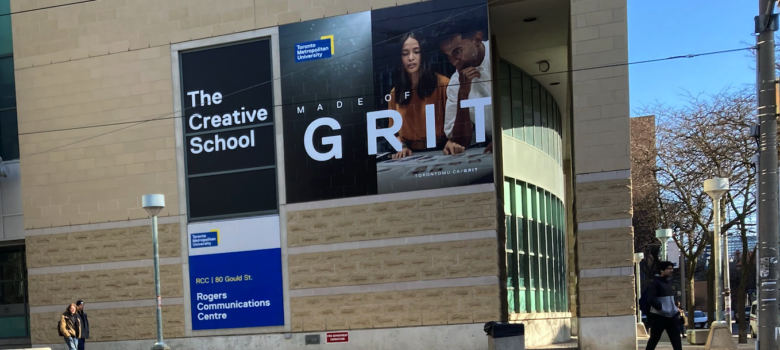
Last fall, two incidents at Toronto Metropolitan University attracted national attention: the September 2025 disruption by the group Students for Justice in Palestine at TMU of a Democracy Forum event featuring federal AI minister Evan Solomon that ended in an arrest, and the November 2025 storming of an off-campus event hosted by Students Supporting Israel that left the speaker hospitalized. TMU responded to mounting concern by retaining retired Ontario Court of Appeal justice Mary Lou Benotto to conduct a review of the incidents, assess the university’s policies and their application, and make recommendations for reforms. Her report, which the University released in redacted form last week, should spark two shockwaves. The first comes from the findings, which describe a campus with recurring antisemitism and the harassment of Jewish students and faculty with ineffective and inconsistent institutional response. The second comes from the university’s response to the report itself. TMU, despite having commissioned the review, now appears determined to delay and ultimately reject its recommendations. Indeed, rather than address the damage that leaves Jewish students and faculty feeling unsafe and subjected to routine harassment and discrimination, the university has opted for damage control that shamefully fails to respond to its antisemitism crisis.
For the Jewish students at the centre of the two incidents, the findings amount to vindication of the concerns that have been ignored for too long. The review concludes that the September arrest, portrayed on social media as an act of brutality against a protester, was reasonable and lawful, criticizing edited footage that omitted what actually occurred. Its account of November 5 is far worse: masked protesters, mobilized within hours by social media posts referencing “Zionist murderers”, followed organizers into a privately rented space where a glass door was shattered inward with a drill bit later found at the scene, leaving the speaker cut and hospitalized along with others. The review expressly rejects claims that the protesters were the victims, noting that five people now face charges that include unlawful assembly, rioting while masked, and public incitement of hatred. Beyond the misleading claims from the perpetrators and their supporters, it holds TMU responsible, concluding that its refusal to allow the event on campus amounted to a heckler’s veto that arguably increased the danger by pushing it into an unprotected venue.
But the report finds that the two incidents were only the most visible signs of a much deeper problem. Coming just two weeks after the CASE report provided national data on a campus antisemitism crisis, the Benotto report supplies the judicially documented, single-campus version of the same story. The record is overwhelming:
- reported classroom statements that minimize the Holocaust, describe academic power as rooted in “Jewish supremacism”, and imply that violence against Jewish children is acceptable if their parents are perceived to support Israel
- the use of red inverted triangles, a symbol used to mark targets, posted over photos of Jewish student leaders
- spoiled milk thrown at Jewish students and spitting directed at others
- a lecturer who no longer wears a Star of David necklace for fear of physical assault
- Shabbat dinners that now require security risk assessments
- redefining Zionism “exclusively through pejorative or demonizing frameworks that leave little room for the perspectives of Jews for whom Zionism forms part of their identity”
There is a direct line between this record and TMU’s institutional failure. The Benotto report concludes that it possesses policies capable of addressing much of the conduct but has failed to apply them consistently. As a result, its lack of enforcement created a perception that there is no risk in violating the rules.
Having identified a serious problem, Benotto proposes concrete reforms, including adopting the IHRA working definition of antisemitism. The recommendation directly reverses the 2024 MacDonald Report, which declined to adopt IHRA following its review of a controversial law students’ letter. Benotto notes that antisemitism at TMU has increased in the two years since that report, “a less restrictive approach to antisemitism is not working”, and that intent has never been a required element of discrimination under Canadian human rights law such that the intent of speakers (even if claimed not to be antisemitic) is irrelevant. The remaining recommendations are a slam dunk: revise the freedom of speech statement to make clear that intimidation and interference with others’ expression are not protected, adopt content-neutral event rules with an express commitment never to cancel lawful events due to threatened disruption, hold student groups accountable for on and off-campus conduct connected to university life, regulate doxxing and targeted filming, prohibit face coverings at protests subject to religious and health exceptions, and respond to misconduct immediately.
A report like this should have sparked immediate action, and it is difficult to believe that findings of this kind involving any other group would have been met with anything less. For example, in November 2020, amid mounting pressure over Egerton Ryerson’s residential schools legacy, TMU established a task force that issued its report within a year (during which time the Ryerson statue was toppled), and the Board of Governors adopted all 22 recommendations immediately (including changing the name of the university to TMU). But when the issue involves Jewish students, TMU’s response is far different. It sat on the report for nearly two weeks, released it with disciplinary findings redacted, and announced a President’s Implementation Task Force that will report back on the report in 2027. That means students arriving on campus in the next few weeks will face another year of antisemitism with the university signalling that there is no urgency to address the issue.
In fact, the task force membership leaves little doubt that the university intends to reject many of the report’s recommendations. Nearly half of the committee’s members have signed public petitions opposing some of the recommendations, including the adoption of the IHRA definition, and rejecting the report’s findings on the links between anti-Zionism and antisemitism. Simply put, delaying the implementation of the Benotto report and stacking a new task force with opponents of its recommendations is precisely what you do when you don’t take the antisemitism report seriously and want to kill its recommendations. As a result, TMU is home to two problems: its antisemitism problem is now the most thoroughly documented in the country, and its leadership is more interested in damage control than fixing the damage. If the university is unable or unwilling to establish a safe environment for all of its students and faculty, it falls to the Ontario government, which already requires universities to implement policies to address and combat hate, including antisemitism, to ensure that it does.






Much of the public commentary about this matter has been about how TMU has serious governance problems, but fewer remedies have been visible. Parents are saying that they won’t sent their kids to TMU and employers are questioning the value of a TMU degree, but these are individual responses. Bill 166 is valuable because the Ministry could have some real teeth. Thank you for surfacing it.
Sorry, but if young religionists are brainwashing themselves into unconditional loving acceptance of and advocacy for the unspeakable atrocities being committed in the name of their religion by the Likud coalition in Gaza, the West Bank, Lebanon and Iran I can’t be bothered to worry about them. If only we could have the opinions of Theodor Herzl or Gershom Sholem, Golda Meier or Mosheh Dayan of the filthy agenda of the current government of the land they fought for, I think most of the young “victims” of campus hostility might have another hard think about why that is.
Pingback: Yoni Goldstein: It's time for Jews to build their own universities in Canada - Loonie Politics
TMU has a reputation not only for Anti Semitism but also for intimidating racialized employees and he problems stem from the head.
So sad to read the news. This issue has existed for many years.
Pingback: The Canadian Broadcastng Corporation News and the Yom Kippur Synagogue Shooting | Mind You Reflections on mental illness, mental health and life