
The Canadian government has responded to three reports focused on digital policies from the Standing Committee on Canadian Heritage, shedding new light on potential future policies and priorities. The three reports – on tech giants, local media, and harms caused by illegal sexually explicit materials posted online – recommended a wide range of measures that include new laws, regulations, and government programs. The government sidesteps some of the recommended legislative reforms in its responses signed by Heritage Minister Marc Miller, suggesting limited interest in committing to broad-based platform liability rules.
Post Tagged with: "online news"

The Law Bytes Podcast, Episode 207: The State of Digital Law and Policy in Canada as Parliament Breaks for the Summer
Parliament adjourned for the summer last week, meaning both the House of Commons and Senate are largely on hold until mid-September. The Law Bytes podcast focuses intensively on Canadian legislative and digital policy developments and with another Parliamentary year in the books, this week’s episode takes a look back and take stock of where things stand. It features discussion on the implementation of the Internet streaming and news bills (C-11 and C-18) as well as an analysis of the current state of privacy, AI, online harms, and digital tax as found in Bills C-27, C-63, C-69, S-210 and C-27.

What the CRTC’s New Registration Requirements Mean for Regulating Everything from Online News Services to Podcast Providers
The CRTC last week released the first two of what is likely to become at least a dozen decisions involving the Online Streaming Act (aka Bill C-11). The decision, which attracted considerable commentary over the weekend, involves mandatory registration rules for audio and visual services that include far more than the large streaming services. The Commission says the registrations would give it “de minimis information about online undertakings and their activities in Canada, which would give the Commission an initial understanding of the Canadian online broadcasting landscape and would allow it to communicate with online undertakings.” By contrast, the inclusion of registration requirements for a wide range of undertakings, including some podcast services, online news sites, adult content sites, and social media left some characterizing it as a podcast registry or part of “one of the world’s most repressive online censorship schemes.” So what’s the reality? As is often the case, it is not as bad as critics would suggest, but not nearly as benign as the CRTC would have you believe.

The Government’s Epic Bill C-18 Miscalculation on Mandating Payments for Links
Meta executives faced another round of criticism at the Standing Committee on Canadian Heritage yesterday, yet beyond the usual outrage emanating from MPs that have labelled critics as racist or dismissed online news outlets at not news, was the growing realization that the company’s plan to block news sharing in Canada if Bill C-18 passes in its current form may not be a bluff. Meta has adopted a consistent position for months that the bill creates the prospect of unlimited liability for linking to news articles, the vast majority of which are posted by the media companies themselves. Paying for those links is viewed as uneconomic and untenable by the company, which would rather exit news sharing altogether in Canada rather than cough up millions of dollars for links.
Fixing Bill C-18: My Appearance Before the Senate Standing Committee on Transportation and Communication
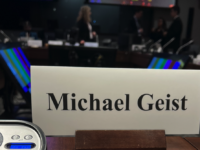
I was pleased to appear yesterday before the Senate Standing Committee on Transportation and Communication on Bill C-18. The discussion focused on a wide range of issues, including the risks of mandating payments for links, the non-compliance with international copyright obligations, why the CBC should not be included in the payment for links system, and how a fund would be a better approach. My opening statement, which tried to identify some fixes to the bill, is posted below as text and as a Youtube video.

Recent Posts
 When Writing About Antisemitism Proves the Point: What the Replies Reveal
  Acting on Antisemitism: If This Was Always Possible, Why Didn’t It Happen Sooner?
  Setting Canada’s AI Policy Priorities: My Appearance Before the Standing Committee on Industry, Science and Technology
  The Law Bytes Podcast, Episode 262: Zack Shapiro on the Claude AI Native Law Firm
  The Online Streaming Act in Jeopardy: U.S. Takes Aim at the CUSMA Cultural Exemption With Threats of Bill C-11 Retaliation
