I'm at Canadian Music Week in Toronto this week (where a representative of the RIAA urged Canadians to increase the "hassle" factor of P2P by launching lawsuits and polluting the P2P networks with fake files) where CRIA just issued a press release heralding the shut down and arrest of a […]
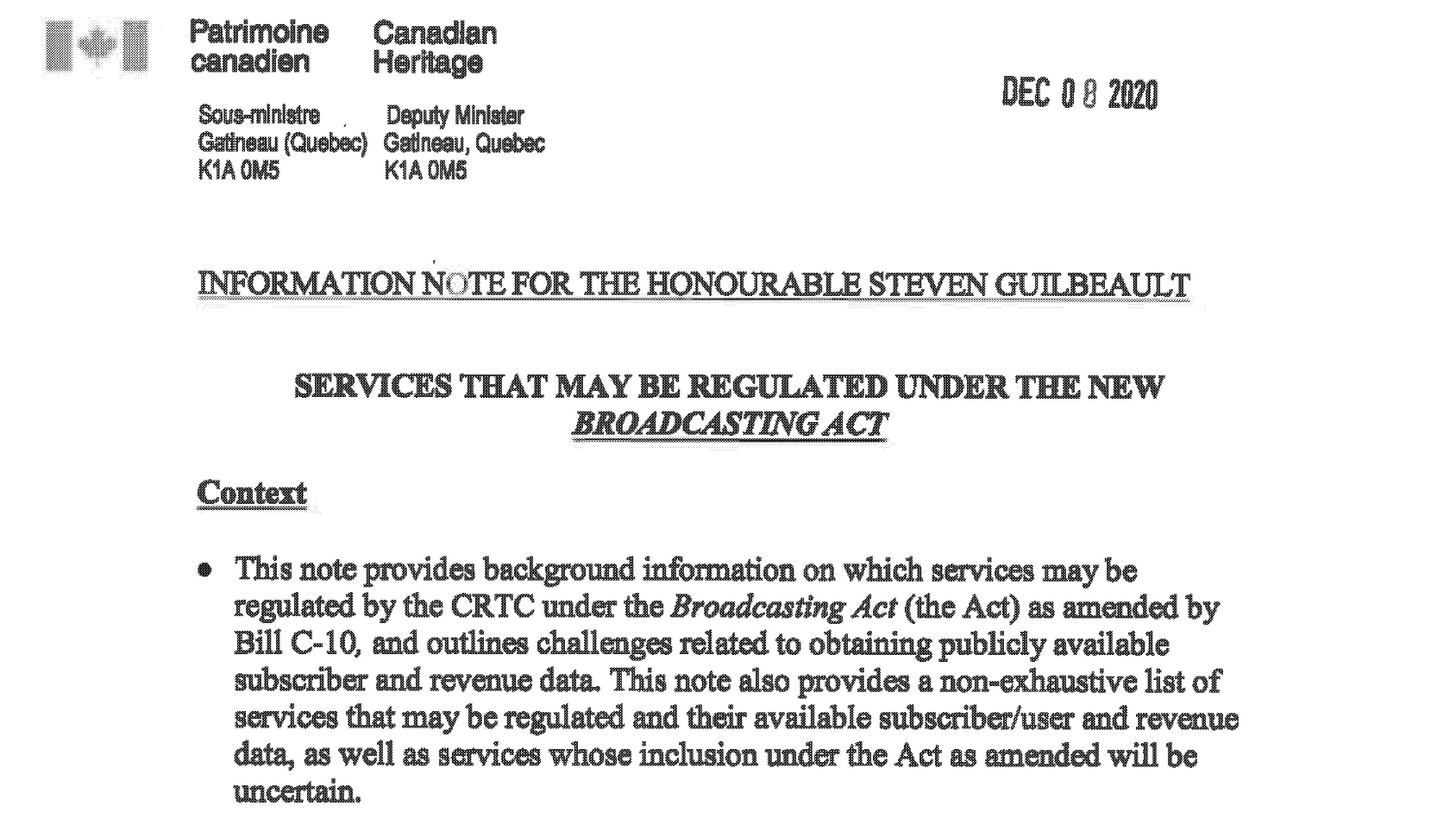
Canadian Heritage Memorandum, December 8, 2020, ATIP A-2020-00498
Bill C-10
The Battle over C-10
I've been rather quiet on the remarkable public outcry over Bill C-10, the legislation currently before the Senate that would give the Minister of Canadian Heritage the power to veto tax credits for films or television productions deemed objectionable. This afternoon I received an email urging me to "write your Government and support restricting or banning funding from the taxpayers for 'pornography'." Given this nonsense, it is important to urge everyone to lend their voice to this issue by contacting their elected representatives and the Senate Banking committee to ask them not to pass the legislation with the film provision. Much like the outcry against DMCA-style copyright reform, there has been a huge online protest with a Facebook group now over 21,000 members.
I believe there is a place for government support for culture. While that support is not unconditional, neither is it appropriate for government to reserve for itself a veto power over content it finds objectionable (the loss of tax credits could effectively kill some film productions). After the Prime Minister's Office apparently pulled Canadian Heritage Minister Josee Verner away from the media, late last night she issued a press release claiming that the provision is designed to stop tax credits from being issued to films that include content that may be subject to prosecution under the Criminal Code. This raises a couple of issues.
Protests Mount over C-10
The protests are beginning to mount over Bill C-10, which includes an overlooked provision that would allow the Canadian Heritage Minister to deny tax credits to films or television show projects deemed offensive. A Facebook group on the issue has attracted hundreds of members in a matter of hours.
USTR Invites Submissions on ACTA
The U.S. Trade Representative has issued a public consultation on the negotiation of the Anti-Counterfeiting Trade Agreement. The consultation, which runs until March 21, 2008, notes that comments should focus on international cooperation, enforcement practices, or the development of new legal framworks. Australia has similarly consulted on its potential involvement […]
RCMP Targets Counterfeit DVD Distribution Network
The RCMP has raided a counterfeiting DVD distribution network in Montreal with Criminal Code and Copyright Act charges to follow. These actions are to be applauded and provide more evidence that the current law is not the chief barrier to anti-counterfeiting enforcement.

Recent Posts
 The Missing Charter Statement: Why Hasn’t the Government Explained How Bill C-34’s Social Media Ban Complies with the Charter?
  Three Years After October 7th: Living With the Shockwaves
  What If the U.S. Demanded This? The Cloud Provider Conditions Behind Canada’s EU Digital Pivot
  Ontario is Done Waiting for Universities to Act on Campus Antisemitism
  Is Compromise on Encryption Possible? Why Bill C-22’s “Minor Opening” Leaves the Central Question Unanswered
