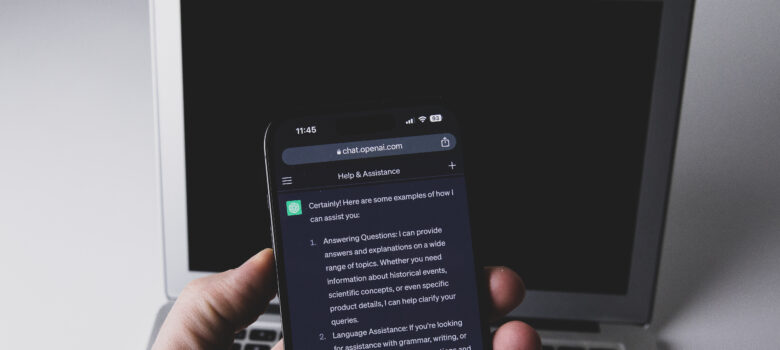
The Delhi High Court has released what may be one of the most consequential copyright decisions yet on artificial intelligence, ruling in ANI Media Pvt. Ltd. v. OpenAI that OpenAI’s use of copyrighted news articles to train the models behind ChatGPT is prima facie fair dealing. The 135-page decision of Justice Amit Bansal, released last week, dismissed an Indian news agency’s application for an interim injunction, and while it is expressly not a final ruling on the merits, it features valuable analysis of the copyright implications of machine research, market harm and the public interest. The case is particularly notable from a Canadian perspective since it is the 2004 landmark CCH Supreme Court of Canada copyright case that provides the decision’s fair dealing foundation.
The ANI lawsuit focused on two claims: that OpenAI copied and stored its articles to train its models, and that ChatGPT reproduced its content in outputs, including through retrieval-augmented generation (RAG), which allows an AI service to pull current information from external sources before answering. The court dismissed the output claim, finding that when the ChatGPT responses were compared with the ANI articles as complete works rather than in fragments, there was no substantial reproduction of ANI’s expression. Further, the court concluded that articles cited by ANI as evidence were likely based on retrieval rather than memorization and ANI had not pleaded retrieval as a basis for infringement.
With a few exceptions, courts worldwide have generally dismissed claims based on outputs given the difficulty in proving reproduction. But it is the input claim focused on the training data that sets this case apart. OpenAI acknowledged that training its model involved at least temporary electronic storage of ANI’s works, and the court held that the reproduction right, which extends to storing a work “in any medium by electronic means,” draws no distinction between temporary and permanent copies. For OpenAI to avoid liability, the case therefore turned on whether the reproduction qualified as fair dealing under section 52(1)(a) of the Indian Copyright Act, which covers “private or personal use, including research.”
Professor Arul George Scaria, one of two amici curiae appointed by the court, offered up the fair dealing analytical framework in his submission to the court and the CCH decision provided the legal foundation. Reliance on CCH is not unprecedented in India, which adopted CCH’s skill and judgment approach in developing India’s originality standard in the 2008 decision in Eastern Book Company v. D.B. Modak. In this case, the court quoted CCH’s critical holding that fair dealing is not a defence or a loophole but rather a user right that must not be read restrictively. Given its importance, the court concluded that “Section 52 independently defines the rights/privileges of a user in respect of copyrighted works and must not be interpreted in a restrictive manner. It is an integral part of the Copyright Act and therefore, it has to be given broad and liberal interpretation.” The influence of the CCH decision is obvious.
Beyond the invocation of user rights, the court also relied on CCH’s finding that research is not limited to non-commercial contexts and that research conducted by lawyers for profit may qualify as fair dealing. In other words, the fair dealing finding upholding the use of works as training data rested largely on CCH’s approach to user rights and its confirmation that fair dealing applies in both non-commercial and commercial contexts.
The court notably declined to adopt the U.S. four-factor fair use test in developing its fair dealing test, nor did it draw on CCH’s six fairness factors. Instead, it identified three questions of its own, anchored in Article 9(2) of the Berne Convention: whether the use was confined to training, whether it competed with ANI or prejudiced its legitimate commercial interests, and whether ChatGPT’s functions serve the public interest. In the court’s view, all three favoured OpenAI, the market harm factor largely because ANI offered no evidence of lost subscribers or revenues.
The case is likely to face an appeal and full trial awaits, but the applicability of the CCH case to AI training data could have real implications for Canadian copyright law, where the country’s largest news organizations have filed their own copyright lawsuit against OpenAI that recently survived a jurisdictional challenge in the Ontario courts. Canadian courts have yet to rule on fair dealing and AI training, but the analysis suggests that Canadian law already provides a roadmap for addressing AI-related training copyright claims. The Heritage committee’s April report recommended an opt-in consent requirement for the use of copyrighted works in AI training, which, as I wrote at the time, would not merely decline to add a text and data mining exception but would override fair dealing by imposing prior authorization found nowhere in the Act. This latest decision highlights that more than 20 years after the CCH decision, it remains the starting point for addressing emerging copyright issues. Rather than adopting the Heritage committee’s recommendation, the government should allow the cases to work their way through the courts, safe in the knowledge that Canadian law has now proven itself capable of addressing the complex intersection between copyright and AI.
Related posts:
 We Need More Canada in the Training Data: My Appearance Before the Standing Committee on Canadian Heritage on AI and the Creative Sector
 Addressing the AI Policy Challenge: My Appearance before the Standing Senate Committee on Transport and Communications
 The Law Bytes Podcast, Episode 249: The Debate Over Canada’s AI Strategy – My Consultation Submission and Appearance at the Canadian Heritage Committee
 Win, Lose or Draw?: The Federal Court of Appeal Overrules a Key Copyright Case on Procedural Grounds







You wrote “Further, the court concluded that articles cited by ANI as evidence were likely based on retrieval rather than memorization and ANI had not pleaded retrieval as a basis for infringement.”
In your opinion, would retrieval have been a good factor to make part of the case?
I can think of arguments both for and against retrieval (:-))
Seems to me that AI should have the same right to read, quote and publish excerpts of copyrighted text verbatim and to summarize ideas in its “own” words, that any published human academic or media writer would have. Applying a different standard to AI would foolishly curtail its social usefulness. Obviously the same obligations to cite the original source should apply.