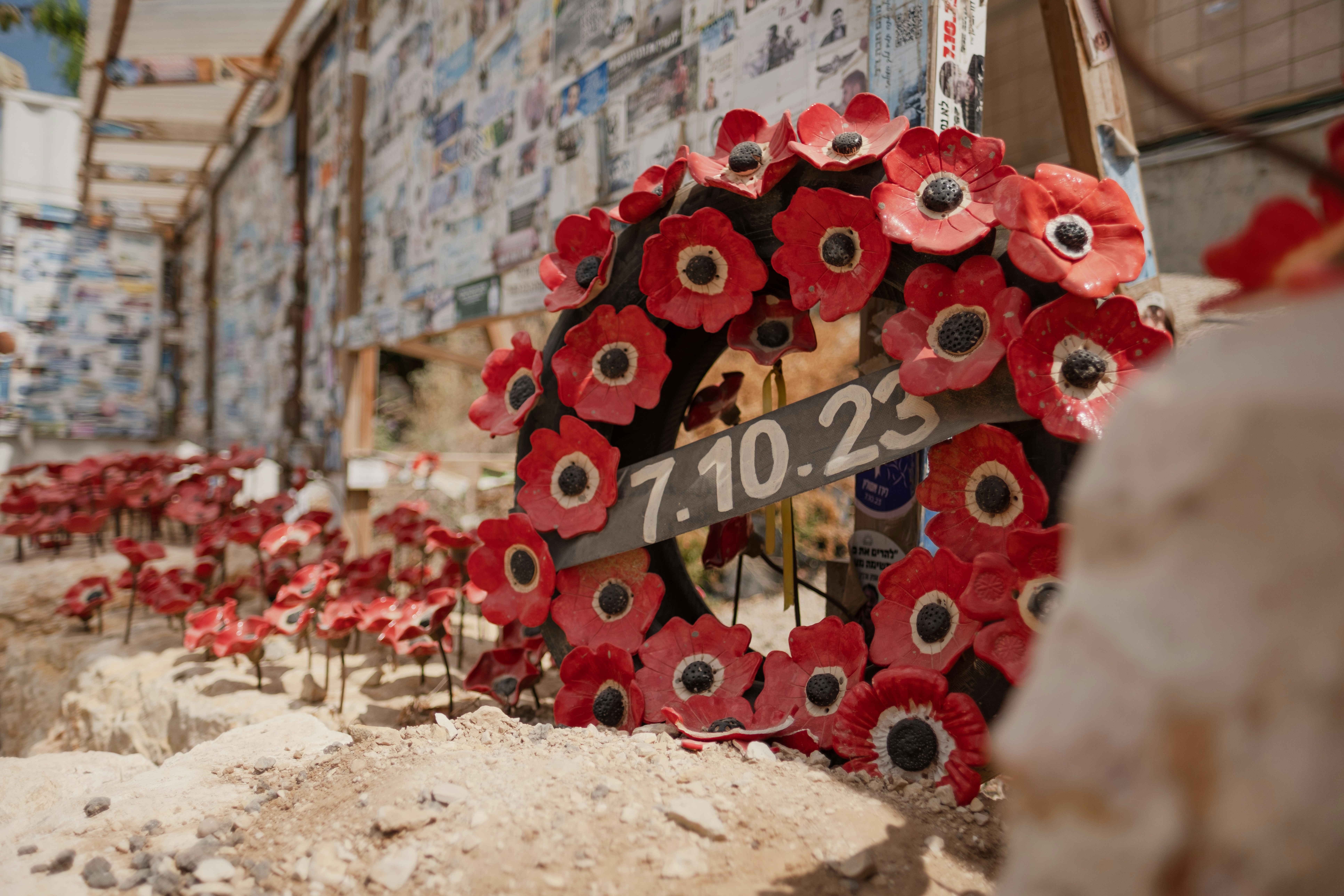
In the immediate aftermath of the Hamas terror attacks on October 7th, Jewish communities around the world shared the shock of Israelis at the largest massacre of Jews since the Holocaust. A year later, I wrote about learning of the attack in real time, hours after a Shabbat dinner, as the Israeli red alert app on my Apple Watch buzzed continuously. The barrage of alerts was so intense that I initially thought the app had malfunctioned. The pain of that day and the days that followed was shared by many who, despite being thousands of kilometres away, felt as if they too had been targeted and were left with a desperate sadness.
Over the past three years, the initial shock has turned into a relentless series of shockwaves, as if October 7th was an earthquake with reverberations that never end. The attack took place in Israel, but Israelis and diaspora Jews have since shared many of the same experiences, dominated by denial, repeated antisemitic violence, and a deep sense of betrayal.
The denial arrived within hours, even as Hamas operatives were still terrorizing Israeli communities in an attack that left 1,200 dead and hundreds held hostage. The Israeli examples are well known, from the claims that still infest social media that Israeli fire on their own was a major source of the casualties to the denial of the sexual violence committed that day. The denial of sexual violence persists even after a UN envoy found reasonable grounds to believe it occurred and the Civil Commission on October 7th Crimes by Hamas Against Women and Children assembled a comprehensive evidentiary report. In the diaspora, it started with denials that the Jewish community had any reason to fear a rise in antisemitism. I wrote in 2024 about the states of disbelief that greeted the Canadian Jewish community, including school shootings and synagogue vandalism dismissed as false flags. Those denials have not gone away and are seemingly invoked with each successive incident of antisemitic violence. So too has the refusal of many anti-Zionists to acknowledge that their incendiary rhetoric can itself be antisemitic, something now explicitly acknowledged by the federal government in its recent report on responding to the Canadian antisemitism crisis.
The antisemitic violence has followed Israelis and Jews wherever they are. Israelis have been targeted around the world, from the streets of Amsterdam, where soccer fans were chased and beaten in November 2024 in what was described as a Jew hunt, to last week’s attempted hijacking of a flydubai plane headed for Tel Aviv, with reported plans to crash the plane with 180 passengers and crew into Ben Gurion Airport. Had it succeeded, it would have been the deadliest attack on Israelis since October 7th.
The antisemitic violence in the diaspora has reached Jewish communities around the world: two dead outside a Jewish museum in Washington, marchers for the hostages firebombed in Colorado, congregants killed at a Manchester synagogue on Yom Kippur, and the massacre at a Hanukkah celebration on Bondi Beach in Australia. The Canadian list of violent incidents is astonishing in its breadth, with more than a dozen shootings and firebombings of synagogues and Jewish schools since October 7th, a Jewish woman stabbed in an Ottawa grocery store, and vandalism at synagogues in communities as wide ranging as Fredericton, Kitchener, London, Halifax, Winnipeg and Victoria. The most dangerous was the recent Yom Kippur attack in Belleville, in which a massacre was averted only because Const. Jeff Smith returned fire, even as the shooter warned “you’re going to die for the Jews.”
Jews in Israel and around the world have also felt a deep sense of betrayal. For Israelis, it began almost immediately, as the October 7th attacks were met in many Western cities with rallies that celebrated or excused them, hostage posters were torn down, and UN Women did not specifically address the sexual violence for many weeks. The initial sympathy of the first days did not last, and many Israelis concluded that the solidarity extended to other terrorism victims would not be extended to them.
The betrayal in the diaspora hits even closer to home, where many in the Jewish community have been left stunned by the absence of support from friends, colleagues and institutions when it was most needed. It was on display in the weekly demonstrations in the heart of Toronto’s Jewish neighbourhoods, as protesters marched on residential side streets. It was evident on university campuses, where 70 per cent of the roughly 900 Jewish students surveyed for the CASE Report said their university does not take antisemitism seriously and where TMU delayed implementing recommendations from an external review of antisemitism that it had itself commissioned. It was reflected in the human rights complaints filed by 12 Jewish teachers against four Ontario school boards and two teachers’ unions, alleging that the institutions responsible for protecting them ignored antisemitism, and in some labour unions, where Jewish members watched their leaders celebrate October 7th as resistance. And it appeared in political parties such as the NDP, whose leader marked the start of Yom Kippur, the holiest day in the Jewish calendar, with a message of collective guilt that “we failed to do our part to stop an ongoing genocide committed in our name.”
October 7th is often described as a seismic political event in the Middle East, but its impact on the day-to-day lives of the Jewish community has led to aftershocks that show no sign of letting up. Three years later, the ground has not settled, and many Jews are no longer confident that when attacked, the friends, institutions and communities around them will stand with them.








https://www.caitlinjohnst.one/p/no-one-gives-a-fuck-about-october
Genocide is not ok no matter how much you whine Mike.
ICJ Judge that found Israel guilty of genocide awarded the Nobel Peace Prize while Geist continues to use his digital policy blog to deny it is happening. What a pillar of the Canadian legal community..
The ICJ has not found Israel guilty of genocide. Pillay chaired the UN Independent International Commission of Inquiry on the Occupied Palestinian Territory, which released a report concluding that Israel had committed genocide against Palestinians in Gaza.
Denying genocide really makes it hard to think of you as anything but a stinky old turd.
I’d rather be a stinky old turd who offers sapient commentary than a trolling low-life anti-semite with a hard-on for insulting posters who don’t share your fanatical obsession with genocide.
Shithead you are a scumbag bigot who thinks genocide is ok so long as the perps are the right kind of people.
You wouldn’t know an antisemite if it hit you on the ass. You label as antisemites those of us who are repelled by a political movement that uses Judaism as an excuse to indulge in land theft, apartheid and genocide
You are truly repulsive and the kind of person we need less of in Canada!
Reading about the red alert app buzzing on your Apple Watch really stayed with me. It’s hard to believe it’s been three years already. The part about the denial and the antisemitic violence in Canada is honestly frightening. I don’t have anything smart to add, just that this was a heavy read and I’m glad you wrote it.Termo Jogo
Reading about the red alert app buzzing continuously really stayed with me. I can’t imagine that feeling of watching it all happen in real time. The part about the denial and betrayal from friends and institutions is hard to read but feels honest. Three years later it still seems like nothing has settled.Wortchamp