
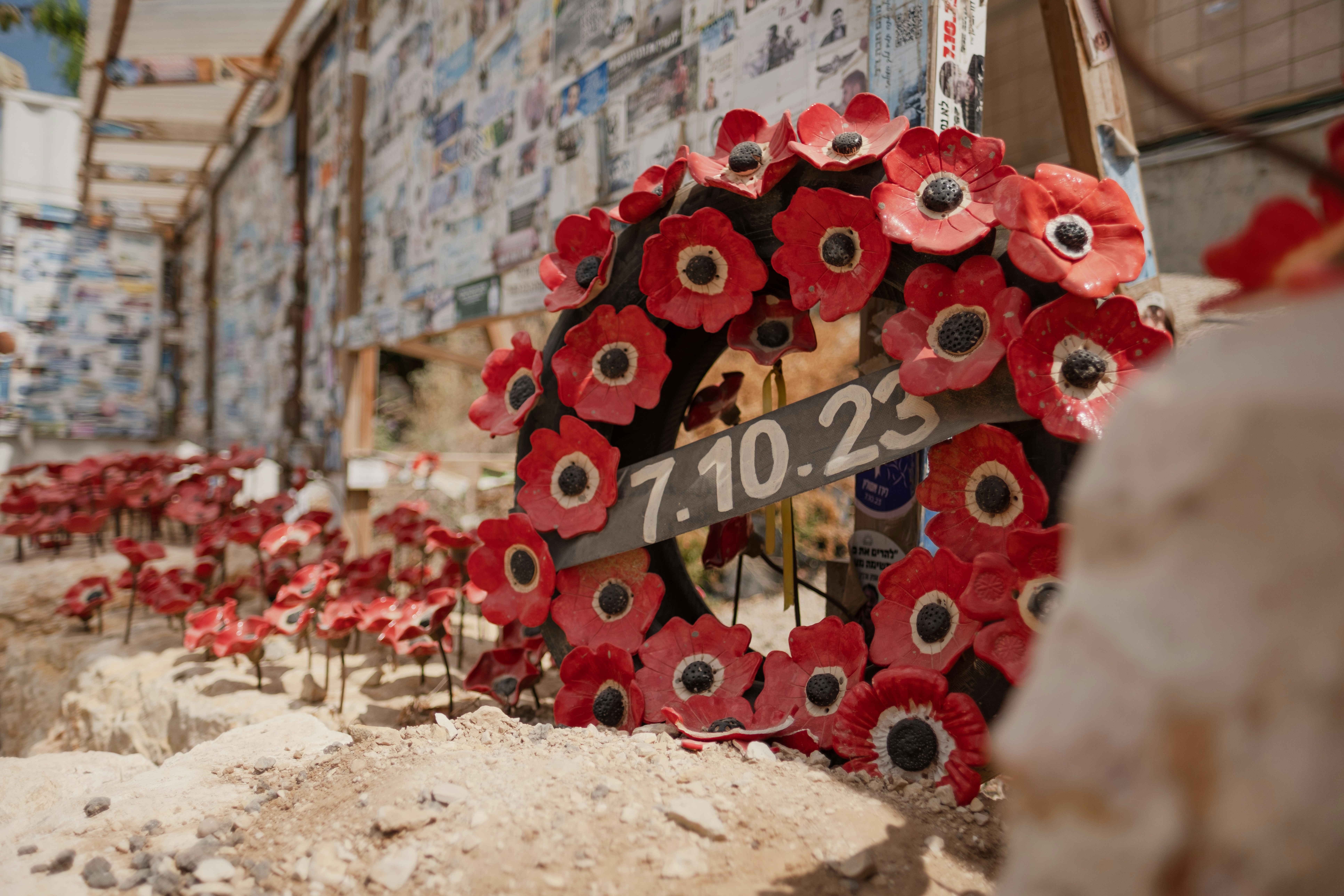
Rosh Hashanah, the Jewish New Year, begins at sundown tonight. This year, it falls at the same time as the 25th anniversary of the September 11th attacks and weeks before the third anniversary of the October 7th attacks, offering an opportunity for reflection that extends beyond the past year. I’ve written about when I first learned about the Hamas terror attacks on October 7th, but not about 9/11.
On September 11, 2001, I was working at my desk at home when messages about a plane hitting the World Trade Center popped up on an Internet law email list. I had moved to Ottawa from the New York City area a few years earlier and immediately rushed to turn on the television for what would become hours of panic and fear. My particular focus was a friend who worked at the Twin Towers. Marc Zeplin, whom I had known for years before I moved to New York, worked at Cantor Fitzgerald on the 104th floor of the north tower, a few floors above where the first plane hit. He was 33, with a wife and two young sons. Several weeks later, I would fly back to New York for a memorial service.
What I remember about the weeks that followed is not the confusion and dread of the first hours but the speed with which three principles were emphasized: that this was an act of terrorism and hatred that was called out clearly rather than contextualized away, that we needed to be careful to ensure that a community or religion did not bear collective responsibility for the actions of terrorists or foreign governments, and that confronting terrorism and its associated harms required legal reforms that did not sacrifice fundamental rights in the process. Yet reflecting back on 9/11 and the response that followed, I am struck by how these principles have seemingly gone missing since October 7th.
Nobody spent much time in 2001 debating whether 9/11 was terrorism, an issue that recently resurfaced when a leaked memo revealed that the CBC instructed its journalists not to describe the attacks as terror attacks. The CBC changed its policy guidance, but the reticence that now attaches to even 9/11 has shaped coverage of the October 7th attacks and the accompanying rise of antisemitism. Within a week of the 9/11 attack, Hezbollah’s Al-Manar broadcast a false claim that 4,000 Jews or Israelis had been warned to stay home from the World Trade Center. That report circulated for years but largely stayed on the fringes, with no supportive statements from student unions and faculty associations or endorsements from mainstream institutions. October 7th was far different. CUPE Ontario president Fred Hahn posted the day after the attacks that he was thankful that “resistance is fruitful.” The York Federation of Students and two other York student unions described the attack five days later as “a strong act of resistance” against “so-called Israel.” Specific atrocities were disputed, false-flag disinformation circulated, hostage posters ripped down, and reports of sexual violence met with weeks of silence from organizations that purport to speak for victims. Those trends continue to this day. As I wrote in October 2024, antisemitism no longer shocks, and as the replies to my writing on the subject have shown, the denial now extends beyond the events of October 7th to the sharp increase in antisemitism that followed.
The 9/11 attacks also sparked fear in September 2001 that the Muslim community would be blamed for the attacks. Indeed, FBI data recorded 481 anti-Muslim hate crimes in 2001, up from 28 the year before. Yet political leaders responded immediately as President George W. Bush visited the Islamic Center of Washington days after the attacks in a show of solidarity. In Canada, Prime Minister Jean Chrétien visited an Ottawa mosque later that month to say he was ashamed of the attacks directed at Canadian Muslims. Leaders did not hesitate to speak out, yet since the October 7th attacks, leadership has given way to a silence that is impossible to ignore. Synagogues, Jewish schools, community centres, and businesses have been targeted as proxies for a foreign state. This post will likely draw the familiar hateful replies insisting that it is not antisemitism to hold Jewish institutions and individuals answerable for the decisions of a government in another country. They are wrong. As I wrote last year about being Jewish in Canada, the effect of that targeting has been to push people toward hiding their identity and building larger walls. This weekend it will mean High Holiday services with security measures that few other communities face.
The third principle on balancing security and civil liberties was the hardest to navigate. The USA Patriot Act passed within weeks, Canada’s Anti-terrorism Act received royal assent in December 2001, and the lawful access debate, which used anti-terrorism measures as justification, is still ongoing, now as Bill C-22. I have spent years focused on civil liberties in these debates, but the argument was fundamentally about how to address real harms without sacrificing essential freedoms. Rather than engaging in that debate, too many today deny the harms that come from the weak responses to antisemitism, lax enforcement of campus policies, or amplification of harmful content.
Twenty-five years after 9/11, the consequences of the attacks remain part of our daily lives, visible in border controls and surveillance law. But responsible institutions never seriously disputed the basic facts of the attack. Rosh Hashanah is a time for accounting, and the accounting this year is that the principles that were essential in responding to the 9/11 attacks have not been extended to the Jewish community in the years since October 7th as evidenced by the prominent police presence I will pass through in order to attend synagogue services this weekend. Shana Tova.





Bruh, this is such selectively remembered horse shit.
Your claim that leaders all condemned anti-muslim rhetoric is absolute fucking nonsense. This is literally when the public started becoming aware of the term dog-whistle, because every conservative was running anti-muslim dog whistles campaigns.
Hell Stephen Harper campaigned against Trudeau with a scary Muslim hotline, and that was like 10+ years after 9/11, and Muslim people still fae discrimination to this day because of 9/11.
You also fail to mention that the government response to 9/11 was to start a forever war that couldn’t be finished that killed 10s of thousands of people before just ending and accomplishing nothing… I wonder what the sounds like?
Your previous post also conveniently and repeatedly claim that anti-Semitism has nothing to do with the actions of the Israeli government, yet governments and Jewish organizations all over the world have explicitly called out the GENOCIDAL acts committed by the IDF as the direct cause of the current trend of rising anti-Semitism.
It is not deflection to identify a root cause of hatred.
Hmmm …. 9/11 was a terrorist attack whole October 7th was a prison break. Go fuck yourself Geist you rabid Zionist bigot.
One day, I was looking for a reliable way to explore payment providers for my business. After comparing several websites, I discovered PayAtlas and decided to take a closer look.
Dear Michael,
As someone deeply concerned about antisemitism and hatemongering, I find your continuous barrage of misleading commentary contemptible. For someone in your position to abuse language and unfounded claims in this manner, you not only bring shame to your profession, but delegitimise yourself.
What makes this piece especially objectionable is the method: you take genuine antisemitism, personal bereavement, the horror of 9/11, and the violence of October 7, and then use them as emotional leverage for propositions they do not prove.
You erase distinctions that a lawyer should regard as elementary: between violence and speech, hatred of Jews and criticism of Israel, collective blame and institutional accountability, factual dispute and denialism, protest and intimidation. Then you just give yourself licence to bundle the resulting confusion under the single heading of antisemitism.
Shame on you.
That is not argument; it is category manipulation. Worse, you invoke the obvious principle that Jews must not be held collectively responsible for the acts of a state while showing remarkably little concern for the inverse principle: that Palestinians are not a population to be punished, displaced, starved, bombed, imprisoned, or made answerable for the acts of others.
Nor do you seriously confront the danger posed by an Israeli state that repeatedly presents itself as acting in the name of Jews everywhere, thereby attempting to fuse Jewish identity with state policy while its defenders condemn others for noticing the connection it itself insists upon. Meanwhile, the daily killing, dispossession and degradation of Palestinians, together with the wider devastation visited upon Lebanese, Syrians, Iranians, Yemenis, Iraqis, Kurds and others, barely registers in your moral accounting except as background noise.
How morally bankrupt and terrified must you be to simply repeat hasbara in every manipulative post you make here and on social media?
Your concern is meticulously individualized when the victims are Jews and conspicuously abstract when the victims are Arabs, Muslims or others caught beneath military power. You are perfectly entitled (I would even say, obliged) to condemn antisemitic threats, vandalism and violence wherever they occur. We all are.
But what you are not entitled to do, at least not without forfeiting intellectual credibility (which granted, you have already abandoned) is to convert those crimes into a rhetorical instrument for stigmatizing dissent and protecting a state’s conduct from scrutiny. You have pushed the already discredited IHRA definition and various manner of sloppy zionist exculpatory propaganda.
For a public figure whose credibility depends on not just accuracy but precision, your leaning on emotional manipulation and strawman arguments is not what I would call “disciplined use of language”. This is not merely a bad argument. It is an abuse of the very standards from which your credibility is supposed to derive. You should be ashamed of having published this, and every other post that increases the anxiety and fear of victims everywhere.
Geist is the proverbial canary in the coal mine but not in the way he thinks. He exposes the deep seated intellectual rot and moral hypocrisy that is present within the Zionist mind. Jewish people that choose to stand with a genocidal apartheid state because it is “Jewish” do both themselves and the Jewish community a disservice.
No amount of Hasbara will overcome the stench of the Gaza genocide. Geist is just another small minded bigot pretending to be something else.
Reading your article and these comments I understand the fear and grief behind what you have written, and I do not doubt that antisemitism is real and deserves to be confronted wherever it appears. I also see that people make a huge distinction between the pain they feel as different types of victims.
I think that people also feel that you could be using your considerable platform less to deepen fear and suspicion, and more to help people distinguish between Jews and the actions of the Israeli state, between criticism and hatred, and between legitimate security concerns and the political use of collective trauma. There is already more than enough suffering, mistrust and dehumanization across this region and beyond. What is needed from people with influence is not another argument that hardens those positions, but language that lowers the temperature, defends the humanity of Palestinians and Israelis alike, rejects antisemitism and anti-Muslim hatred with equal seriousness, and helps people imagine peace rather than perpetual fear. You have the ability to contribute to that kind of conversation, and I sincerely hope you choose to.
Shana tova.
Some thoughtful comments above, I’d throw in that it’s quite a stretch to blame protesters for the conflation of religious Judaism with the violent crypto-nationalism of (let’s just call it) the Likud Coalition, when that very conflation has been a primary and consistent ideological project of the regime and the various AIPAC style diaspora political machines, ever since they achieved their electoral and international hegemony. It has been the historic goal and largely the current triumph of Bibi and the Gang to have Jewish people presumptively identified as their collaborators, and any objection presumptively “anti-semitic”. That perfidious conflation is not the fault of campus or street level protesters, but is an own goal by Israel for the world’s real anti-semites.
One day, I was looking for a reliable way to explore payment providers for my business. After comparing several websites, I discovered PayAtlas and decided to take a closer look.
Really well said. It’s crazy how fast people forgot the simple rule that you don’t blame local communities for stuff happening overseas. Really appreciate you speaking out on this.
It’s hard to read about your friend Marc and the memorial service. The point about how quickly leaders spoke out after 9/11 compared to now really stuck with me. Wishing you a meaningful Rosh Hashanah.