
The United States-Mexico-Canada Agreement (USMCA) is more than just an updated version of the North American Free Trade Agreement. With the inclusion of a digital trade chapter, the deal sets a new standard for e-commerce that seems likely to proliferate in similar agreements around the world. My Washington Post op-ed notes that negotiators have touted the benefits of addressing modern forms of commerce, but the reality is that the USMCA digital trade chapter raises many concerns, locking in rules that will hamstring online policies for decades by restricting privacy safeguards and hampering efforts to establish new regulation in the digital environment.

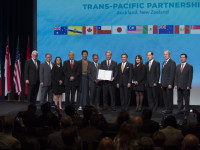
Cooperation in the Pacific Rim by Jakob Polacsek, World Economic Forum (CC BY-NC-SA 2.0) https://www.flickr.com/photos/worldeconomicforum/48179628441
Digital Trade
Data Rules in Modern Trade Agreements: The Video
Earlier this month, CIGI posted my essay contribution to its series on data governance in the digital age. Data Rules in Modern Trade Agreements: Toward Reconciling an Open Internet with Privacy and Security Safeguards focuses on the policy challenges associated with including data provisions in trade agreements such as the TPP and NAFTA. I also sat down with CIGI for a short video on the essay. It is embedded below.
Canada Releases Most of the Updated TPP Text…But the Side Letters Are Still Missing
The Canadian government and other TPP partners released the text of most of the CPTPP yesterday. The release contained few surprises as the TPP remains intact and a new annex identifies the suspended provisions. The list of suspended provisions was revealed several months ago and is particularly notable for the suspension of IP provisions such as copyright term extension, patent term adjustment, technological protection measures, biologics protection, and Internet safe harbour rules.
Don’t Make the TPP Mistake Again: Why Canada Needs to Maintain a Progressive Approach on IP in NAFTA
The intellectual property chapter has not been a focal point of the NAFTA negotiations this week in Montreal, but the successful conclusion of the TPP11 (or CPTPP) serves as a reminder that it is likely to emerge as a contentious issue in the months ahead. The U.S. position on the NAFTA IP chapter is clear: it wants to replicate the original TPP IP chapter. Yet Canada now stands opposed to that chapter having backed the suspension of many of its provisions including copyright term extension, digital locks, notice-and-takedown, patent protections, biologics protections, and pharmaceutical plan rules. In fact, Prime Minister Justin Trudeau this week cited changes to the IP provisions as one example of how the government worked to make the TPP more progressive.
When Consultations Count: Why the TPP is a Reminder of the Value of Speaking Out
In June 2016, I appeared at one of the government’s public town hall meetings on the TPP. Alongside then-International Trade Minister Chrystia Freeland (now Global Affairs minister), C.D. Howe’s Daniel Schwanen, and Unifor’s Jerry Dias, I had the chance to raise concerns with the TPP’s IP and e-commerce provisions and then hear from dozens of people who raised a wide range of issues. The town hall was part of a broad public consultation that was frequently derided by critics as a stalling tactic, yet the impact of the consultation was felt with yesterday’s announcement of a deal on a slightly re-worked TPP that includes suspension of many of the most controversial IP provisions.