Australia has launched a new copyright consultation on private copying of films and photos to determine whether its current list of exceptions could be expanded.
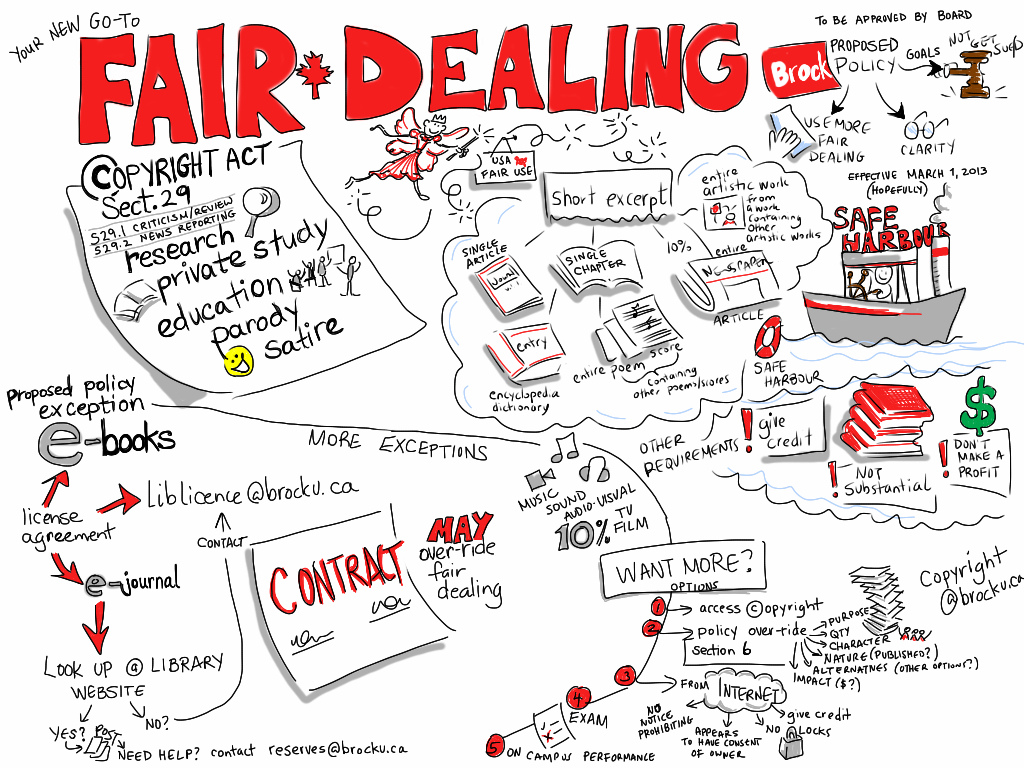
Fair Dealing by Giulia Forsythe (CC BY-NC-SA 2.0) https://flic.kr/p/dRkXwP
Copyright
Fair Copyright for Canada Local Chapters Grow Again
Add Kitchener-Waterloo and York Region to the list of chapters.
The CCC on Copyright Reform
The Creators' Copyright Coalition is out this morning with its position on copyright reform. The CCC includes many large creator associations and copyright collectives. Though there are some notable exceptions – the Canadian Music Creators Coalition, Appropriation Art, and the Documentary Organization of Canada to name three – there are some important voices here.
While the government's focus on copyright reform has centred on new technologies, the CCC's position paper seems to focus primarily on non-digital issues. Indeed, the CCC is clearly troubled by the growing concern from users (it talks of "the tendency to privilege users") and of the Supreme Court of Canada's emphasis on balancing copyright (it laments that users are "now officially part of an on-going process of striking a 'necessary balance'"). The position paper sets out to scale back user concerns by dropping the SCC's balance objective to one where the "Copyright Act's main objective is to protect the moral and economic rights of creators." Moreover, it seeks to limit the fair dealing provision, by specifically excluding any commercial purposes from within its ambit.
In addition to shifting away from a copyright balance, the CCC looks at copyright reform primarily as the opportunity to introduce new rights and fees. In particular:
Two Copyright Columns To Start the Week
I have two copyright-related columns out this morning. The first, Fair Copyright Provides Prentice With Reform Roadmap, appears in the Hill Times (HT version, homepage version). The column raises the same fair copyright proposals that I posted last week. The second, Copyright Reform a Potential Threat to Privacy, is my […]

Michael Geist on Substack
Recent Posts
The Law Bytes Podcast, Episode 282: Udbhav Tiwari on Why Signal May Exit Canada Over Bill C-22’s Encryption and Metadata Retention Rules

From Making Web Giants Pay to Paying Media Giants: Budget 2026 Replaces the Government’s Internet Platform Strategy With $1.5 Billion in Taxpayer Dollars for Culture and News
Has the Government Read Its Own Bill? What Three Days of House Debate Revealed About Bill C-34 Before the Committee Hearings Begin
Surveillance By Design: Government Officials Say Lawful Access Could Reach Gaming Platforms, Daycares and AI Services

Canada’s First Digital Trade Agreement: Why the Canada-EU Deal Will Likely Follow Europe’s Template and What That Means for Canadian Digital Law