
French President Emmanuel Macron has been the global leader in promoting a ban on social media for kids, consistently welcoming countries that propose such measures with a “thanks for joining the movement” tweet. That includes Canada, which received its congratulatory tweet after a ban was included in Bill C-34. As I argued last month, however, I believe the Canadian ban is vulnerable to constitutional challenge on at least two fronts: freedom of expression, since blocking an entire cohort of Canadians from accessing information and expressing themselves on social media infringes Section 2(b) of the Charter, and privacy, since enforcing the ban will require millions of Canadians to verify their age to use social media services with the promised safeguards nowhere in place when the ban takes effect. Last week, France became the first major jurisdiction to have such a ban reviewed by its highest constitutional court, and it proceeded to strike down the law on substantially the same two constitutional concerns.

Wiertz Sebastien - Privacy by Sebastien Wiertz (CC BY 2.0) https://flic.kr/p/ahk6nh
Privacy
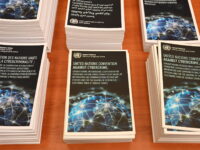
The Law Bytes Podcast, Episode 277: Kate Robertson on the Risks That Lie Behind Canada’s Unexpected Signing of the UN Cybercrime Convention
The Canadian government’s surprise decision to sign the UN Cybercrime Convention has sparked many questions about the convention, its risks, and what changed over the past nine months between Canada no-showing the signing in Vietnam and this month’s reversal. To help answer those questions, there is no one better than Kate Robertson, a senior research associate at the Citizen Lab, who has been vocal on the convention since negotiations began years ago. She joins the Law Bytes podcast to discuss her concerns and how the Convention fits within the broader global political and policing frameworks.

Rushing Lawful Access Backfires: Wyden Letter on Bill C-22 Highlights Political, Trade and Business Risks
Public Safety Minister Gary Anandasangaree and the government presumably hoped that pushing Bill C-22 through a House of Commons committee past midnight without debate or a recorded vote would put an end to the lawful access controversy. A new letter from U.S. Senator Ron Wyden, the ranking Democrat on the Senate Finance Committee that holds jurisdiction over trade, suggests the opposite. The letter, released last week, calls on the U.S. administration to treat Canada’s lawful access plans as a counterintelligence threat, to use the CLOUD Act negotiations as leverage, and to take regulatory steps to insulate American officials from surveillance demands directed at U.S. companies. Coming just weeks after House Judiciary Committee chair Jim Jordan and House Foreign Affairs Committee chair Brian Mast warned that the bill harms U.S. national security and economic interests, the letter confirms that Bill C-22 has become a bilateral irritant with the potential to emerge as a full-blown trade issue. Given the latest threats of new tariffs, lawful access could add yet another complication in the increasingly fraught trade relationship.

The Law Bytes Podcast, Episode 275: David Loukidelis on Why Stripping Privacy Enforcement from Canada’s Privacy Commissioner in Bill C-36 is Unnecessarily Risky Policy
he government’s privacy reform bill was supposed to earn applause for its effort to modernize outdated rules and provide Canadians with stronger privacy protections. Yet the decision to strip the Privacy Commissioner of Canada of responsibility for private-sector privacy law and shift that responsibility to the Digital Safety Commission has sparked widespread concern among Canadian privacy experts.
This week’s Law Bytes podcast features David Loukidelis, one of Canada’s best-regarded former privacy commissioners. Loukidelis served as BC’s Information and Privacy Commissioner from 1999 to 2010, where he was responsible for the enforcement of BC’s Freedom of Information and Protection of Privacy Act and Personal Information Protection Act, which came into force in 2004. He joins me on the podcast to share his thoughts on the enforcement changes in the bill and what it may mean for privacy in Canada.

The Data on Australia’s Social Media Ban: The Better the Privacy Protection, The Less Effective the Ban
As regular readers know, the Canadian plan to establish a social media ban for under 16s in Bill C-34 is based largely on the Australian model that took effect last December. With more data on the ban’s effectiveness continuing to roll in, multiple studies now confirm that it simply hasn’t worked as the majority of under-age users still have access to social media accounts. Yet rather than treating that as a reason to reconsider the model, Australian Prime Minister Anthony Albanese told Parliament in late June that his government is working “as a priority” to strengthen the law. The failure highlights a troubling correlation: the better the privacy protection, the less effective the ban. In other words, since users will find ways to circumvent the ban, “strengthening” the law likely means less privacy and more surveillance.

Recent Posts
 The Law Bytes Podcast, Episode 279: My Keynote on Digital Sovereignty: Control, Choice, and Connection
  The What, Me Worry? Consultation: Media Quietly Tells Government It Wants Even More Funding With Little Concern for Independence Risks
  Years of Uncertainty: Bill C-22’s Missing Regulations and Secret Ministerial Orders
  The Missing Charter Statement: Why Hasn’t the Government Explained How Bill C-34’s Social Media Ban Complies with the Charter?
  Three Years After October 7th: Living With the Shockwaves
