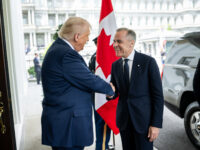
Less than two hours before new U.S. tariffs on Canada were set to take effect, U.S. President Trump last night announced a three-day pause, claiming there is a deal “subject to the finalization of documents.” Prime Minister Carney released a statement saying that substantial progress had been made, without offering much detail. But a congratulatory tweet from the U.S. Trade Representative offered one clue with significant implications for Canadian digital policy: the deal will include “digital trade alignment.” What might that mean? This post considers some of the possibilities.
Post Tagged with: "digital trade"

The Law Bytes Podcast, Episode 113: The Year in Canadian Digital Law and Policy
The past year has been an incredibly active one for Canadian digital law and policy with legislative battles over Bill C-10, controversial consultations on online harms and copyright, important Supreme Court decisions, new digital taxes, and an emerging trade battle with the United States. For this final Law Bytes podcast of 2021, I go solo without a guest to talk about the most significant trends and developments in Canadian digital policy from the past year and to think a bit about what may lie ahead next year.
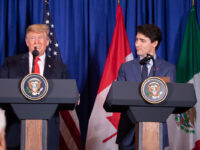
The BTLR and USMCA, Part One: Why the Broadcast Panel Recommendations Conflict With Canada’s Emerging Trade Obligations
Since the release of the Broadcast and Telecommunications Legislative Review Panel report late last month, I’ve posted on several key issues including an overview of concerns, news regulation, Canadian Heritage Minister Guilbeault’s comments, net neutrality, discoverability claims, consumer costs, and a podcast debate with panel chair Janet Yale. The blog now shifts for the next two days on trade-related concerns arising from the report’s recommendations. This issue is particularly timely since the House of Commons has been debating Bill C-4, the implementation bill for the US-Canada-Mexico (USMCA) Trade Agreement and the government had made treaty implementation one of its top legislative priorities.

Setting the Standard?: How the USMCA Quietly Reshapes Global Digital Trade Agreements
The United States-Mexico-Canada Agreement (USMCA) is more than just an updated version of the North American Free Trade Agreement. With the inclusion of a digital trade chapter, the deal sets a new standard for e-commerce that seems likely to proliferate in similar agreements around the world. My Washington Post op-ed notes that negotiators have touted the benefits of addressing modern forms of commerce, but the reality is that the USMCA digital trade chapter raises many concerns, locking in rules that will hamstring online policies for decades by restricting privacy safeguards and hampering efforts to establish new regulation in the digital environment.

Canada’s Lead Negotiator Confirms Government Seeking Net Neutrality Safeguards in NAFTA
Steve Verheul, Canada’s lead NAFTA negotiator, appeared before the Standing Committee on International Trade earlier this week to provide an update on the negotiations. In addition to confirming Canada’s commitment to a cultural exception (Verheul acknowledged that the U.S. “has not reacted positively”), Verheul was asked about the digital trade chapter. He indicated that there has been significant progress on issues such as online consumer protection and privacy. He also touched on two other issues: one a Canadian ask and the other a U.S. priority.
From a Canadian perspective, Verheul said that Canada wants a net neutrality provision included in NAFTA, noting:

Recent Posts
 Digital Trade Alignment: What May Be in Play in the Canada-U.S. Trade Deal
  TMU Picks Damage Control Over Fixing the Damage: Behind Its Shameful Response to the Devastating Benotto Report on Campus Antisemitism
  Thanks For Joining the Movement: French Constitutional Council Strikes Down Kids’ Social Media Ban
  Denial, Hate, and Silence: The Three Responses to Overwhelming Evidence of Canada’s Campus Antisemitism Crisis
  The Law Bytes Podcast, Episode 278: Ben Waldman on Gander Social and the Challenges of Building a Sovereign Social Network
