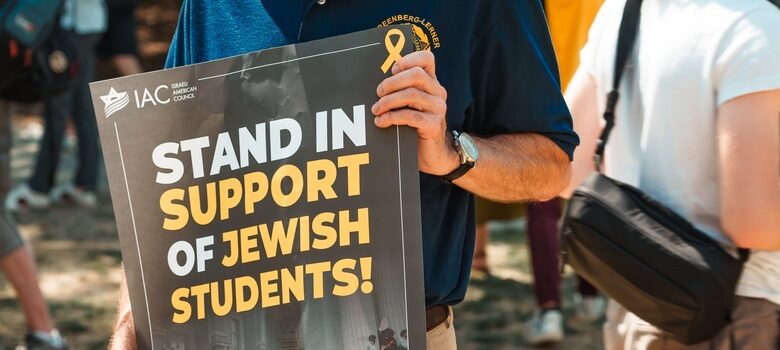
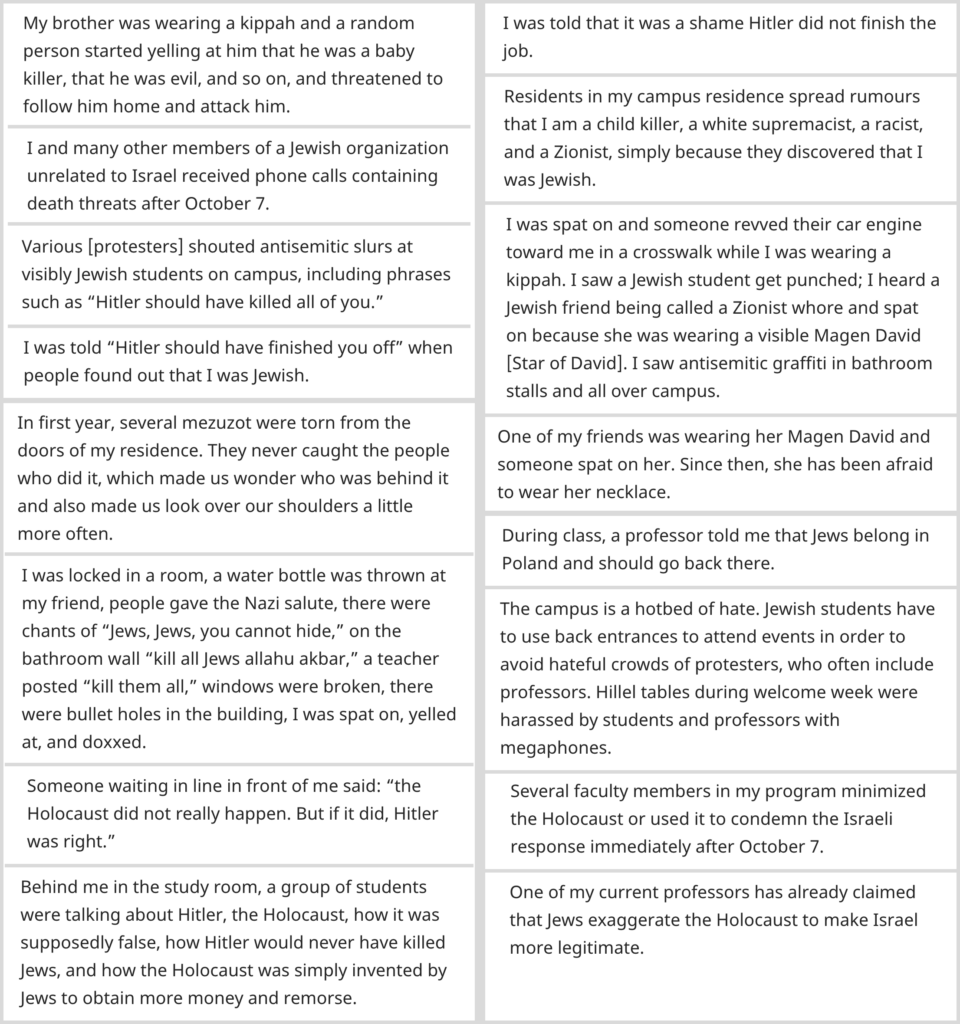
One week ago, the release of the Campus Antisemitism and Student Experiences (CASE) report provided the most comprehensive national data to date on antisemitism on Canadian university campuses. As I wrote in my post on it, there is a crisis: of the more than 900 Jewish students surveyed, 95.7% experienced or witnessed antisemitism over the previous year, 72% limit what they say in class, 57% avoid wearing Jewish symbols, and roughly one-quarter have considered dropping out. That data is in addition to the more than 1,200 open-ended student accounts that deliver the gut punch: a professor telling a class that “Jews belong in Poland and should go back there,” widespread Holocaust denial, and physical and verbal threats targeting Jewish students. The samples posted below give a sense of the responses.
In the week since the report’s release, the reaction has taken three forms: denial, hate, and silence. Each demonstrates the report’s central conclusion that campus antisemitism has become normalized and systemic.
The first response is denial, with some groups claiming the survey is unrepresentative, its methodology flawed, and that it conflates Jewish identity with Zionism. The objections do not withstand scrutiny. The survey’s community-recruited, non-probability approach is the standard methodology for researching discrimination against small, hard-to-reach populations. Indeed, it served as the methodology for surveys on 2SLGBTQ youth, urban Indigenous health studies, anti-Asian racism data, and trans communities. Governments have used the resulting data for policy development and treated that research as a basis for action.
Moreover, while relying on the IHRA definition is precisely what a study backed by a government that has itself adopted that definition should do, the findings do not depend on definitions. Set aside every Israel and Zionism-related item in the survey and the data still shows 56% of Jewish students witnessing discriminatory treatment of Jews as Jews, 54% witnessing intimidation or threats, 22% witnessing physical violence, and 45% regularly encountering Holocaust denial. No definition is required to classify “Hitler should have finished you off”, “the Holocaust did not really happen”, or “Jews, Jews, you cannot hide.” Critics themselves concede that the report documents “unmistakable antisemitism,” but are left to quibble at the edges by debating definitions rather than confronting what the data shows.
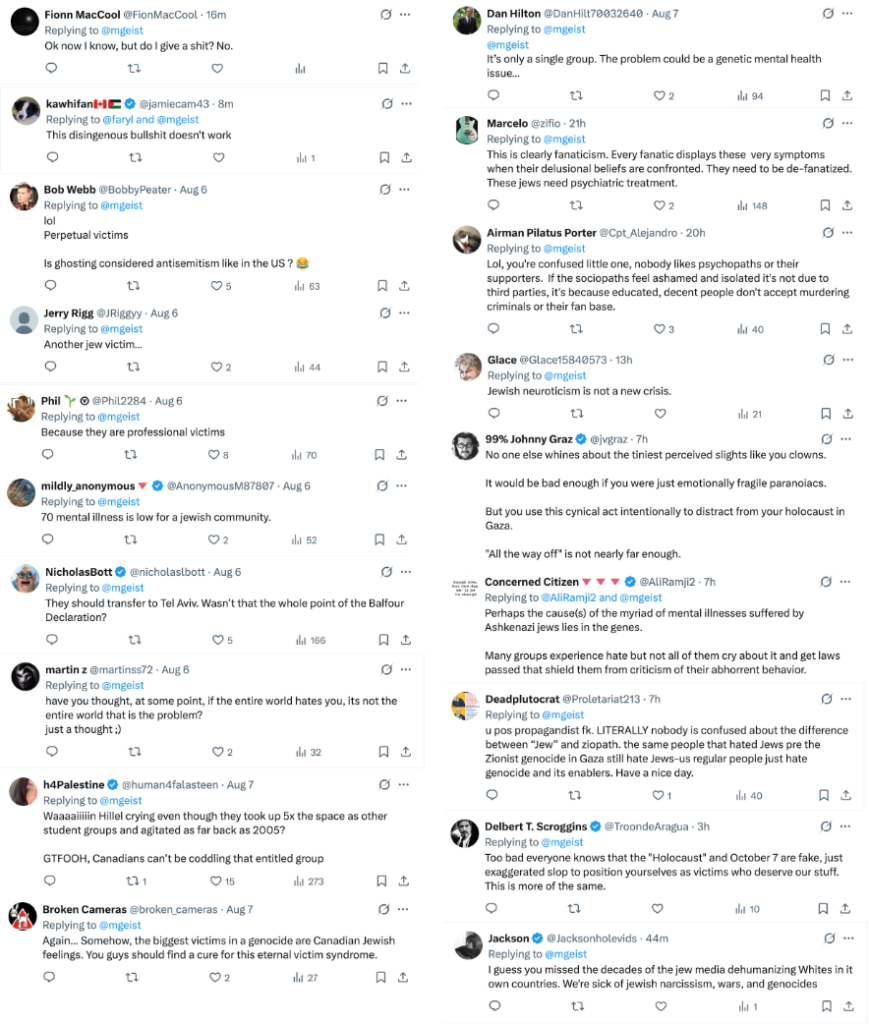
The second response is hate. Once again, my posts about the survey attracted replies on my social media that read like a live enactment of the report’s findings, validating a national dataset in real time. The survey found that 45% of Jewish students regularly encounter Holocaust denial or distortion; the replies included the claim that the Holocaust is “fake, just exaggerated slop to position yourselves as victims.” The survey found that more than 70% of Jewish students report harm to their mental health; the replies mocked that finding with comments about “mental illnesses suffered by Ashkenazi jews” lying “in the genes.” The survey documented students hiding their identity and considering leaving their universities; the replies suggested Jewish students “should transfer to Tel Aviv” and dismissed them as “professional victims.”
The most important response, however, was the non-response or silence from those who must act. One week after a government-backed report found that 70% of Jewish students believe their universities do not take antisemitism seriously, I could find no responses from university presidents [update: Universities Canada statement here]. Political leaders have been little better: Culture Minister Marc Miller called the findings “alarming”, but a broader response or sense of urgency from governments has been missing. The Advisory Council on Rights, Equality and Inclusion, which serves as the government’s replacement for the Special Envoy on Preserving Holocaust Remembrance and Combatting Antisemitism (who commissioned the CASE report), continues to signal that it is not a serious effort to combat antisemitism. At the report’s release, Council member and former senator Marc Gold read the Minister’s statement, declined to respond to criticism of the government’s approach, and described the council’s progress as: “we’re getting to know each other and we are providing input into a work plan.” The house is on fire and they are getting to know each other.
Simply put, silence is not neutral, as it confirms students’ worst fears and risks making them even more skeptical about reporting their experiences. The NECA recommendations released alongside the report provide a ready-made starting point, beginning with enforcing the policies universities already have. With the fall term just weeks away, no university leader can claim to be unaware of what returning Jewish students face.
The report’s findings were overwhelming, and so is what the past week has revealed. The deniers cannot bring themselves to accept what the data shows, the haters keep demonstrating it, and the institutions with the power to act have said nothing at all. It is time for a fourth response: action.







Michael,
Will you answer the call to end antisemitism by stopping the conflation of Judaism and Zionism (despite protests from the CIJA, Evangelicals, the IHRA, etc.) and bringing an end to the unceasing, abhorrent violence perpetrated by the Zionist state?
If not, I’m afraid you’re part of the problem.
He is part of the problem and the fact that he gets tapped for a report on Jewish issues when he (and several of the authors) are known Zionist racists shows the sad state of affairs in this country.
https://www.reversecanarymission.org/person/michael-geist
How shocking – but not at all surprising – that the first two comments here by antisemites prove the authors thesis.
You mislabel anti genocide as anti Semitism because got are a Zionist bigot. How repulsive you are.
Pingback: Michael Geist | peckford42
I am from Vancouver and i want to say: I have heard about lots of Palestinian Students been condemned and in some cases dismissed from University for supporting Palestine. I have never heard of any incidents of Antisemitic attacks against Jewish Students at Canadian Universities.
So i have come to the conclusion that it is a lie that these is a rise in Antisemitic attacks on Jewish Students at Canadian Universities.