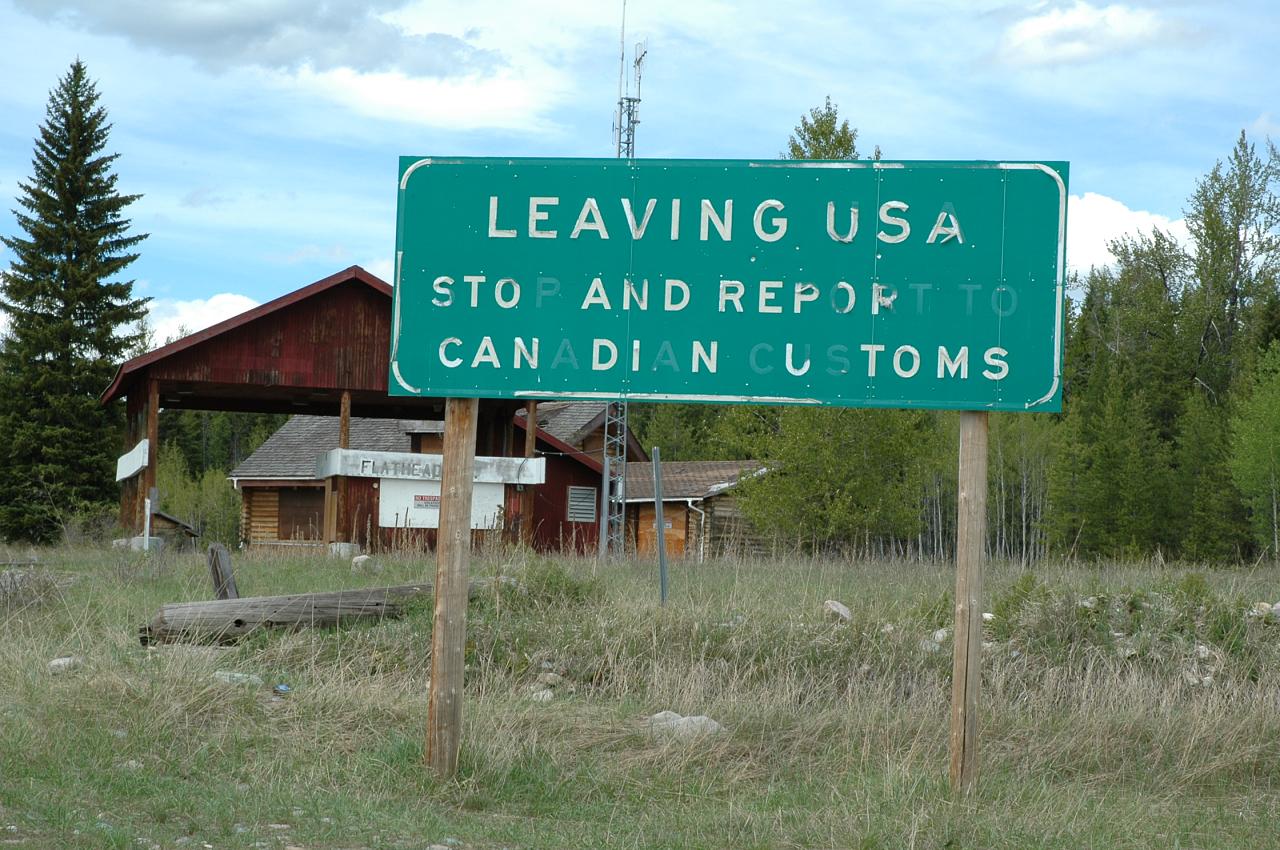
Abandoned border by mtsrs (CC BY 2.0) https://flic.kr/p/49aR7g
Jurisdiction

The Equustek Effect: How One Case Has Sparked Canada’s Aggressive Approach Over Internet Jurisdiction
Equustek Solutions v. Google Inc., a case that originated in British Columbia, Canada, in 2014, captured international attention as one of the first internet jurisdiction cases to be considered by a nation’s highest court. My CIGI Policy Brief notes that since then, the case has emerged as a cautionary tale about increasingly aggressive legal approaches with respect to the Internet, with significant implications for online governance.

B.C. Court Leaves Google Global Takedown Order Intact Pending Full Trial
A British Columbia court has denied Google’s request to vary an injunction requiring it to remove search results from its global index, concluding that a U.S. ruling that did not demonstrate that the removal would result in a violation of U.S. law. The Google v. Equustek case has attracted international attention with the Supreme Court of Canada upholding a global takedown order. That decision noted that it was open to Google to raise potential conflict of laws with the B.C. court in the hopes of varying the order:

Back to B.C.: Court Re-examines Google Takedown Order In Light of U.S. Ruling
Last year’s Supreme Court of Canada Google v. Equustek case, which upheld a B.C. court’s global takedown order, continues to play out in the courts. The Supreme Court decision noted that it was open to Google to raise potential conflict of laws with the B.C. court in the hopes of varying the order:
If Google has evidence that complying with such an injunction would require it to violate the laws of another jurisdiction, including interfering with freedom of expression, it is always free to apply to the British Columbia courts to vary the interlocutory order accordingly.

U.S. Judge Rules Canadian Court Order “Threatens Free Speech on the Global Internet”
A U.S. federal court has issued a preliminary injunction blocking enforcement of a Canadian court order requiring Google to remove search results on a global basis. Google filed suit in U.S. court in the aftermath of a Supreme Court of Canada decision upholding a B.C. court’s global takedown order. The Supreme Court decision noted that it was open to Google to raise potential conflict of laws with the B.C. court in the hopes of varying the order:
If Google has evidence that complying with such an injunction would require it to violate the laws of another jurisdiction, including interfering with freedom of expression, it is always free to apply to the British Columbia courts to vary the interlocutory order accordingly.

Google Files Suit in U.S. Court To Block Enforcement of Canadian Global Takedown Order
Last month’s Supreme Court of Canada decision upholding a global takedown order requiring Google to remove search results on an international basis sparked widespread concern from civil liberties and digital rights groups who fear the implications for freedom of expression online (the case was celebrated by IP rights groups who now envision using Canada as the base for global takedowns). My initial post on the decision argued that the Court had failed to grapple with the elephant in the room, namely the broader implications of global takedowns and the likelihood of conflicts:
The Supreme Court of Canada did not address the broader implications of the decision, content to limit its reasoning to the need to address the harm being sustained by a Canadian company, the limited harm or burden to Google, and the ease with which potential conflicts could be addressed by adjusting the global takedown order. In doing so, it invites more global takedowns without requiring those seeking takedowns to identify potential conflicts or assess the implications in other countries.
The prospect of global conflicts has now come to the Equustek case with Google filing suit in a federal court in California asking the court to block enforcement the Canadian order on the grounds that it violates the U.S. constitution and federal laws.

Recent Posts
 You Can’t Put the Toothpaste Back in the Tube: Why the Government’s Reported “Temporary” Plan for a Kids’ Social Media Ban Would Mean Mandated ID for Everyone
  The Law Bytes Podcast, Episode 271: Taking Stock of a Wild Week in Canadian Digital Policy With the Online Streaming Reversal, AI Strategy Release, and Lawful Access Review
  Canadian American Business Council on Bill C-22: It “Threatens Our Bilateral Partnership on Data Security”
  AI for All, Details to Follow: Government Releases a Big-Spending AI Strategy That Is Still Short on the Specifics That Matter
  New Privacy Rights in the Morning, Mandatory Metadata Retention in the Afternoon: How Bill C-22 Undercuts the AI Strategy Before It Launches
