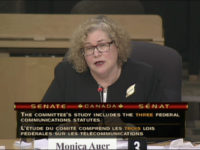
Many Canadians follow telecommunications and broadcast issues at the CRTC from a distance – the cost of wireless services, the speed of their Internet access, the availability of broadcasting choice. Others engage more closely on issues such as net neutrality, Cancon regulation, or Netflix taxes. But there is one Canadian who doesn’t just follow the CRTC. She watches it through the use of access to information laws that present a perspective on the CRTC that would otherwise remain hidden from view. Monica Auer, the Executive Director of the Forum for Research and Policy in Communications, joins the podcast this week to talk about insider access, slow reimbursement of costs for public interest groups, the number of CRTC meetings, and the Commission’s seeming indifference to commissioning original research. The interview is interspersed with comments from current CRTC Ian Scott taken from one of his first public speeches after being named chair in 2017.
Archive for April 30th, 2019

Recent Posts
 Making the Case Against Its Own Bill: What the Government’s Bill C-34 Charter Statement Reveals About the Constitutional Vulnerability of the Social Media Ban
  “Position Has Not Changed”: The Canadian Government Reaffirms That Antisemitism Includes Anti-Zionism
  The Law Bytes Podcast, Episode 279: My Keynote on Digital Sovereignty: Control, Choice, and Connection
  The What, Me Worry? Consultation: Media Quietly Tells Government It Wants Even More Funding With Little Concern for Independence Risks
  Years of Uncertainty: Bill C-22’s Missing Regulations and Secret Ministerial Orders
