Blog
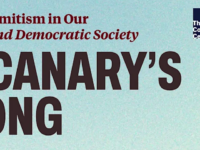
A Canary’s Song: What Antisemitism Reveals About the Health of Canadian Democracy
Peter Biro’s A Canary’s Song: Antisemitism in Our “Free and Democratic Society” conference was held earlier this week at the University of Toronto Conference Centre as the University stepped up after Massey College demanded that it vet the conference Biro had proposed, organized, and committed to fund. Biro resigned his senior fellowship rather than accept the demands, which led to national media coverage and well-deserved criticism of the college. I was honoured to participate in the exceptional event alongside an incredible lineup of experts in a packed, sold-out room.

Elbows Up With Europe Too: Why Canada’s Pivot to the EU Raises the Same Digital Sovereignty Questions as the U.S.
Canada’s pivot to Europe continues to accelerate with Prime Minister Mark Carney’s speech to the European Parliament today, the call for Canada to become the first “associate member” of the EU, negotiations on a Canada-EU Digital Trade Agreement launched earlier this year that could conclude this fall, and an upcoming summit that could bring even further measures. In the wake of the collapse of trade talks between Canada and the U.S., closer relations with the EU are an obvious alternative. While U.S. demands on digital policy (notably the cancellation of the DST and streaming payments) have attracted some criticism in Canada, a European shift is likely to substitute one pressure point for another, with some of the same questions about Canadian digital sovereignty in play. Indeed, the EU has exported its regulatory standards around the world for decades, and trading U.S. “digital trade alignment” for a European digital regulatory model will still raise many of the same “elbows up” questions about whether Canada gets to set its own digital policies.

A Century After Keeping Jewish Students Out, Universities Are Letting Them Be Pushed Out
In 1926, McGill University’s dean of arts, Ira MacKay, urged the university to establish a quota on the admission of Jewish students, writing that “the Jewish people are of no use to us in this country” and that “as a race of men their traditions and practices do not fit in with a high civilization in a very new country.” McGill proceeded to increase admission requirements for Jewish applicants and informally establish quotas for students applying to medicine and law, restrictions that would last for years and be mirrored in other institutions such as the University of Manitoba.
My The Hub op-ed notes the ugliness of naked antisemitism once felt like ancient history in Canada, but as students are heading back to class, new studies and reports have confirmed that a century after open quotas and discrimination, the Jewish experience on campus is once again under threat.

The Lessons of 9/11 We Forgot After October 7th
Rosh Hashanah, the Jewish New Year, begins at sundown tonight. This year, it falls at the same time as the 25th anniversary of the September 11th attacks and weeks before the third anniversary of the October 7th attacks, offering an opportunity for reflection that extends beyond the past year. I’ve written about when I first learned about the Hamas terror attacks on October 7th, but not about 9/11.
On September 11, 2001, I was working at my desk at home when messages about a plane hitting the World Trade Center popped up on an Internet law email list. I had moved to Ottawa from the New York City area a few years earlier and immediately rushed to turn on the television for what would become hours of panic and fear. My particular focus was a friend who worked at the Twin Towers. Marc Zeplin, whom I had known for years before I moved to New York, worked at Cantor Fitzgerald on the 104th floor of the north tower, a few floors above where the first plane hit. He was 33, with a wife and two young sons. Several weeks later, I would fly back to New York for a memorial service.

Named to Canadian Lawyer’s Top 25 Most Influential Lawyers
Canadian Lawyer released its 2026 list of the Top 25 Most Influential Lawyers in Canada yesterday and I am grateful to be included. This is the fourth time I have appeared on the list, but the first since 2013, when the issues of the day were copyright reform and usage-based billing rather than artificial intelligence and online harms. It is a particular pleasure to be joined by my colleague Amy Salyzyn, named for her leadership on legal ethics and AI, giving the University of Ottawa two of the 25.

Recent Posts
 A Canary’s Song: What Antisemitism Reveals About the Health of Canadian Democracy
  Elbows Up With Europe Too: Why Canada’s Pivot to the EU Raises the Same Digital Sovereignty Questions as the U.S.
  A Century After Keeping Jewish Students Out, Universities Are Letting Them Be Pushed Out
  The Lessons of 9/11 We Forgot After October 7th
  Named to Canadian Lawyer’s Top 25 Most Influential Lawyers
