
Kiva’s, the well-known Toronto Jewish bakery, was struck by gunfire and smashed windows in two locations over the weekend. This one is personal as Kiva was my grandmother’s cousin. Both were Holocaust survivors who rebuilt their lives in Toronto, and though he sold the business years ago, the owners have kept his name on the window ever since. Whoever fired at that window almost certainly knew none of this, since for those responsible the Jewish name on the storefront was evidently reason enough.
For me, the sense that the violence keeps landing close to home is not new. The Pride of Israel synagogue, where I grew up and where my parents have been members for decades, was vandalized in 2024, and last summer an elderly Jewish woman was stabbed in a hate-motivated attack at my local Ottawa grocery store, a Loblaws known for carrying the city’s largest selection of kosher food. The attack on Kiva’s makes three incidents with a personal connection, which might seem like a remarkable string of bad luck were it not for the reality that the volume of antisemitic violence in Canada now ensures that many Jewish Canadians can tell a similar story about their synagogue, their school, their grocery store, or their family. For anyone wondering why so many Canadian Jews describe feeling vulnerable and unsafe, that is the answer.
Kiva was part of a generation of survivors who arrived in Canada with little and built new lives on the promise that this was a country where a Jewish name on a storefront was just a name. The bakery became an institution for many in the Jewish community, which is presumably what made it a target. The attackers were not responding to the current owners or to anything they may believe about a foreign conflict, but simply to a Jewish name that has outlived the survivor who gave it.
The national numbers tell the same story. Just last week, Toronto police charged a man with a terrorism offence, with investigators pointing to ties to Hamas, and days later B’nai Brith reported that violent antisemitic incidents in the first half of 2026 had already more than doubled the total for all of 2025. I wrote nearly two years ago that antisemitism in Canada no longer shocks, yet since then the pace of violence has only increased.
The temptation is frequently to call on our leaders to do more, but the attacks came just days after the Combatting Hate Act took effect, which creates new criminal offences that include intimidation and obstruction provisions designed to protect access to places of worship, community schools, and cultural centres. I think Parliament largely got the balance right with the new law, but its approach reflects a model of protection based on identifying the places where Jewish life gathers and building a legal and physical perimeter around them. But a bagel bakery is not a synagogue or community centre, and no realistic security program can place a protective perimeter around every bakery, deli, bookstore, and storefront where Jewish life occurs.
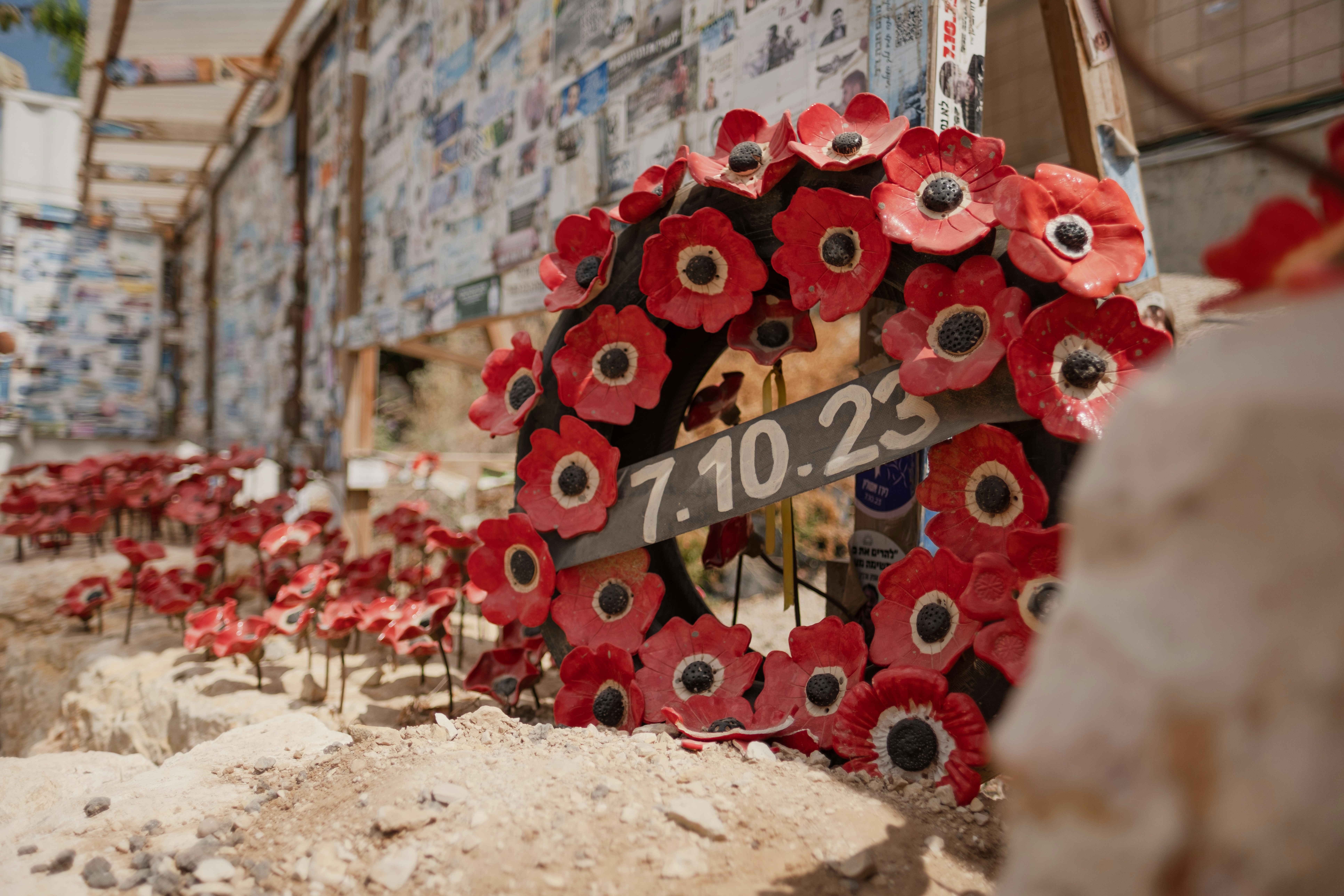
None of this renders the new law, enforcement efforts, or security spending pointless, but it is a reminder that all address symptoms rather than the source. The reluctance to enforce the law and the violence itself have been enabled or worsened by the normalization of antisemitism in Canada since the Hamas terror attack on October 7, 2023. When glorifying terrorism is defended as protest, when targeting Jewish institutions is rationalized as political expression, and when each new attack is met with denial or false flag allegations, the message to the public is that antisemitism can be justified and to police and prosecutors that these cases are best avoided as a “two-sides” debate emerges around antisemitic hate.
Kiva’s generation rebuilt their lives here on the promise that Canada was different, yet the growing fear among Canadian Jews is that it no longer is. Restoring that promise will take more than another statute or security grant, as the violence only stops when antisemitism stops being a hatred that too many Canadians have decided they can live with, ignore, or explain away.





Appalling behaviour in Canada must be corrected,but in Gaza it is acceptable?
Let me get this right, are you saying it is OK to collectively punish Jews in Canada for whatever the state of Israel is doing in Gaza?
Because that is antisemitism.
Let me get this straight, it’s ok for thousands to march with a genocidal apartheid state because Jewish, right?
There is a difference between supporting Netanyahu and simply being Jewish. Do you understand that?
“…”Silence encourages the tormentor, never the tormented…”
“…God has pity on kindergarten children,
He pities school children — less.
But adults he pities not at all…”
It seems innocence, empathy, and compassion diminish as people grow older. Not being Jewish, I can’t in good conscience and self reflection even consider myself as a supporter, for I stand by, while I let someone else stand alone. Michael, your thoughts and opinions carry more weight than you might imagine, thanks for educating and opening peoples eyes, those like myself.
Didn’t the cops say the synagogue shootings were for hire and not hate based motivation? They declined to press hate charges I believe. Paid actions such as this, although vile, do not suggest in any way that Canadian society has become more anti-Semitic or apathetic about Jewish people. That’s just hysterical nonsense. We have a legal system and police that will do all they can do bring the perpetrators to justice.
Meanwhile the Gaza genocide goes on and Israeli Settlers undertake pogroms against Palestinian people in the West Bank. Where is the condemnation from Toronto’s mainstream Jewish organizations of such?
Please just fuck off Michael.
Seriously? This is why hate continues
Seriously.
The problem is not the anti genocide crowd but bigots like Geist who try and smear them as anti semites because some foreign bad actors paid some Canadian kids to do stupid shit.
So yeah just fuck off Michael Geist and maybe you too Barb.
Speaking of two sides, for years racist Zionists have been telling us there are two sides to the debate about the Nakba and the brutal way the Yishuv and Israel have treated the people that lived in Palestine but had the misfortune of not being born Jewish. The only two sides the oppressor and the oppressed.
I am Jewish and concerned that every crime against a person or business that is Jewish is being framed as antisemitic and a Hate Crime before it’s been investigated. To wit, the Hate Crimes Unit of TPS is in charge of this investigation. I think we need to ask: IF THE SHOOTER HIT TWO OUTLETS OF KIVA’S BAGELS BAKERY, ONE ON STEELES, AND THE OTHER ON ST CLAIR, IS IT NOT POSSIBLE THEY WEREN’T GENERALLY ATTACKING JEWISH BUSINESSES? Does it not sound like a beef with Kiva’s Bakery itself? Steeles is resplendent in Jewish-owned businesses that he drove right by on his way downtown to attack the second Kiva’s.
So yeah, “suspected” hate crime.
Just like when church arsons were all the rage, and many were about a lack of accountability for residential school crimes, but others, like the one in my neighbourhood, were about an employer-employee dispute. I bet some were caused by old wiring, and other arsons were done for insurance money or to be able to sell what might have been deemed heritage property.
AND NOT A SINGLE ONE WAS ANTI-CHRISTIAN PER SE. Even the arsons about residential school crimes were about revenge for those crimes, not blanket hatred for Christians.
AND NO, OF COURSE I AM NOT SAYING THAT ANYONE JEWISH SHOULD BE ATTACKED FOR ISRAEL’S CRIMES.
Here for the beloved Jewish community in Toronto . We are feeling this is not the same country too. Know that we are here and with you.
So all the dismissive replies we received from the older generation back in the 1980s and 1990s- anti-semitism doesn’t exist in the USA and Canada and it was all in our minds- was malarkey. What a lesson to learn in one’s sixties.
…were malarkey.