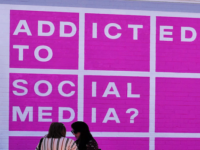
The momentum behind a social media ban for Canadian minors has been building for months. The federal Liberals voted at their April policy convention to back a minimum age of 16 for social media accounts and AI chatbots, the government’s expert panel on online safety is studying the issue, protesters have now rallied on Parliament Hill calling for it, and on Saturday night, Manitoba Premier Wab Kinew told a Winnipeg fundraiser that his government will be the first in Canada to ban social media and AI chatbots for kids. Kinew did not specify which kids, when it would happen, or how it would be enforced, none of which appeared to matter to the audience. The political appeal of a ban is obvious, since concerns about social media’s effects on young users are widely shared. Yet the policy itself is a terrible idea that will not work. This post examines at least six reasons why an outright age-based ban, particularly one that extends to AI chatbots, is the wrong response to a serious issue.
News

AI Without Canada: Why the Heritage Committee’s AI Report Could Lead to Less Canadian Content in the Training Data
When I appeared before the Standing Committee on Canadian Heritage last fall for its study on AI and the creative industries, I emphasized that the large language models and generative AI systems that are reshaping how people access information, culture, and entertainment are only as representative as the data on which they are trained. If Canadian works, perspectives, and cultural content are absent from those models, Canada risks disappearing in the AI-mediated world. The committee’s report, released this month, acknowledges this concern, but its lead recommendation risks making the situation worse.
Addressing the AI Policy Challenge: My Appearance before the Standing Senate Committee on Transport and Communications
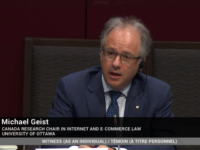
Earlier this week, I appeared before the Standing Senate Committee on Transport and Communications as part of its study on AI regulation. This follows earlier appearances before the House of Commons Heritage and Industry committees on the same issue. The hearing led to robust exchanges with multiple Senators on the intersection of AI policy with issues such as privacy, copyright, online harms, and sovereignty. I plan to post clips from the hearing in a future Law Bytes podcast, but in the meantime, my opening statement provides a good sense of my views on AI regulation with respect to privacy, copyright, and the need for an AI Transparency Act. A video of the opening statement is embedded below, followed by the text.
Lawful Access Heads to Committee: The Opposition Found Its Voice, the Government Never Found Its Defence
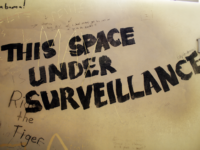
After several days of debate in which the opposition to lawful access seemed half-hearted at best, the Conservatives woke up on Monday. MP after MP rose to argue, correctly, that Bill C-22 represents an unprecedented surveillance threat: mandated metadata retention (including location information) for up to a year, security vulnerabilities built into the interception architecture the bill requires, and a weakened legal standard for access to subscriber information. After days of debate with the government visibly struggling to defend its own legislation, this is precisely what the opposition should be targeting (coverage from day one, day two, day three).

A Standard That Doesn’t Exist: Parliamentary Secretary for Justice Offers Misleading Defence of Bill C-22’s Lower Threshold for Subscriber Information
The lawful access debate continued for a third day on Friday with Bloc MP Claude DeBellefeuille asking Patricia Lattanzio, the Parliamentary Secretary to the Minister of Justice, a critical question: why has the government chosen “the lowest possible threshold for obtaining information, that of reasonable grounds to suspect, rather than the more stringent threshold of reasonable grounds to believe.” She added that she did not understand the choice and would like a clear answer (I focused on this issue in a previous post). In keeping with the government’s discouraging defence of lawful access thus far (my posts on day one and day two of debate) Lattanzio’s response went for deception rather than clarity. After noting that reasonable grounds to suspect already appears in parts of the Criminal Code, she offered the government’s substantive defence of the lower threshold in a single sentence: “We also think that ‘reasonable grounds to suspect’ is higher than the threshold of mere suspicion.” The problem is that mere suspicion isn’t a threshold for search at all, but rather the standard the courts point to when a search is unconstitutional.

Recent Posts
 Midnight Madness: The Government Rushes Lawful Access Bill Through the House Without Debate or a Recorded Vote
  One Step Forward, Two Steps Back: Bill C-36 Modernizes Canada’s Privacy Law, Then Delays It to 2030
  Gary Anandasangaree’s Vic Toews Moment Shows the Government Has Lost Its Way on Lawful Access
  Government Moves to Shut Down Lawful Access Hearing In Order To Fast Track Passing the Bill This Week
  Canada’s Digital Super-Regulator: Bill C-36 Pushes Out the Privacy Commissioner and Hands Private Sector Privacy to an Overloaded Commission
