Post Tagged with: "c-11"

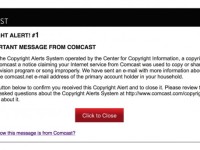
comcast_six_strikes_alert by aaron_anderer (CC BY-ND 2.0) https://flic.kr/p/dYokuc

Notice the Difference: Canada’s Internet Provider Notice-and-Notice Rules and the TPP

Last week, negotiators from around the world gathered in Ottawa for negotiations on the Trans Pacific Partnership agreement. I was fortunate to be asked to meet with many of the intellectual property negotiators as part of a side session sponsored by the Electronic Frontier Foundation on the copyright implications of the agreement.  EFF’s Jeremy Malcolm and Maira Sutton write about the event here, which also included Howard Knopf and Open Media’s Reilly Yeo.

My presentation
, embedded below, focused on the Canadian notice-and-notice rules for Internet service provider liability. The government recently announced that notice-and-notice will take effect in January 2015. I explained the background of the Canadian approach, how it differs from the U.S. notice-and-takedown system, and how experience demonstrates its effectiveness.

Read more ›

July 18, 2014 2 comments News
copyright takedown notice by Andrew Allingham (CC BY 2.0) https://flic.kr/p/bw9zNC

Canadian Copyright Notice-and-Notice System to Take Effect in 2015

The government today announced that there will be no additional regulations associated with the notice-and-notice rules that provide rights holders with the ability to have Internet providers forward notifications to subscribers alleging infringement. The government had delayed implementation of the rules amid a consultation on the issue. The notice-and-notice system does not require the ISP to disclose the subscriber’s personal information to the rights holder nor to takedown the content. The system, which other countries are now considering due to its effectiveness, is set to take effect on January 1, 2015.

Read more ›

June 17, 2014 5 comments News

Access Copyright Urges Copyright Board to Ignore Bill C-11’s Expansion of Fair Dealing

As I noted in a post yesterday, Access Copyright has filed its response to the Copyright Board of Canada’s series of questions about fair dealing and education in the tariff proceedings involving Canadian post-secondary institutions. Yesterday’s post focused on how Access Copyright has urged the Copyright Board to ignore the Supreme Court of Canada’s ruling on the relevance of licences to a fair dealing analysis. Today’s post examines the collective’s response to the Copyright Board’s question on the effect of the fair dealing legislative change in Bill C-32/C-11. Access Copyright engages in revisionist history as it seeks to hide its extensive lobbying campaign that warned that the reforms would permit mass copying without compensation.

For two years during the debates over the bill, Access Copyright stood as the most vocal opponent of the expansion of the fair dealing purposes to include education. Given its frequent public comments and lobbying efforts on the bill, one would think its response to the Copyright Board, would be pretty straight-forward. For example, it created a copyright reform website – CopyrightGetitRight.ca – that warned:

the education exception will permit mass, industrial-scale copying (equivalent to millions of books every year) without compensation to the creators and publishers who invested their creativity, skill, money and effort to produce this content.

Read more ›

April 17, 2014 6 comments News

Government Launches Consultation on Rules for ISP Notice-and-Notice System Amid Shift in Priorities

Industry Canada and Canadian Heritage launched a consultation yesterday on the rules associated with the Internet service provider notice-and-notice system that was established in Bill C-11, the copyright reform bill enacted in June 2012. Responses to the consultation are due by November 8, 2013. Most of the bill took effect in November 2012, but the government delayed implementation of the ISP rules, with expectation of a consultation and regulations to follow. It has taken nearly a full year, but the consultation was sent to undisclosed stakeholders with the promise to bring the notice-and-notice system into effect “in the near future.”

The notice-and-notice system allows copyright owners to send infringement notices to ISPs, who will be legally required to forward the notification to their subscribers. If an ISP fails to forward the notifications, it must explain why or face the prospect of damages that run as high as $10,000. ISPs must also retain information on the subscriber for six months (or 12 months if court proceedings are launched). Copyright owners may also send notifications to search engines, who must remove content that has been removed from the original source within 30 days. The notices must meet a prescribed form that includes details on the sender, the copyright works and the alleged infringement.

Despite some expectation that the consultation would place several issues on the table – form issues for notices, data retention, and costs for notices among them – the language used in the consultation letter suggests that the government is likely to simply bring the rules as articulated in the law into effect with no further regulations at all. It states:

Read more ›

October 10, 2013 42 comments News

Canada Moves Forward With WIPO Internet Treaty Ratification But It Likely Won’t Be Final Until 2014

Canadian Heritage Minister James Moore tabled  the WIPO Internet Treaties (the WIPO Copyright Treaty and the WIPO Performances and Phonograms Treaty) earlier this week in the House of Commons, starting the process of Canadian ratification of the treaties. The move does not come as a surprise since Bill C-11, which received royal assent just over one year ago, was designed to bring ensure Canadian law conformed to the treaty requirements.

While there were some suggestions that the next step is formal notification with WIPO in Geneva, there are actually several steps required in Canada that will likely mean the treaties won’t be in force in Canada until early 2014 (I wrote about the treaty ratification process  in 2008). First, the treaties are subject to a waiting period of 21 sitting days. During that period, MPs may debate the treaties in the House, raise questions, or bring motions related to the treaty. The 21 sitting day period started on June 12th. Since the House is scheduled to break for the summer next week, the period will not be completed until the first week of October.  Once this process is completed, the Minister of Foreign Affairs may then seek legal authority, through an Order in Council, for Canada to prepare instruments of ratification of the two treaties. Once the instruments of ratification are deposited with WIPO, there is a further three month delay from the date of deposit.

Read more ›

June 14, 2013 3 comments News