Post Tagged with: "fair dealing"

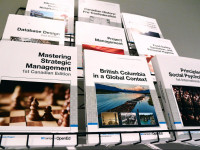
Back to school for BC post-secondary students by Province of British Columbia (CC BY-NC-ND 2.0) https://flic.kr/p/xTkDt4

Not a Free for All: Canadian University Libraries Spending Hundreds of Millions on Licensing

As students across Canada head back to school this week, the Canadian Association of Research Libraries (CARL), which represents 31 member libraries, issued a reminder that Canadian education spends hundreds of millions of dollars every year on content licensing. Access Copyright and the publishing community have tried to paint the Canadian situation as a free-for-all, but the reality is that educational institutions, libraries, and students are still buying books and licensing content. In fact, recent U.S. data shows that textbook costs are increasing far faster than any other education cost.

The CARL release states:

The 31 member libraries of the Canadian Association of Research Libraries (CARL) spent $293 million on information resources in 2014-15, demonstrating a clear commitment to accessing print and digital content legally and rewarding content owners accordingly. Universities are actively engaged in outreach to their faculty, staff, and students, educating them on their rights and responsibilities under the Copyright Act and ensuring that uses of material under copyright fall well within the provisions of the law. Where educational uses are more substantive and therefore fall outside of fair dealing, the content is either purchased to be added to licensed collections, or rights clearances are obtained and royalties are paid for these uses. Trained, knowledgeable library staff support these activities.

Some voices in the publishing community and associated lobbyists have stated in the media that the education market has evaporated as a result of users’ fair dealing rights. This is inaccurate. Universities continue to buy and to license access to published works, at substantial cost, using public funds and student tuition dollars.

Read more ›

September 8, 2016 2 comments News
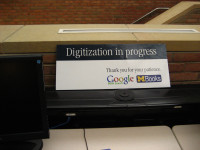
google book search notification at Art & Architecture library, Duderstadt Center by Timothy Vollmer (CC BY 2.0) https://flic.kr/p/42Ls8i

Canada’s National Digitization Plan Leaves Virtual Shelves Empty

Imagine going to your local library in search of Canadian books. You wander through the stacks but are surprised to find most shelves barren with the exception of books that are over a hundred years old. This sounds more like an abandoned library than one serving the needs of its patrons, yet it is roughly what a recently released Canadian National Heritage Digitization Strategy envisions.

Led by Library and Archives Canada and endorsed by Canadian Heritage Minister Mélanie Joly, the strategy acknowledges that digital technologies make it possible “for memory institutions to provide immediate access to their holdings to an almost limitless audience.”

Yet it stops strangely short of trying to do just that.

Read more ›

July 26, 2016 8 comments Columns
Open Textbook Summit 2014 Day 1 by BCcampus_News (CC BY-SA 2.0) https://flic.kr/p/narczC

Fictional Claims: Why Kids Are Not Suffering With Canada’s Copyright Fair Dealing Rules

In recent weeks, there has been some media coverage claiming that Canadian educational materials are disappearing in the face of copyright fair dealing rules. For example, several weeks ago, Globe and Mail writer Kate Taylor wrote a column on copyright featuring the incendiary headline that “Kids Will Suffer if Canada’s Copyright Legislation Doesn’t Change.” This week, the CBC provided coverage of a writer’s conference panel with a piece titled “Copyright-free material edging out Canadian texts” that speaks of sales falling off a cliff.

These articles are the latest shots in the battle launched by Canadian publisher and writer groups against fair dealing. The campaign includes regular meetings with Members of Parliament from all parties (speak to almost any MP and they will tell you that they have heard horror stories about Canadian copyright), international letter writing campaigns, and commissioned studies that feature unsubstantiated claims about the state of licensing revenues in Canada (the PWC study comes with the caveat that “we provide no opinion, attestation or other form of assurance with respect to the results of this Assessment”).

While there have been some notable responses from people such as Meera Nair, many copyright watchers have remained largely silent, perhaps assuming that the reliance on false rhetoric will fail to find an audience. It is true that the claims have fallen flat with key independent decision makers such as the Supreme Court of Canada, the Copyright Board of Canada, and the Australian government’s Productivity Commission, but the persistent rhetoric could lead to an inaccurate view of Canadian copyright just as a review of the law is planned for 2017.

Read more ›

June 23, 2016 8 comments News
BOOKS by Ian Muttoo (CC BY-SA 2.0) https://flic.kr/p/7NpS98

False Alarms: Examining the Misleading Claims About the State of Canadian Publishers

Earlier this month, Digital Book World posted an article chronicling the discussion of a conference copyright panel featuring Access Copyright counsel Erin Finlay (the article was promoted by Access Copyright). The article caught my attention due to Finlay’s comments about the impact of Canadian copyright on education publishers:

“Another example Finlay used was the case of Broadview Press, which is an independent Canadian publisher that cannot publish anymore.

The comment prompted me to contact Don LePan, the Broadview Press owner, who has been outspoken critic of the copyright term extension in the TPP. LePan was shocked by the claim which he said was completely inaccurate. He posted a long response on the Digital Book World site, which responded by amending the piece. Kristine Hoang, the journalist who wrote the article, noted that “what I had written was a reference to Erin Finlay’s direct quotes in my recorded transcript where she said ‘Broadview Press cannot publish anymore.'”

The erroneous claim about the state of a Canadian publisher would be surprising if it did not happen so frequently.

Read more ›

March 18, 2016 4 comments News
Stacks by Travis Wise (CC BY 2.0) https://flic.kr/p/qs75yk

Copyright Board Ruling Strikes Fair Balance in Heated Education Fight

The role of copyright within the Canadian education system has emerged as a contentious issue in recent years as the Internet and digital technologies have transformed how schools provide students with access to materials. At the centre of the fight are a series of Supreme Court of Canada rulings that establish the boundaries of “fair dealing”,  which permits copying of reasonable portions of materials without the need for permission or further compensation.

My weekly technology law column (Toronto Star version, homepage version) notes that last month, the Copyright Board of Canada issued a landmark decision on copying practices in primary and secondary schools, largely affirming the approach adopted by educational institutions. As a result, Access Copyright, the copyright collective that represents publishers and authors, will collect far less for in-school copying than it originally demanded.

Read more ›

March 16, 2016 4 comments Columns