Post Tagged with: "fair dealing"

CBC Radio Canada - Vancouver by Tyler Ingram (CC BY-NC 2.0) https://flic.kr/p/7NujTF

CBC Seeks Takedown of Conservative Ad, Claims “No One” Can Re-Use Its News Clips Without Permission

Last week, the Conservative party posted an offensive advertisement on YouTube and Facebook titled Justin Trudeau on ISIS. The ad starts with ISIS music and images of prisoners about be drowned or beheaded before running short edited clips from a 13 minute interview with Trudeau and the CBC’s Terry Milewski. The advertisement has rightly generated a backlash with questions about whether it violates Bill C-51’s prohibitions on terrorist propaganda. Conservative Party campaign spokesman Kory Teneycke argues that it is little different than newscasts involving ISIS, but watching the combination of music and imagery, it clearly goes well beyond conventional news reporting on ISIS. Indeed, even if it fall short of violating Bill C-51, the ad is in terrible taste, treating images of victims as mere props for political gain.

Beyond the C-51 issue, the CBC waded into the issue late on Friday, as Jennifer McGuire, the CBC News Editor-in-Chief, posted a blog indicating that the broadcaster has asked YouTube and Facebook to take down the ad. The ostensible reason?  Copyright. The CBC has again raised the issue of re-use of news coverage in political advertising, claiming that it is determined to limit re-use since “our integrity as providers of serious, independent coverage of political parties and governments rests on this.” In light of this position, the CBC says its guiding principle is:

No one – no individual candidate or political party, and no government, corporation or NGO – may re-use our creative and copyrighted property without our permission. This includes our brands, our talent and our content.

Read more ›

June 29, 2015 48 comments News
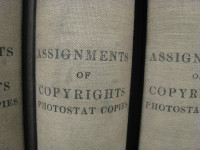
Assignments of copyrights photostat copies by mollyali (CC BY-NC 2.0) https://flic.kr/p/5JbsPE

Why The Copyright Board Decision Affirms Canadian Education’s Approach to Fair Dealing

The Copyright Board of Canada delivered a devastating defeat to Access Copyright on Friday, releasing its decision on a tariff for copying by employees of provincial governments. Yesterday’s post provided a detailed review of the decision, including the Board’s findings on the limits of Access Copyright’s repertoire, the scope of insubstantial copying, and the proper interpretation of fair dealing.

The decision focused on copying within provincial and territorial governments, but much of the analysis can be easily applied within an education context. Indeed, since the Supreme Court of Canada 2012 copyright decisions, there has been a very public battle over the validity of fair dealing guidelines that have been widely adopted by the Canadian education community.  I’ve written several posts on the education consensus (here and here) and there are no shortage of the fair dealing guidelines readily available online.

Read more ›

May 26, 2015 2 comments News
Copying will start. by Chris Campbell (CC BY-NC 2.0) https://flic.kr/p/2XWjMK

A Licence With Limited Value: Copyright Board Delivers Devastating Defeat to Access Copyright

The Copyright Board of Canada delivered a devastating defeat to Access Copyright on Friday, releasing its decision on a tariff for copying by employees of provincial governments. Access Copyright had initially sought $15 per employee for the period from 2005 – 2009 and $24 per employee for the period from 2010 – 2014. It later reduced its demands to $5.56 and $8.45. The board conducted a detailed review of the copying within government and the applicability of the Access Copyright licence. Its final decision gives Access Copyright pennies rather than dollars: 11.56 cents for 2005-2009 and 49.71 cents for 2010-2014.

The financial loss for Access Copyright in the case is obvious as it expected to earn millions from the tariff. With roughly 120,000 full time employees covered by the tariff, Access Copyright’s initial ask would have brought in $9 million in the first five years and another $14.4 million in the second five years for a total of almost $25 million (even its reduced ask envisioned nearly $9 million in revenues). Instead, the Board estimates that the total value of the tariff for the entire period will be $370,000, which is unlikely to cover Access Copyright’s legal and administrative costs (it also does not include revenues from the Province of Ontario, which struck an incredibly bad deal in 2011 by agreeing to pay $7.50 per year per employee).

Read more ›

May 25, 2015 8 comments News
Should Universities Opt Out of Access Copyright? @HowardKnopf @RoanieLevy Debate by Giulia Forsythe (CC BY-NC-SA 2.0) https://flic.kr/p/nvbkJN

Too Little, Too Late?: Access Copyright Finally Acknowledges the Reduced Value of Its Licence

Access Copyright announced a shift in its licensing approach for universities and colleges yesterday, unveiling what it described as “new market-focused services.” Access Copyright CEO Roanie Levy is quoted as saying “we recognize the advances many institutions have made on content dissemination and the centralized management of copyright. We hear you. We are changing.” Indeed, the copyright collective has changed its tune in some important ways.

Less than three years ago, Access Copyright believed that institutions simply could not opt-out of its licence, claiming that an opt-out would amount to “an absolute ban on all copying” since the only possible way to legally copy materials was to pay the collective. Over the past three years, Access Copyright has been proven wrong. The Supreme Court of Canada dismissed all of its key legal arguments in a massive defeat, the government expanded fair dealing with the inclusion of education, universities opted-out of the Access Copyright licence in droves, and dozens adopted fair dealing policies that called into question whether there was much value in the licence at all.

While Access Copyright is still suing York University (more about that below), the collective appears to recognize that the education sector has alternatives, including the enormous expenditures on site licences, open access publishing, fair dealing, public domain works, and individual licences for works not otherwise available. In other words, Access Copyright is an option, not a requirement, and the collective must prove value that extends beyond extolling the size of its repertoire. Rather, it must demonstrate that it offers value for money in an environment where the Supreme Court has emphasized the importance of users’ rights and adopted a liberal, flexible approach to fair dealing.

Read more ›

December 10, 2014 11 comments News
Londres - Omnibus by Aurélie (CC BY-SA 2.0) https://flic.kr/p/dH9VMQ

About That Copyright Exception for Political Advertising. . .Never Mind

Earlier this month, a political storm hit in Canada when it was revealed that the government was considering including a new copyright exception for political advertising in its forthcoming omnibus budget bill. The reports sparked claims of fascism, censorship, expropriation, and more, yet as I argued, the commentary bore almost no relationship to reality. There were legitimate concerns about an exception made solely available to politicians and political parties as well as doubts about the need for such an exception given the breadth of the current fair dealing exception that already permits most uses of video clips.

Yesterday, the government tabled its omnibus budget bill, which contains changes to the Patent Act (to bring Canada into compliance with the Patent Law Treaty), effectively ban paper billing charges for telecom and broadcast services, and grant new enforcement powers to the CRTC. As for the copyright reform provision, perhaps the public outcry had an impact. It is nowhere to be found.

Read more ›

October 24, 2014 Comments are Disabled News