
It started with an unexpected early-morning announcement on June 3, 2026, from Marc Miller, the Minister of Identity and Culture. Mr. Miller said that the government planned to direct the Canadian Radio-television and Telecommunications Commission (CRTC), Canada’s broadcast regulator, to review its two-week-old decision that imposed hundreds of millions in new investment requirements on internet streaming services. My Globe and Mail essay that appeared over the weekend notes that the move came as a surprise, not only because he had chastised the commission a month earlier for moving too slowly, but also because it marked a major reversal of a core Canadian digital policy that had been years in the making. The decision sent shock waves through the cultural sector, but it was only the start.
Post Tagged with: "solomon"

One Step Forward, Two Steps Back: Bill C-36 Modernizes Canada’s Privacy Law, Then Delays It to 2030
Canada’s private sector privacy law is more than 25 years old and there is broad consensus that a modernization is long overdue. Bill C-36, tabled on Monday, is the government’s third attempt at updating the law, following the failed efforts with Bill C-11 in 2020 and Bill C-27 in 2022. My first post on the new bill focused on what I think remains both the most important development and the biggest mistake: the decision to push the Privacy Commissioner of Canada out of private-sector privacy and to place the file with an overloaded digital safety commission. For years, privacy critics have argued that, given the absence of order-making powers or serious penalties, Canada’s biggest shortcoming has been weak enforcement. Yet just as the government adds much-needed new rights and penalties to the privacy law framework, it undermines enforcement once again by introducing a new regulator that will take years to establish. The consequence is that, rather than updating the law for 2027, it is updating it for 2030 or later.

Canada’s Digital Super-Regulator: Bill C-36 Pushes Out the Privacy Commissioner and Hands Private Sector Privacy to an Overloaded Commission
In the last act of an incredibly intense digital policy stretch, the government today tabled new private sector privacy legislation in the form of Bill C-36, the Protecting Privacy and Consumer Data Act. It is a big bill, and my initial take will be divided into two: this post will focus on the seismic shift the bill creates for privacy administration and enforcement, and a second post (hopefully tomorrow) will discuss the substantive changes and additions. I start with the enforcement side because the most consequential feature of C-36 is the question of who will administer the rules. The bill firmly cements the Digital Safety Commission as a new digital super-regulator in Canada, stripping the Privacy Commissioner of authority over private sector privacy law and handing it instead to the same five-member commission the government created a few days ago to police online harms. I believe the approach is unprecedented among peer countries and will have negative repercussions for Canada’s standing in the privacy world. Indeed, removing an Agent of Parliament from private-sector privacy enforcement after decades isn’t something you tuck into a lengthy bill, but rather requires extended public consultation and analysis on how best to ensure Canada has effective privacy enforcement. This is a stunning abrogation of good policy development and a poorly conceived vision of the breadth and importance of privacy.

AI for All, Details to Follow: Government Releases a Big-Spending AI Strategy That Is Still Short on the Specifics That Matter
The government today released its much-anticipated national AI strategy, an ambitious plan featuring a myriad of new programs and initiatives to support AI adoption. The strategy emphasizes trust, framing its approach as “AI for All.” Spending dominates the announcement, with money sprinkled across the economy as the government bets on the economic returns that flow from widespread AI adoption. Yet spending money is the easy part. What stands out is the deferral of many of the hard policy choices. The government has no plans for AI-specific regulation, instead relying on updated privacy rules and a reintroduction of online safety legislation. AI Minister Evan Solomon started the process by noting that the prior government had “over-indexed” on regulatory plans, and that perspective remains largely unchanged. There are real risks in bad legislation (see yesterday’s reset of the Online Streaming Act), but the Canadian government will never outspend the market on AI. For the Canadian government, supporting AI development must primarily involve creating the legal and regulatory frameworks that facilitate investment, trust, and adoption, and deferring the hard choices to later does not help.
New Privacy Rights in the Morning, Mandatory Metadata Retention in the Afternoon: How Bill C-22 Undercuts the AI Strategy Before It Launches
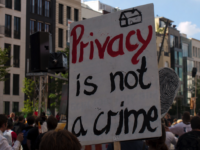
The government unveils its long-awaited national AI strategy this morning. AI Minister Evan Solomon has made it clear that the strategy will emphasize trust, noting that Canadians will only embrace the technology if they are confident their privacy is protected and safeguards are in place against potential harms. The privacy assurances are likely to take the form of a new private-sector privacy bill that includes European-style rules, stronger penalties, and recognizing privacy as a fundamental right. The government has proposed as much before, adding fundamental-rights language to the Consumer Privacy Protection Act in Bill C-27 before that bill died on the order paper. But the government is, at the same time, pressuring the public safety committee to pass Bill C-22, whose mandatory metadata retention regime is the single largest privacy risk in Canada in years and one that comparable countries have already struck down as a violation of the fundamental right to privacy. The disconnect is dizzying: the government cannot claim privacy as a fundamental right in the morning and enact mandatory metadata retention that overrides it in the afternoon.

Recent Posts
 The Missing Charter Statement: Why Hasn’t the Government Explained How Bill C-34’s Social Media Ban Complies with the Charter?
  Three Years After October 7th: Living With the Shockwaves
  What If the U.S. Demanded This? The Cloud Provider Conditions Behind Canada’s EU Digital Pivot
  Ontario is Done Waiting for Universities to Act on Campus Antisemitism
  Is Compromise on Encryption Possible? Why Bill C-22’s “Minor Opening” Leaves the Central Question Unanswered
