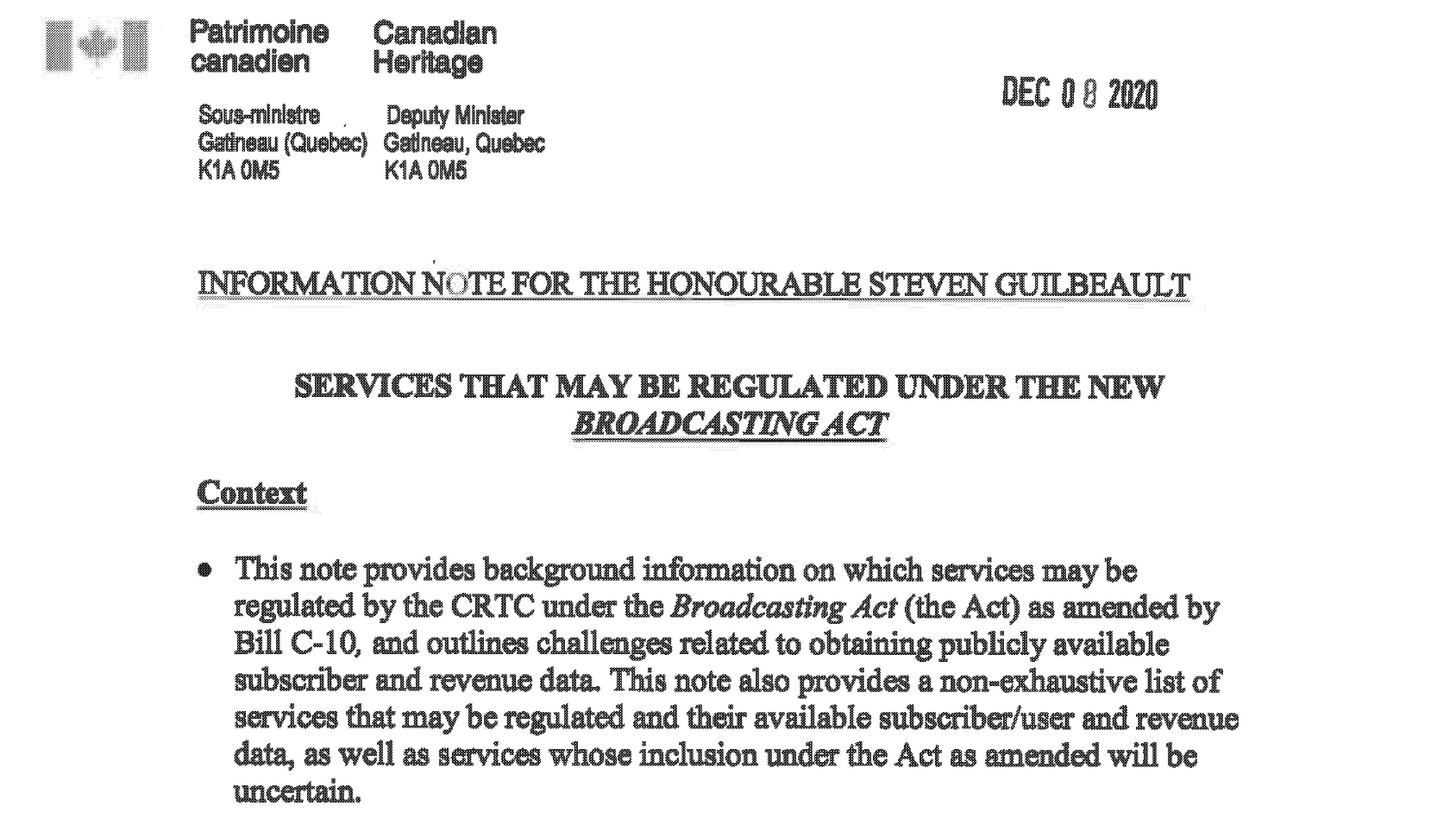
Canadian Heritage Memorandum, December 8, 2020, ATIP A-2020-00498

Canadian Heritage Memorandum, December 8, 2020, ATIP A-2020-00498

Bill C-10

Industry Committee Report on Intellectual Property: A Case of Policy Laundering for CETA and TPP

The Standing Committee on Industry, Science and Technology released its report on the Intellectual Property Regime in Canada yesterday. The report is the result of lengthy hearings that focused on a wide range of IP issues including patent reform, trademarks, counterfeiting, and pharmaceutical protection. While most the recommendations are fairly innocuous – the committee identifies many issues for further study – there are essentially three main legislative reform recommendations. One involves limiting the scope of official marks, which appears to be the result of comments from Dalhousie law professor Rob Currie (echoed by CIPO’s Sylvain Laporte) expressing concern with governmental abuse of official marks in a way that may stifle innovation.

The other two are particularly interesting as they set the stage for the Canada – EU Trade Agreement and the Trans-Pacific Partnership. First, the report recommends anti-counterfeiting measures similar to those required by CETA and found in Bill C-56.  Should criticism arise over Bill C-56 or CETA, the government will likely point to this report in support. 

The second involves a classic case of policy laundering as the government has manufactured support for CETA and Trans-Pacific Partnership (TPP) provisions that were not even raised at committee.  The report recommends:

Read more ›

March 19, 2013 5 comments News

What’s Really Behind Canada’s Anti-Counterfeiting Bill?

With only limited fanfare, earlier this month Industry Minister Christian Paradis introduced Bill C-56, the Combating Counterfeit Products Act. Since no one supports counterfeit products – there are legitimate concerns associated with health and safety – measures designed to address the issue would presumably enjoy public and all-party support. Yet within days of its introduction, the bill was the target of attacks from both opposition parties and the public.

The NDP raised the issue during Question Period in the House of Commons, accusing the government of trying to implement the widely discredited Anti-Counterfeiting Trade Agreement (ACTA) “through the backdoor.” The public also picked up on the issue, noting that the bill appears to be less about protecting Canadians and more about caving to U.S. pressure (the U.S. called on Canada to implement ACTA on the same day the bill was tabled).

My weekly technology law column (Toronto Star version, homepage version) notes the concerns associated with the bill fall into two main categories: substance and ACTA implementation. The substantive concerns start with the decision to grant customs officials broad new powers without court oversight. Under the bill, customs officials are required to assess whether goods entering or exiting the country infringe any copyright or trademark rights.

Read more ›

March 13, 2013 11 comments Columns

What’s Really Behind Canada’s Anti-Counterfeiting Bill

Appeared in the Toronto Star on March 9, 2013 as What’s Really Behind Ottawa’s Anti-Counterfeiting Bill? With only limited fanfare, earlier this month Industry Minister Christian Paradis introduced Bill C-56, the Combating Counterfeit Products Act. Since no one supports counterfeit products – there are legitimate concerns associated with health and […]

Read more ›

March 13, 2013 Comments are Disabled Columns Archive

NDP Calls It: Bill C-56 is “ACTA Through the Backdoor”

The government is characterizing its Bill C-56 as an anti-counterfeiting bill, yet this week NDP MP Charmaine Borg framed it more accurately as “ACTA through the backdoor.” During Question Period on Monday, Borg asked Industry Minister Christian Paradis directly if the bill paves the way for ratification of the discredited treaty:

Mr. Speaker, last July the European Parliament rejected the anti-counterfeiting trade agreement over serious concerns about the regressive changes it would impose on intellectual property in the digital age. Yet on Friday, the Conservatives introduced a bill in the House that would pave the way for the ACTA without question. Canadians have concerns about goods being seized or destroyed without any oversight by the courts. Will the minister now be clear with Canadians? Are the Conservatives planning to ratify ACTA, yes or no?

Paradis refused to respond to the ACTA ratification question:

Read more ›

March 6, 2013 21 comments News

U.S. Seeks to Revive ACTA Without European Support

The Canadian introduction of Anti-Counterfeiting Trade Agreement compliance legislation on Friday appears to have come in direct response to a new U.S.-led effort to revive the discredited treaty. When the European Parliament overwhelmingly voted to reject ACTA last July, many declared it dead. But is not dead yet: it is […]

Read more ›

March 4, 2013 7 comments News