
Last week, CBC journalist Neil Herland was reportedly pulled from the air and brought before a disciplinary hearing after posting a tweet thread about being taunted on his way to the Song Shul’s Yom Kippur services at the Meridian Arts Centre in Toronto. The thread included video of the protesters shouting “Zionist alert,” “you’re going to hell” and “baby killer” at people walking in to pray as well as context on the rise in antisemitism, the terror attack at the Sons of Jacob synagogue in Belleville the night before, and the presence of a guest speaker at the service. Herland’s tweet thread sparked opposition, with some defending the protesters on the grounds that the location is a public facility and not a full-time synagogue and that the speaker was Mark Regev, who once served as a spokesperson for the Israeli government. I tweeted about the response last week, noting that the thread was accurate and that I did not understand the concern. That tweet has been viewed over 280,000 times, leading to plenty of angry responses. This post unpacks the arguments and explains why I still don’t see the issue with the tweet thread. If anything, the focus should be protesters who may have violated the Criminal Code.
Post Tagged with: "CBC"

The Law Bytes Podcast, Episode 227: Tara Henley on How to Save the CBC
Debates over the role and future of the CBC are seemingly about as old as the CBC itself. Those debates have become increasingly fractious in recent years as some see the public broadcaster as essential to Canadian culture and to address concerns about misinformation, while other insist it is hopelessly biased, outdated, and a threat to marketplace competition. Tara Henley is a Canadian writer, journalist and podcaster who spent years at the CBC. Several years ago, she quit the CBC in very public fashion and has since developed an important presence online through her podcasts and Substack. She’s recently wrote an important piece on how to save the CBC and she joins the Law Bytes podcast this week to discuss.

The Behind-the-Scenes Bill C-18 Battle: How Newspapers, Big Broadcasters and the CBC Are Trying to Seize Control Over How Google Money is Allocated to Canadian Media
Bill C-18, the Online News Act, is best known for two things: the government’s bad bet that Meta was bluffing when it said it would block news links in response to a system that mandated payments for links (news links have now been blocked for 10 months in Canada) and its attempt to salvage the legislation by striking a deal with Google worth $100 million annually. The Google deal has receded into the background, but the behind the scenes there is an intense battle over who will be selected to administer and allocate the annual $100 million. The outcome – which will be decided by Google by June 17th – will have enormous implications for Canadian media for years to come since it is anticipated that Google and the selected collective will negotiate a five year deal worth $500 million. Sources say that two proposals have emerged: a big media consortium led by News Media Canada (NMC), the Canadian Association of Broadcasters (CAB), and the CBC, pitted against a proposal spearheaded by a group of independent and digital publishers and broadcasters that is promising a more transparent and equitable governance approach.

Bill C-18 and the CBC’s Self-Destructive Approach to Government Digital Policy
I need to start this post by making it clear that I am a supporter of publicly funded broadcasting and the CBC. With the increased use of paywalls and dramatic shifts in the media landscape, there is value in a public broadcaster that fills the gaps in the privately owned media world by ensuring that all Canadians have open, freely available access to reliable news. That requires embracing all forms of distribution, maintaining steadfast independence, and limiting direct competitive overlap with the private side that is currently facing significant digital transition challenges. This should be an easy value proposition for the CBC and one that would provide a compelling case for public funding. Yet the CBC’s approach to Bill C-18 and other government digital policies seems determined to do the opposite and, in doing so, threatens its future support.
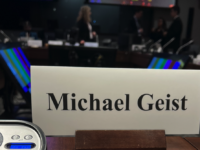
Fixing Bill C-18: My Appearance Before the Senate Standing Committee on Transportation and Communication
I was pleased to appear yesterday before the Senate Standing Committee on Transportation and Communication on Bill C-18. The discussion focused on a wide range of issues, including the risks of mandating payments for links, the non-compliance with international copyright obligations, why the CBC should not be included in the payment for links system, and how a fund would be a better approach. My opening statement, which tried to identify some fixes to the bill, is posted below as text and as a Youtube video.

Recent Posts
 The Missing Charter Statement: Why Hasn’t the Government Explained How Bill C-34’s Social Media Ban Complies with the Charter?
  Three Years After October 7th: Living With the Shockwaves
  What If the U.S. Demanded This? The Cloud Provider Conditions Behind Canada’s EU Digital Pivot
  Ontario is Done Waiting for Universities to Act on Campus Antisemitism
  Is Compromise on Encryption Possible? Why Bill C-22’s “Minor Opening” Leaves the Central Question Unanswered
