
Telecom by yum9me (CC BY-NC-ND 2.0) https://flic.kr/p/53jSy4
Telecom

The Law Bytes Podcast, Episode 267: Peter Nowak on Rogers, the Shaw Merger Aftermath, and the Limits of Canadian Telecom Policy
The recent announcement that Rogers is offering buyouts to half of its workforce is just the tip of the iceberg in a series of developments involving one of Canada’s dominant communications companies. It has seen rising consumer complaints, is cutting capital expenditures, increasingly pivoting towards sports and media, and is now looking to cut its workforce dramatically. Three years after the Rogers-Shaw merger, is this simply the predicted outcome of allowing that merger to go through?
To help assess what is happening, Peter Nowak, a veteran telecom journalist, joins the Law Bytes podcast. Peter has covered the industry, worked in the industry and now publishes “Do Not Pass Go”, a regular newsletter and a podcast focused on competition, monopoly, and corporate concentration in Canada.

The Government Doubles Down on News Sector Support: Fiscal Update Opens the Door to Tens of Millions in Tax Credits for Bell, Rogers and Corus
The government is doubling down on its support for the Canadian news sector by proposing to massively expand the Labour Journalism Tax Credit to include television and radio news. The announcement in yesterday’s Spring Economic Update didn’t garner much attention, but it will mean tens of millions of dollars for Bell, Rogers, Corus and other broadcasters. The tax credit is the most important support for those who meet the standard of being a Qualified Canadian Journalism Organization (QCJO) as it provides a 35 percent refundable tax credit up to $29,750 per employee. The government paid out roughly $71 million for just over 3,000 journalists in 2024, but that would likely double if coverage extends to television and radio news.

The Law Bytes Podcast, Episode 220: Marina Pavlović on the CRTC’s Plans to Address Consumer Frustration Over Wireless Contracts
Consumer frustration with just about everything associated with Canadian communications services is well known. The list of concerns is long: high prices, contracts that lock in consumers but not providers, gaming prices to make comparison shopping difficult, and confusing consumer codes among them. As politicians have begun to take notice, the CRTC has suddenly become more active with several consultations and new consumer focused initiatives. My colleague Marina Pavlović, a law professor at the University of Ottawa, has been at the forefront of consumer rights law and communications services for many years. She joins the Law Bytes podcast to talk about the ongoing consumer challenges and the latest CRTC developments.
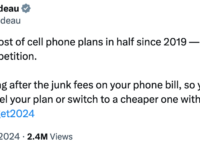
The Law Bytes Podcast, Episode 202: David Soberman on the Reality Behind Claims Canadian Wireless Prices Have Been Cut in Half
Prime Minister Justin Trudeau recently claimed that “we’ve cut the cost of cell phone plans in half since 2019 – in part by increasing competition.” Is that true? What is the real state of Canadian wireless competition and how does pricing compare with other countries? To help answer those questions, this week David Soberman, a Professor of Marketing at the Rotman School of Management at the University of Toronto and the Canadian National Chair of Strategic Marketing joins the Law Bytes podcast. Professor Soberman’s research is focused on understanding how the operation of markets is affected by the exchange of information between organizations and customers, relationships within the distribution channel and the introduction of innovations to markets.

The Law Bytes Podcast, Episode 186: Andy Kaplan-Myrth on the CRTC’s Last Ditch Attempt to Fix Canada’s Internet Competition Problem
For many years, Canadians have lamented the state of competition for Internet broadband services, pointing to concerns regarding price and lack of choice. Earlier this month, the CRTC seemed to agree, admitting in a decision involving competitive access that it is “important that the Commission revise its approach to promote competition and protect the interests of Canadians.” Andy Kaplan-Myrth is Vice-President, Regulatory and Carrier Affairs at TekSavvy, one of the few remaining independent competitors in Canada. He joins the Law Bytes podcast to discuss the current state of competition, the recent CRTC decision, and what this might mean for the Canadian market.

Recent Posts
 The Law Bytes Podcast, Episode 280: A Fall Update on Where Things Stand on Canadian Digital Policy Reforms
  The Wrong Ban: The Heritage Committee Backed a Targeted Ad Ban for Kids and Stopped Short of a Social Media Ban, Yet the Government Chose the Reverse
  Regulator First, Rules Later: Bill C-34 Debate Shows the Government Wants a Digital Safety Commission Before It Figures Out What It Will Do
  Making the Case Against Its Own Bill: What the Government’s Bill C-34 Charter Statement Reveals About the Constitutional Vulnerability of the Social Media Ban
  “Position Has Not Changed”: The Canadian Government Reaffirms That Antisemitism Includes Anti-Zionism
