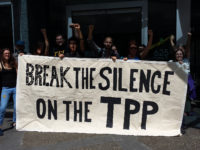
While the NAFTA negotiations in Montreal were expected to be the lead trade story this week, the Trans Pacific Partnership talks in Tokyo have stolen the show with the remaining 11 countries reaching agreement on a deal that is likely to be signed in March. Canada faced intense criticism last year from some TPP partners (particularly Japan and Australia) over its demands to address concerns with the agreement. That sparked some Canadian business groups to quickly call on the government to simply cave in order to conclude a deal. Global Affairs Minister Chrystia Freeland and International Trade Minister François-Philippe Champagne rightly argued that capitulation is not a negotiating strategy and they now come away with an improved (albeit still flawed) agreement.
Archive for January 23rd, 2018

Recent Posts
 The Missing Charter Statement: Why Hasn’t the Government Explained How Bill C-34’s Social Media Ban Complies with the Charter?
  Three Years After October 7th: Living With the Shockwaves
  What If the U.S. Demanded This? The Cloud Provider Conditions Behind Canada’s EU Digital Pivot
  Ontario is Done Waiting for Universities to Act on Campus Antisemitism
  Is Compromise on Encryption Possible? Why Bill C-22’s “Minor Opening” Leaves the Central Question Unanswered
