News

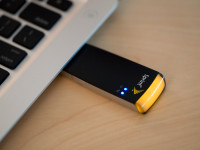
Sierra Wireless Compass 597 by Scott Beale / Laughing Squid (CC BY-NC-ND 2.0) http://laughingsquid.com/

The CCTS Report on Wireless Code Violations: When Is Data on a Data Stick an “Add On”?

The Commissioner for Complaints for Telecommunications Services released his annual report yesterday resulting in a wide range of interpretations with some citing improved customer service due to an overall decline in complaints, others focusing on declining customer service owing to an increase in complaints from misleading contractual terms, and yet others pointing to the CRTC Wireless Code as the reason behind the overall decline in complaints.

Despite some improvement in service, the most notable aspect of the report is a review of compliance with the wireless code. With the code now fully operational, there is simply no excuse for carrier non-compliance. Yet the data suggests that there are numerous confirmed breaches. Bell is easily the most notable company when it comes to failure to comply with the code: when you combine Bell Canada, Virgin Mobile (which it owns), and Northern Tel (which it now also owns), 2/3 of the confirmed breaches all come from the same source. In other words, every few weeks, Bell Canada or one of its companies had a confirmed breach of the wireless code.


Read more ›

November 5, 2014 Comments are Disabled News
DSC_0110 Minister of Canadian Heritage and Official Languages James Moore by Heather (CC BY 2.0) https://flic.kr/p/6BbzwP

Why the Digital Privacy Act Will Expand Personal Information Disclosure Without Court Oversight

My column this week on warrantless access to personal information under Canadian law noted that Bill S-4, the Digital Privacy Act, will expand the likelihood warrantless disclosures between private organizations. As I posted recently:

Bill S-4 proposes that:

“an organization may disclose personal information without the knowledge or consent of the individual… if the disclosure is made to another organization and is reasonable for the purposes of investigating a breach of an agreement or a contravention of the laws of Canada or a province that has been, is being or is about to be committed and it is reasonable to expect that disclosure with the knowledge or consent of the individual would compromise the investigation;

Unpack the legalese and you find that organizations will be permitted to disclose personal information without consent (and without a court order) to any organization that is investigating a contractual breach or possible violation of any law. This applies both past breaches or violations as well as potential future violations. Moreover, the disclosure occurs in secret without the knowledge of the affected person (who therefore cannot challenge the disclosure since they are not aware it is happening).

Read more ›

November 4, 2014 6 comments News
The Fifth Eye by Dustin Ginetz (CC BY-NC-SA 2.0) https://flic.kr/p/id9KHn

Canada’s New “Anti-Terrorism” Bill: Responding to the Courts, Not the Attacks

The government yesterday introduced Bill C-44, the Protection of Canada from Terrorists Act. While some were expecting significant new surveillance, decreased warrant thresholds, and detention measures, this bill is a response to several court decisions, not to the attacks last week in Ottawa and Quebec. A second bill – which might use the U.K. legislative response to terror attacks as a model – is a future possibility, but policy decisions, cabinet approval, legal drafting, and constitutional reviews take time.

Bill C-44, which was to have been tabled on the day of the Ottawa attack, responds to two key issues involving CSIS, Canada’s domestic intelligence agency.  The first involves a federal court case from late last year in which Justice Richard Mosley, a federal court judge, issued a stinging rebuke to Canada’s intelligence agencies (CSEC and CSIS) and the Justice Department, ruling that they misled the court when they applied for warrants to permit the interception of electronic communications. Mosley’s concern stemmed from warrants involving two individuals that were issued in 2009 permitting the interception of communications both in Canada and abroad using Canadian equipment. At the time, the Canadian intelligence agencies did not disclose that they might ask their foreign counterparts (namely the “five eyes” partners in the U.S., U.K., Australia, and New Zealand) to intercept the foreign communications.

Read more ›

October 28, 2014 7 comments News
Londres - Omnibus by Aurélie (CC BY-SA 2.0) https://flic.kr/p/dH9VMQ

About That Copyright Exception for Political Advertising. . .Never Mind

Earlier this month, a political storm hit in Canada when it was revealed that the government was considering including a new copyright exception for political advertising in its forthcoming omnibus budget bill. The reports sparked claims of fascism, censorship, expropriation, and more, yet as I argued, the commentary bore almost no relationship to reality. There were legitimate concerns about an exception made solely available to politicians and political parties as well as doubts about the need for such an exception given the breadth of the current fair dealing exception that already permits most uses of video clips.

Yesterday, the government tabled its omnibus budget bill, which contains changes to the Patent Act (to bring Canada into compliance with the Patent Law Treaty), effectively ban paper billing charges for telecom and broadcast services, and grant new enforcement powers to the CRTC. As for the copyright reform provision, perhaps the public outcry had an impact. It is nowhere to be found.

Read more ›

October 24, 2014 Comments are Disabled News
Access & Privacy Conference 2013 by forester401 (CC BY-NC-SA 2.0) https://flic.kr/p/eLS9xR

The Expansion of Personal Information Disclosure Without Consent: Unpacking the Government’s Weak Response to Digital Privacy Act Concerns

Bill S-4, the government’s Digital Privacy Act, was sent for review to the Industry Committee yesterday. The committee review, which comes before second reading, represents what is likely to be the last opportunity to fix a bill that was supposed to be a good news story for the government but has caused serious concern within the Canadian privacy community. While there are several concerns (I raised them in my appearance before the Senate committee that first studied the bill), the chief one involves the potential expansion of voluntary disclosure of personal information without consent or court oversight. Bill S-4 proposes that:

“an organization may disclose personal information without the knowledge or consent of the individual… if the disclosure is made to another organization and is reasonable for the purposes of investigating a breach of an agreement or a contravention of the laws of Canada or a province that has been, is being or is about to be committed and it is reasonable to expect that disclosure with the knowledge or consent of the individual would compromise the investigation;

Translate the legalese and you find that organizations will be permitted to disclose personal information without consent (and without a court order) to any organization that is investigating a contractual breach or possible violation of any law. This applies both past breaches or violations as well as potential future violations. Moreover, the disclosure occurs in secret without the knowledge of the affected person (who therefore cannot challenge the disclosure since they are not aware it is happening).

The government is clearly aware that this is a major concern as it attempted to answer the critics during debate over Bill S-4 in the House of Commons yesterday. Unfortunately, the responses were incredibly weak. I’ve identified at least six responses from government sources below.

Read more ›

October 21, 2014 3 comments News