The Broadcasting Act blunder series has featured several posts raising concerns that Bill C-10 is likely to increase costs for consumers and decrease choice as some services block the Canadian market altogether. Canadian Heritage Minister Steven Guilbeault has regularly cited the situation in Europe as evidence that the concerns are unfounded. For example, he told the House of Commons that “European Union has adopted new rules on streamers resulting in increased investment, jobs, choice of content and ability to assert one’s own cultural sovereignty” and told the media that the European Union has had a requirement since 2018 that 30% of Internet streaming services content must be European content without resulting in higher fees.
Guilbeault’s comparison of Bill C-10 to the situation in Europe is misleading at best.
Read more ›
The Broadcasting Act blunder series has made several references to the risk of a trade challenge over provisions found in Bill C-10. This post unpacks the trade issue and explains why the bill could result in billions of dollars in retaliatory tariffs against Canada. The starting point for the trade issue is to recognize that Canada negotiated the continuation of the cultural exemption in the Canada-US-Mexico Trade Agreement (CUSMA or USMCA). This was viewed as an important policy objective for the government, with Prime Minister Justin Trudeau insisting that “defending that cultural exemption is something fundamental to Canadians.” The exemption means that commitments such as equal treatment for U.S., Mexican and Canadian companies may be limited within the cultural sector.
Yet the cultural exemption did not come without a cost.
Read more ›
The Broadcasting Act blunder series has emphasized the uncertainty associated with Bill C-10, highlighting how the bill removes foundational broadcast policies such as Canadian broadcast ownership requirements and leaves many specifics to the CRTC to sort out in a future hearing. In fact, even as Canadian Heritage Minister Steven Guilbeault claims that the bill establishes economic thresholds, excludes news services, or result in a billion dollars in new funding, the reality is that the bill does not specify any of these things. Rather, Guilbeault is presumably assuming that the Commission will decide to do so. If all of this uncertainty were not enough, Guilbeault has promised another layer of uncertainty, committing to release a policy direction to the CRTC should the bill become law.
Read more ›
The release of the much-anticipated Broadcast and Telecommunications Legislative Review Panel report late last month sparked a torrent of discussion and debate. The 235 page report – often referred to as the BTLR or Yale Report – features 97 recommendations that covers telecom, broadcast, the future of the CBC, online harms, digital taxation, and a myriad of other issues. Janet Yale, the panel chair, joins the podcast this week to talk about the report. Our wide ranging conversation touches on the policy objectives of the panel, the news regulation concerns, net neutrality, consumer costs, and what may lie ahead for communications law reform.
Read more ›
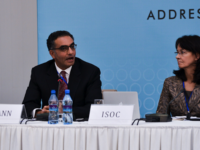
The dot-org domain extension was established as one of the first top-level domains in 1985 alongside dot-com, dot-net and a handful of others. In 2002, administration over the domain was awarded to the Public Interest Registry (PIR), a non-profit established by the Internet Society (ISOC), to run the extension. PIR recently announced that it was being purchased by Ethos Capital, a private equity firm that includes a former CEO of ICANN among its founders. With a rumoured purchase price of over $1 billion dollars, there is big money for ISOC but the deal has left the non-profit community worried about potential price increases and policy changes to the domain that could impact online speech. Elliot Harmon, Activism Director with the Electronic Frontier Foundation, recently wrote about the issue and has been working on a campaign with NGOs around the world opposed to the deal. He joined on the podcast to discuss the background behind dot-org, the concerns with the sale, and what can be done about it.
Read more ›