
My latest Globe and Mail op-ed opens by noting that my grandparents arrived in Canada in 1948, seeking to build a new life after surviving the Holocaust and knowing that most of their family had been killed in the death camps. They settled in Toronto, and in their later years moved to the northern part of the city, where my grandfather would go on daily walks in his predominantly Jewish residential area. He passed away many years ago, but those walks came to mind recently as I watched video of masked protesters roaming the same streets in north Toronto, leaving many residents fearful of leaving their homes.
Post Tagged with: "freedom of expression"

Out of Nowhere: TIFF Undermines Artistic Freedom of Expression With Forced Name Change of October 7th Documentary
The controversy over the Toronto International Film Festival decision to remove a Canadian made October 7th documentary film from its lineup focused primarily on the absurd demand for copyright clearances of clips taken by Hamas terrorists on the day of the attack. While TIFF reversed its decision given the enormous backlash over what many rightly perceived to be censorship, another aspect of TIFF’s demands remain in place. According to media reports, the initial title of the documentary was Out of Nowhere: The Ultimate Rescue. TIFF demanded that the name be changed in order to be included in the program, leading to the new title, The Road Between Us: The Ultimate Rescue. TIFF staff apparently objected to the phrase “Out of Nowhere”, which suggests that staff believes both that (1) the October 7th attack was not out of nowhere, and (2) that it was appropriate to limit artistic freedom of expression by substituting its political views over those of the creator.

New Era and New Risks: Meta’s Content Moderation Reforms and Freedom of Expression Online
Meta CEO Mark Zuckerberg yesterday announced significant new changes to the company’s content moderation policies. The five-minute video is worth watching in its entirety, as it demonstrates the shifting political sands that seemingly pressured even the world’s largest social media company to pay heed. Zuckerberg said the company’s reliance on third-party fact checkers had resulted in too much censorship and vowed to return to an emphasis on freedom of expression. That means the fact checkers are gone, replaced by the Twitter (X) model of community notes. Moreover, the company is moving its content moderation team from California to Texas (a nod to claims the California-based teams were biased), increasing the amount of political content in user feeds, and pledging to work with the Trump administration to combat content regulation elsewhere, including in Europe and South America.
The Law Bytes Podcast, Episode 221: Inside My Canadian Heritage Committee Appearance on Freedom of Expression
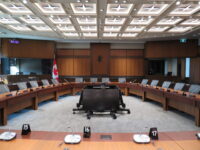
The Standing Committee on Canadian Heritage has for the past month been conducting a study on protecting freedom of expression. The counters of the study aren’t entirely clear. In fact, after I was invited to appear, I asked for some sense of what the committee was looking to address. There wasn’t much detail, which has really left it open for witnesses to cover whatever issues they like. I chose to focus my time on two issues: the expression implications of Canadian digital policy and the chilling effect of antisemitism. The two issues have really dominated my attention in recent months. Digital policy – including Bills C-11, C-18, C-63, and S-210 for years now and the antisemitism issues an enormous concern post October 7, 2023.
This week’s Law Bytes podcast takes the listener into the hearing room and the wide range of questions from Liberal, Conservative, and Bloc MPs my opening statement sparked.
Protecting Freedom of Expression: My Heritage Committee Appearance on the Chilling Effect of Antisemitism
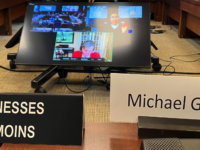
The Standing Committee on Canadian Heritage is in the midst of conducting a study on protecting freedom of expression that has opened the door to discussing a wide range of issues. I appeared as a witness before the committee yesterday and divided my opening remarks into two issues. First, I discussed the way digital policies (notably including Bills C-11, C-18, C-63, and S-210) all intersect with expression in either directly or indirectly, arguing that we haven’t always taken the protection of expression sufficiently seriously in the digital policy debate. Second, I focused on the challenge of when expression chills others expression, using antisemitism as a deeply troubling example.
I will likely devote a future podcast to the full appearance and my exchanges with MPs, who wanted to learn more about both the speech implications of digital policy and some of the suggestions for addressing antisemitism. In the meantime, my opening comments are posted below in text with a video on the chilling effect of antisemitism. I discuss the myriad of concerns and identify steps that could be taken to mitigate against the harms, including clearly defined policies, such as the IHRA definition of antisemitism, active enforcement of campus policies and codes, principled implementation of institutional neutrality, leadership in speaking out against conduct that creates fear and chills speech, as well as time and place restrictions and bubble zone legislation to strike a much needed balance.

Recent Posts
 The Law Bytes Podcast, Episode 263: The Lawful Access Act Roundtable With David Fraser and Robert Diab
  When Writing About Antisemitism Proves the Point: What the Replies Reveal
  Acting on Antisemitism: If This Was Always Possible, Why Didn’t It Happen Sooner?
  Setting Canada’s AI Policy Priorities: My Appearance Before the Standing Committee on Industry, Science and Technology
  The Law Bytes Podcast, Episode 262: Zack Shapiro on the Claude AI Native Law Firm
