
The Bill C-11 debate continued for hours in the House of Commons yesterday with a dispiriting discussion featuring MPs from all sides ignoring or exaggerating the implications of the bill. The debate often seemed to gravitate to two polar opposites: either the bill is China or North Korea-style censorship or it has no implications for freedom of expression and the regulation of user content. Both are false. To the claims of censorship, Bill C-11 is not China, Russia or Nazi Germany. As I’ve stated many times, it does not limit the ability to speak, but could impact the ability to be heard. That raises important implications for freedom of expression but it does not turn Canada into China. To the claims that user content regulation is excluded from the bill, Section 4.1(2)(b) and 4.2.2 clearly scope such content into the bill, an interpretation that has been confirmed by dozens of experts and the former Chair of the CRTC. Liberal and NDP MP claims to the contrary should be regarded as disinformation, a deliberate attempt to spread false information. Indeed, the Senate proposed a fix. The government rejected it. That was supposed to be the focus of the debate, yet Liberal MPs such as Kevin Lamoureux falsely claimed that there is no there there.
Post Tagged with: "freedom of expression"

A Tax on Freedom Of Expression: Report Suggests Bill C-18 Could Be Expanded Even Beyond Mandated Payment for Links
Google was scheduled to appear before the Standing Committee on Canadian Heritage yesterday to discuss Bill C-18 and its test of the removal of links to Canadian news services for a small percentage of its users, but the meeting was postponed due to technical difficulties. That ensured that the big Bill C-18 news of the day did not come from the hearing, but rather from an exceptional Ricochet Media article featuring comments from Senator Paula Simons that should heighten concern about the government’s intent with Bill C-18. Senator Simons, a longtime journalist and Trudeau appointee to the Senate, raises many concerns with the bill (and a great line that “honest to god, I feel that this is written by people who have never used the Internet”), but I think this is the key passage, which opens the door to targets beyond Google and Facebook:
Then there’s the question of what would happen down the road if Google and Facebook were no longer profitable? Simons told Ricochet that when she raised that question with staff in the Heritage ministry, she was told they “would turn to TikTok.”“I said, ‘Wait a minute! TikTok doesn’t share news links,’” Simons recalled. “And staff said, ‘TikTok shares news stories in other ways. It talks about the news.’ I said, ‘Woah, wait a minute! That’s a fair-use argument.’…Then the official said to me, ‘Lots of Canadians get their news from TikTok.’” But, she pointed out, if a content creator on TikTok talks about something they read, that’s not the same as actually sharing a news story.

Elon Musk’s Twitter Linking Restrictions May Have Been Short-Lived, But Bill C-18 is Based on a Similar Approach to Links
The dismantling of Twitter over the past six weeks has been incredibly distressing for millions of users who have come to rely on the platform. From the mass layoffs to journalist suspensions to this weekend’s seemingly short-lived policy blocking some links to rival services, it has been a head-spinning stretch since Elon Musk assumed ownership of the service in late October. In response, many have established a presence on various alternatives: you can now also find me on Mastodon, Post, and Substack. As Twitter users promote these alternatives, on Sunday the company briefly unveiled a new policy that involved removing “accounts created solely for the purpose of promoting other social platforms and content that contains links or usernames for the following platforms: Facebook, Instagram, Mastodon, Truth Social, Tribel, Nostr and Post.” From an operational perspective, this would have meant blocking some links to rival platforms big (Facebook, IG), growing (Mastodon), and small (Post).
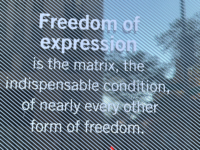
Freedom of Expression is Not A Loophole: Responding to the Government’s Inaccurate Defence of Mandated Payments for Links in Bill C-18
The Standing Committee on Canadian Heritage opened its clause-by-clause review of Bill C-18 on Friday with some extensive questions about the scope of coverage of the bill and the opportunity to vote on several amendments. The meeting finally provided the chance to ask department officials for their views on key questions, including whether the government believes that services such as Reddit and Twitter are caught by the law (the answer was yes they are digital news intermediaries, but may not be sufficiently dominant to be required to negotiate mandate payments). The most important moment in the hearing came toward the end, when Conservative MP Rachael Thomas moved an amendment to exclude links from the scope of the definition of news content. That approach would still ensure that news publishers are covered for uses of their work such as republication (which is precisely what most would envision) but safeguard the foundation of the free flow of information on the Internet.

Why Bill C-18’s Mandated Payment for Links is a Threat to Freedom of Expression in Canada
The study into the Online News Act continues this week as the government and Bill C-18 supporters continue to insist that the bill does not involve payment for links. These claims are deceptive and plainly wrong from even a cursory reading of the bill. Simply put, there is no bigger concern with this bill. This post explains why link payments are in, why the government knows they are in, and why the approach creates serious risks to the free flow of information online and freedom of expression in Canada.
Payments for Links: “The Whole Purpose of Why We’re Here”
First, the statute and comments related to the bill leave no doubt that payment for links is absolutely part of the legislative plan. Section 2(2) of the bill defines making news content available as follows:

Recent Posts
 The Law Bytes Podcast, Episode 280: A Fall Update on Where Things Stand on Canadian Digital Policy Reforms
  The Wrong Ban: The Heritage Committee Backed a Targeted Ad Ban for Kids and Stopped Short of a Social Media Ban, Yet the Government Chose the Reverse
  Regulator First, Rules Later: Bill C-34 Debate Shows the Government Wants a Digital Safety Commission Before It Figures Out What It Will Do
  Making the Case Against Its Own Bill: What the Government’s Bill C-34 Charter Statement Reveals About the Constitutional Vulnerability of the Social Media Ban
  “Position Has Not Changed”: The Canadian Government Reaffirms That Antisemitism Includes Anti-Zionism
