
Rogers v. Rogers, the exceptional one-person play, recently ran in Ottawa, giving attendees a chance to relive the battle over control of Rogers and competition law’s role in Canada. Prioritizing wireless competition seemed like an obvious policy position at the time, but it appears to have been short-lived. This week, Quebecor unveiled a $31 billion proposal to acquire Telus, which, if completed, would reduce the number of national wireless carriers from four to three and unwind the very remedy the government relied upon to justify approving the Rogers-Shaw merger in 2023. Industry Minister Mélanie Joly released a Telecom Competition Roadmap less than three weeks ago that declared “cross-Canada competition” to be the government’s objective, but her statement on the bid refers to competition only in the name of the Competition Bureau. The statement still mentions prices Canadians can afford, but it says nothing about maintaining the fourth national competitor the government has repeatedly claimed was essential to making wireless prices more affordable. Instead, the new priority is “sovereign connectivity from sea to sky,” which doesn’t make a ton of sense as the organizing principle for the largest telecom transaction since Rogers-Shaw.
Post Tagged with: "joly"

Canadian TikTok Ban Called Off as the Government Hits the Digital Policy Reset Button Once Again
The Carney government’s steady reset of Canadian digital policy continues as it has now backed off plans to ban TikTok from operating in Canada. The government’s approach, first announced in November 2024, never made any sense since the TikTok app remained available without restriction and the corporate ban weakened privacy enforcement and resulted in millions in lost cultural support. The policy was a true lose-lose-lose and seemed premised on piggybacking on U.S. legislation to ban the app. The change in U.S. administration effectively nixed those plans, leaving Canadians with the worst of both worlds: a corporate ban that created real harms with no discernible benefit and a Canadian TikTok app that would ultimately offer fewer safeguards than the U.S. equivalent.
The reset on the TikTok ban came through what amounts to a settlement between the government and TikTok that was made official yesterday by the federal court.

Let Competition Be the Guide: Why the Government and CRTC Got It Right on Wholesale Fibre Broadband Access
Late last night, Industry Minister Mélanie Joly announced that the government was leaving in place a CRTC decision that granted wholesale access to fibre networks. By sheer coincidence, today the Globe and Mail runs my opinion piece on the issue, in which I argued that maximizing competition regardless of provider should be the guiding principle for the government. I start by noting that the Canadian struggle to foster greater competition in telecom and Internet services dates back decades. As early in the 1970s, the Canadian Radio-television and Telecommunication Commission (CRTC) mandated that dominant companies such as Bell provide access to their key network infrastructure to open the door to new marketplace entrants. In recent years, the debates have shifted to granting wholesale access to wireless and Internet networks to inject competition into those services.

“A Lack of Commitment to Transparency and a Failure of Leadership”: Melanie Joly and Global Affairs Ignore Information Commissioner Ruling in My Request for Decades-Old Copyright Records
In 2017, I filed an access to information request with Global Affairs Canada seeking records related to the creation of the WIPO Internet Treaties more than 20 years earlier. The timing of the request was not accidental. The exception for cabinet confidences in the Access to Information Act no longer applies after 20 years and my hope was to gain insights into the government’s thinking during the negotiation process that might have previously been publicly unavailable. The request took a long time to process and the department still withheld many records on a range of grounds. I rarely appeal to the Information Commissioner, but in this case I did. Last week, the Information Commissioner determined that my complaint was well-founded, but Global Affairs and its Minister, Melanie Joly, have thus far refused to abide by the ruling.
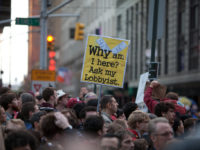
One-Sided Story: Lobbyist Data Shows Music, Movie and Publisher Groups Account For 80 Per cent of Registered Copyright Meetings in Canada Since 2015 Election
Canadian Heritage Minister Pablo Rodriguez travelled to Toronto last week, providing an opportunity for the newly-named minister to meet with cultural groups. With many of the biggest rights holder groups tweeting out the meet and greet (CMPA, Writers Guild, Access Copyright, ACTRA, ACP), the visit sent a signal that the new minister is readily available to hear creator community concerns. While Rodriguez should obviously take the time to meet with all stakeholders, an extensive review of lobbying records related to copyright since the 2015 election reveals that 80 per cent of registered copyright meetings for government officials, including policy makers, political staffers, Ministers and Parliamentary Secretaries, have been with rights holder groups. The behind-the-scenes imbalance runs counter to oft-heard claims regarding the influence of companies such as Google and suggests a diminished voice for education, innovative companies, and users on copyright policy.
Recent Posts
 Jewish Students Are Telling the Same Story Everywhere But Only Canada Refuses To Listen
 What Happened to Competition? Why Sovereignty Is the Wrong Answer to Quebecor’s Bid for Telus
 The Law Bytes Podcast, Episode 283: Sabine Witting on Why the French Constitutional Council Struck Down France’s Under-15 Social Media Ban
 Back-of-the-Napkin Cultural Policy: The Government’s $600 Million Streaming Plan Copies the CRTC Decision It Killed at More Than Double the Cost
 The Law Bytes Podcast, Episode 282: Udbhav Tiwari on Why Signal May Exit Canada Over Bill C-22’s Encryption and Metadata Retention Rules
