
Justice Minister Sean Fraser appeared earlier this week before the Standing Committee on Justice and Human Rights, relying on what has become a standard defence of Bill C-22’s privacy implications, telling Conservative MP Roman Baber that the bill lets police access “a modern version” of what used to appear in the phone book. The “it’s just phone book information” claim has been repeatedly recycled by cabinet ministers and MPs alike. Public Safety Minister Gary Anandasangaree used the same framing to open the government’s second reading defence of the bill on April 15th, telling the House that “twenty-five years ago, there were phone books that every household had. Bell Canada would deliver phone books to virtually every household” and presenting lawful access as a restoration of what those phone books once provided to police. The problem is that the analogy is plainly misleading as the data captured by Bill C-22, whether subscriber data or metadata, is nothing like the name, address, and phone number that once filled the phone book.
Post Tagged with: "subscriber information"

The Hidden Lawful Access Tradeoff: How Bill C-22 Lowers the Evidentiary Standards for Police Access to Subscriber Information
The return of lawful access in Bill C-22 has unsurprisingly focused on the government’s significant shift on warrantless access to subscriber information, which was the headline concern with Bill C-2, the previous lawful access proposal. As noted in my initial summary of the bill, Bill C-22 establishes court oversight for subscriber information with the warrantless access piece limited to requiring telecom companies to confirm whether they provide service to a given individual. That is a positive step, but there is a tradeoff, namely that the evidentiary standard needed to obtain an order for access to subscriber information is actually being lowered.
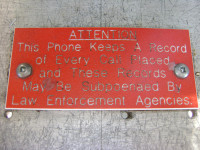
An Inconsistent Mess: Government Documents Reveal Ineffective and Inconsistent Policies Amid Widespread Demands for Subscriber Information
One day after NDP MP Charmaine Borg received a government response to her request for more data on subscriber requests and disclosures, Liberal MP Irwin Cotler received a response to his request for information. While there is some overlap between the documents, Cotler asked some important specific questions about the number of requests, which providers face requests, and the results of the information disclosed. Departments such as CSIS and CSEC unsurprisingly declined to provide much information, but several other departments were more forthcoming.
The results paint a disturbing picture: massive numbers of requests often with little or no record keeping, evidence to suggest that the disclosures frequently do not lead to charges, requests that extend far beyond telecom providers to include online dating and children’s gaming sites, and inconsistent application of the Supreme Court of Canada’s recent Spencer decision.
How Telcos and ISPs Hand Over Subscriber Data Thousands of Times Each Year Without a Warrant
The lawful access fight of 2012, which featured then-Public Safety Minister Vic Toews infamously claiming that the public could side with the government or with child pornographers, largely boiled down to public discomfort with warrantless access to Internet subscriber information. The government claimed that subscriber data such as name, address, and IP address was harmless information akin to data found in the phone book, but few were convinced and the bill was ultimately shelved in the face of widespread opposition.
My weekly technology law column (Toronto Star version, homepage version) notes the government resurrected the lawful access legislation last year as a cyber-bullying bill, but it has been careful to reassure concerned Canadians that the new powers are subject to court oversight. While it is true that Bill C-13 contains several new warrants that require court approval (albeit with a lower evidentiary standard), what the government fails to acknowledge is that telecom companies and Internet providers already hand over subscriber data hundreds of times every day without court oversight. In fact, newly released data suggests that the companies have established special databases that grant law enforcement quick access to subscriber information without a warrant for a small fee.
How Telcos and ISPs Hand Over Subscriber Data Thousands of Times Each Year Without a Warrant
Appeared in the Toronto Star on March 29, 2014 as Internet Data Routinely Handed Over Without a Warrant The lawful access fight of 2012, which featured then-Public Safety Minister Vic Toews infamously claiming that the public could side with the government or with child pornographers, largely boiled down to public […]

Recent Posts
 Regulator First, Rules Later: Bill C-34 Debate Shows the Government Wants a Digital Safety Commission Before It Figures Out What It Will Do
  Making the Case Against Its Own Bill: What the Government’s Bill C-34 Charter Statement Reveals About the Constitutional Vulnerability of the Social Media Ban
  “Position Has Not Changed”: The Canadian Government Reaffirms That Antisemitism Includes Anti-Zionism
  The Law Bytes Podcast, Episode 279: My Keynote on Digital Sovereignty: Control, Choice, and Connection
  The What, Me Worry? Consultation: Media Quietly Tells Government It Wants Even More Funding With Little Concern for Independence Risks
