
Less than two hours before new U.S. tariffs on Canada were set to take effect, U.S. President Trump last night announced a three-day pause, claiming there is a deal “subject to the finalization of documents.” Prime Minister Carney released a statement saying that substantial progress had been made, without offering much detail. But a congratulatory tweet from the U.S. Trade Representative offered one clue with significant implications for Canadian digital policy: the deal will include “digital trade alignment.” What might that mean? This post considers some of the possibilities.
Post Tagged with: "usmca"

Why Being Locked Out of Frontier AI is The Sovereignty Threat Canada Missed
For months, questions about digital sovereignty have dominated the Canadian digital policy landscape, with many concerned about domestic control over both computing infrastructure and the data that fuels the digital economy. The debate reflected mounting unease over the risks of relying on non-Canadian companies for what have become essential services, and fears that Canadian privacy safeguards could be overridden by foreign courts or governments. My Globe and Mail op-ed notes that these remain real concerns, but the past few weeks have revealed an overlooked threat that similarly speaks to a loss of control. While Canadians have been worried about others controlling our infrastructure or using our data, we have lost sight of the risks of Canada being locked out of the most capable artificial-intelligence models, with consequences that could leave the country in the second tier of AI.

Know When to Fold Em: The Big Risk Behind Canada’s Digital Services Tax Bet
The Globe and Mail runs my opinion piece on Canada’s digital services tax today. I open by noting that the Canadian government’s efforts to regulate big tech companies sometimes feels like a series of high-stakes poker matches in which the government foolishly bets that readily apparent risks can be ignored. That approach has proven costly: the plan to regulate internet streaming services is now mired in multiple legal challenges in court, while news links on Facebook and Instagram have been blocked in Canada for nearly a year in response to the Online News Act.
The latest high-risk strategy involves the implementation of a digital services tax, which could lead to billions in tariff retaliation targeting some of Canada’s most important economic sectors.
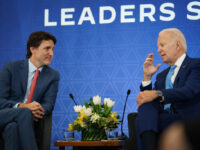
The Biden Visit to Canada: Why Digital Policy is Emerging as a Serious Trade Tension
The U.S. President Joe Biden’s visit to Ottawa this week has begun to place the spotlight on the mounting tensions over digital policy. For months, Canadian officials have not only been dismissive of the issue, but – as this week’s fishing expedition into Google and Facebook demonstrates – have not shied away from making the issue front and centre. I have been posting about trade-related risks with Canadian digital policy for months, noting that the risks are real and could result in billions in retaliatory tariffs that hits some of Canada’s most sensitive sectors. Indeed, this issue has been raised at every major meeting between senior trade officials for the past year. Is retaliation likely to happen? Certainly not immediately, but the longer the issues fester, the greater the impediment to advancing Canadian trade priorities. As Scottie Greenwood notes, “these are top-of-mind issues. They are not a small obscure issue.”

The Law Bytes Podcast, Episode 155: Mark Swartz on the Harm Caused by Canada’s Copyright Term Extension
Many Canadians started the new year with an unwelcome surprise as they learned that Canada had extended the term of copyright by additional 20 years with no mitigation measures or efforts to limit the harmful effects of the policy. That the extension did not get much attention was seemingly by design as the government buried it in a budget implementation bill and posted no news releases on it. Mark Swartz is a Scholarly Publishing Librarian at Queen’s University and has been an active participant in copyright reform issues for many years. He recently published an op-ed in the Toronto Star and Hill Times identifying both the harms of term extension and potential mitigation measures. He joins the Law Bytes podcast to talk about Canada’s approach to copyright term extension, the impact on the public domain, and what could come next.

Recent Posts
 Years of Uncertainty: Bill C-22’s Missing Regulations and Secret Ministerial Orders
  The Missing Charter Statement: Why Hasn’t the Government Explained How Bill C-34’s Social Media Ban Complies with the Charter?
  Three Years After October 7th: Living With the Shockwaves
  What If the U.S. Demanded This? The Cloud Provider Conditions Behind Canada’s EU Digital Pivot
  Ontario is Done Waiting for Universities to Act on Campus Antisemitism
