Union des Consommateurs has posted a public letter expressing concern over the Anti-Counterfeiting Trade Agreement.
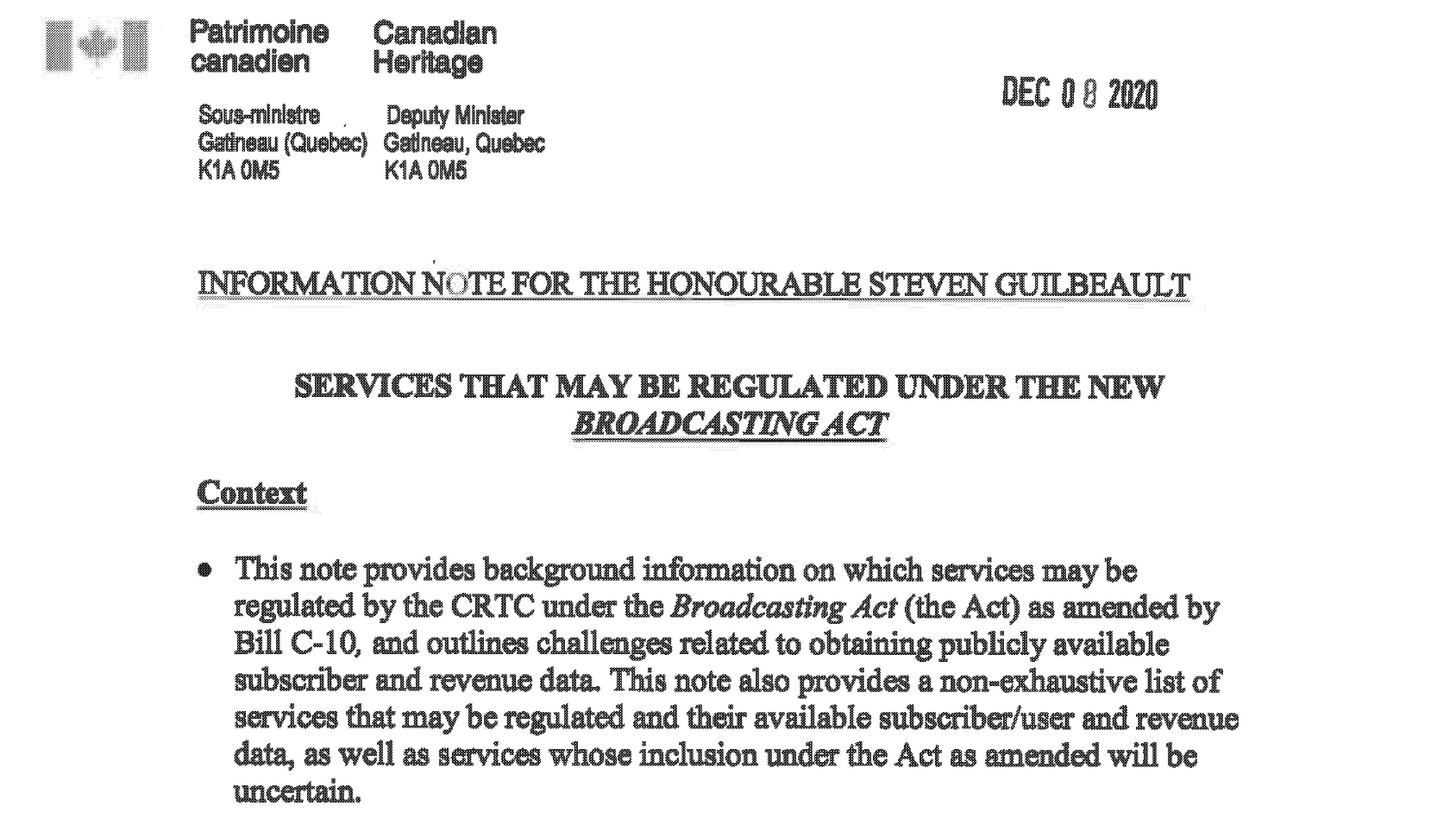
Canadian Heritage Memorandum, December 8, 2020, ATIP A-2020-00498
Bill C-10
Legislators Worldwide Asking Questions About ACTA
Legislators around the world are demanding more information on the secret Anti-Counterfeiting Trade Agreement. French Deputy Nicolas Dupont-Aignan raised ACTA questions in the National Assembly late last year, expressing concerns about a global three-strikes and you're out approach, increased costs for medicines, and the lack of transparency associated with the process.
U.S. Senator Ron Wyden goes even further in a letter to the USTR this week that seeks answers to nearly a dozen questions about ACTA. Wyden asks about:
- possible constraints on domestic U.S. law reforms
- ensuring ACTA does not interfere with public health flexibilities in TRIPs
- the definition of counterfeit
- concerns about the inclusion of patents within ACTA
- the role of ISPs in ACTA
- whether increased monitoring of subscriber usage is envisioned by ACTA
- the privacy impact of ACTA
- details on border measures provisions
- third party liability for IP infringement
- possible commitments worldwide to comply with the DMCA
Wyden is not the first U.S. senator to raise questions about ACTA. Last year, Senators Bernie Sanders and Sherrod Brown also wrote to the USTR as did Senators Pat Leahy and Arlen Specter in 2008.
UK Gov’t On ACTA: Lack of Transparency Not In the Public Interest
The UK Government discusses the lack of transparency in an EU access to information request: "More broadly with respect to ACTA the UK considers that transparency is crucial to ensure the legitimacy of the agreement and to stop the spread of rumours. We believe the lack of transparency is unhelpful […]
Kenyan Anti-Counterfeiting Law To Face Constitutional Challenge
Health Action International Africa is challenging the constitutionality of a new Kenyan anti-counterfeiting law. The group argues that the law violates the right to health since it confuses generics with fake medicines and could lead to a health crisis.
Canada and The WIPO Treaties: Flexibility Was Always Key
Yesterday I blogged about the origins of the WIPO Internet treaty, challenging Mihály Ficsor's claims that the treaty requires a ban on the distribution and manufacture of circumvention devices. Coincidentally, I recently received long overdue documents under the Access to Information Act that highlight the Canadian position during the negotiations of those treaties. As the Canadian delegation prepared to go to Geneva for the final round of negotiation, then Deputy Minister Kevin Lynch (later Clerk of the Privy Council under Prime Minister Harper) provided then Industry Minister John Manley with a memorandum approving the Canadian instructions (the delegation was led by Danielle Bouvet, then with Industry Canada).
Three issues stand out from the document. The first has to do with the hesitation with the treaty itself. The memo acknowledges "in certain areas, the proposed treaty language has not been the subject of adequte debate within Canada – or indeed internationally." Perhaps arising from these concerns, the memo concludes by noting "the delegation will not have full powers to sign a treaty."
Second, the position of the Canadian government was to support provisions that would not result in major changes to domestic law or were sufficiently flexible in implementation. In particular, the memo states that "Canada will also support provisions that constitute minor changes to domestic policy, or which provide flexiblity to adopt measures compatible with Canadian policy." The delegation instructions were therefore limited to provisions consistent with Canadian law (which the WIPO Internet treaties were not) or were flexible in implementation.

Recent Posts
 The Missing Charter Statement: Why Hasn’t the Government Explained How Bill C-34’s Social Media Ban Complies with the Charter?
  Three Years After October 7th: Living With the Shockwaves
  What If the U.S. Demanded This? The Cloud Provider Conditions Behind Canada’s EU Digital Pivot
  Ontario is Done Waiting for Universities to Act on Campus Antisemitism
  Is Compromise on Encryption Possible? Why Bill C-22’s “Minor Opening” Leaves the Central Question Unanswered
