Last week, negotiators from around the world gathered in Ottawa for negotiations on the Trans Pacific Partnership agreement. I was fortunate to be asked to meet with many of the intellectual property negotiators as part of a side session sponsored by the Electronic Frontier Foundation on the copyright implications of the agreement. EFF’s Jeremy Malcolm and Maira Sutton write about the event here, which also included Howard Knopf and Open Media’s Reilly Yeo.
My presentation, embedded below, focused on the Canadian notice-and-notice rules for Internet service provider liability. The government recently announced that notice-and-notice will take effect in January 2015. I explained the background of the Canadian approach, how it differs from the U.S. notice-and-takedown system, and how experience demonstrates its effectiveness.

Cooperation in the Pacific Rim by Jakob Polacsek, World Economic Forum (CC BY-NC-SA 2.0) https://www.flickr.com/photos/worldeconomicforum/48179628441
Digital Trade
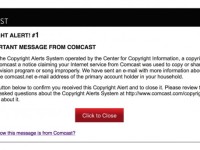
Notice the Difference: Canada’s Internet Provider Notice-and-Notice Rules and the TPP

Why The Secrecy on the TPP Talks in Ottawa This Week? Because There is Something to Hide
Trade agreements have emerged in recent years as one of the federal government’s most frequently touted accomplishments. Having concluded (or nearly concluded) free trade deals with the likes of the European Union and South Korea, senior government ministers such as International Trade Minister Ed Fast and Industry Minister James Moore have held dozens of events and press conferences across the country promoting the trade agenda.
The next major agreement on the government’s docket is the Trans Pacific Partnership, a massive proposed trade deal that includes the United States, Australia, Mexico, Malaysia, Singapore, New Zealand, Vietnam, Japan, Peru, and Chile. While other trade talks occupy a prominent place in the government’s promotional plans, the TPP remains largely hidden from view. Indeed, most Canadians would be surprised to learn that Canada is hosting the latest round of TPP negotiations this week in Ottawa.
My weekly technology law column (Toronto Star version, homepage version) argues the secrecy associated with the TPP – the draft text of the treaty has still not been formally released, the precise location of the Ottawa negotiations has not been disclosed, and even the existence of talks was only confirmed after media leaks – suggests that the Canadian government has something to hide when it comes to the TPP.

Has Canada Caved on Copyright Term Extension in the TPP?
The Trans Pacific Partnership negotiations resume next week and while an agreement does not appear imminent, reports from Japan indicate that the copyright term issue may have been resolved. Japan and Canada are two of several TPP countries whose term of copyright protection is life of the author plus 50 years. According to the Japan News, those countries (which also include New Zealand, Malaysia, Vietnam, and Brunei) are prepared to cave to U.S. pressure to extend the term of copyright to life of the author plus 70 years:
Among the 12 countries, Japan, Canada and four other countries protect an author’s copyright for 50 years after their death, the United States and four other countries for 70 years and Mexico for 100 years. Following the agreement, Japan will extend its duration by 20 years.

Why the Canadian Government Should Maintain Its Position on CETA and the ISDS Provision
Media reports last week indicated that finalizing the Canada – European Union Trade Agreement has been delayed by a Canadian demand to exclude intellectual property from the scope of the investor-state dispute settlement system. While that sounds like an arcane, technical issue, it actually involves potentially billions of dollars and the Canadian government deserves kudos for adopting its current position even as the pressure builds to simply cave on the issue.
The investor-state dispute settlement provision is among the most controversial aspects of CETA (and the proposed Trans Pacific Partnership) since it opens the door to private lawsuits by companies against the government over the state of national law. These lawsuits can involve claims for hundreds of millions of dollars, with costs that may ultimately be borne by taxpayers. The Canadian government is keenly aware of the risks, since it is currently facing a $500 million lawsuit by pharmaceutical giant Eli Lilly over the approach of Canadian courts to the concept of utility in patent law. The Canadian government is likely to ultimately win the lawsuit, but the legal risks are still significant, with Eli Lilly effectively demanding that every Canadian pay it nearly $15 due to our patent laws. If Eli Lilly can file a $500 million lawsuit over two patented drugs, the potential for numerous lawsuits and billions in claims is a real possibility.
Panel Discussion: The Internet, Free Trade, and Transparency: An International Perspective
I participated in a panel titled The Internet, Free Trade, and Transparency: An International Perspective as part of Yale University’s Trade and Transparency in the Internet Age.
The panel was moderated by Margot Kaminski and the other participants were Peter Yu, Ante Wessels. We discussed the impact of WikiLeaks leaking a draft of Anti-Counterfeiting Trade Agreement and parts of the Trans-Pacific Partnership Agreement , another free trade agreement. Both leaks led to considerable public debate over both the content of the agreement and the negotiating process. The leaks, and their policy effects suggest there is a need for discussion of trade and transparency in the Internet Age.

Recent Posts
 The Wrong Ban: The Heritage Committee Backed a Targeted Ad Ban for Kids and Stopped Short of a Social Media Ban, Yet the Government Chose the Reverse
  Regulator First, Rules Later: Bill C-34 Debate Shows the Government Wants a Digital Safety Commission Before It Figures Out What It Will Do
  Making the Case Against Its Own Bill: What the Government’s Bill C-34 Charter Statement Reveals About the Constitutional Vulnerability of the Social Media Ban
  “Position Has Not Changed”: The Canadian Government Reaffirms That Antisemitism Includes Anti-Zionism
  The Law Bytes Podcast, Episode 279: My Keynote on Digital Sovereignty: Control, Choice, and Connection
