The Canadian government announced its plans for a copyright review in December 2017, tasking the Standing Committee on Industry, Science and Technology with the review. That report has been in the drafting stage for several months and is expected before the summer. In an effort to dampen concerns that Canadian Heritage would play a diminished role in the review, the responsible ministers asked the Industry committee to ask the Heritage committee to conduct a review on remuneration models for artists and creative industries. The formal request asked the Standing Committee on Canadian Heritage to “call upon the expertise of a broad range of stakeholders impacted by copyright to ensure a holistic understanding of the issues at play.”
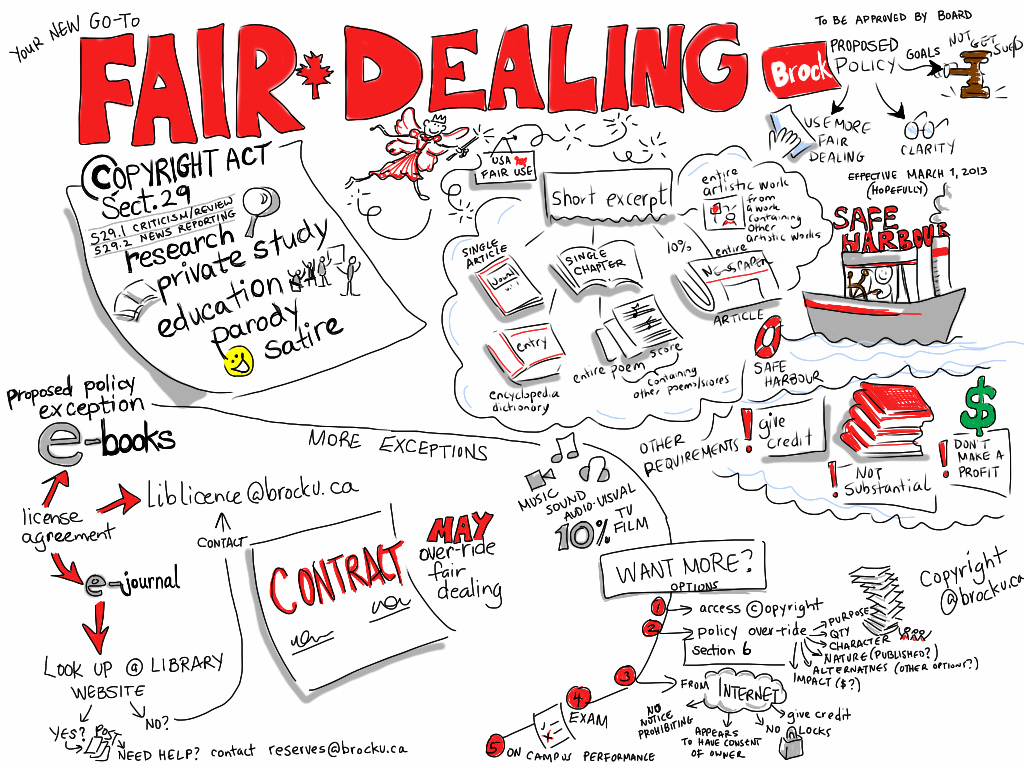
Fair Dealing by Giulia Forsythe (CC BY-NC-SA 2.0) https://flic.kr/p/dRkXwP
Copyright
The LawBytes Podcast, Episode 10: Lowdown on Lawsuits – James Plotkin on Copyright Threats, Notices, and Lawsuits
Copyright threats and lawsuits against individuals have been around in Canada since 2004, when they were rejected by the federal court. Those threats receded for about a decade, but now they’re back. Copyright notices, litigation threats, settlement demands, and actual lawsuits have re-emerged at the very time that the music and movie industries are experiencing record music streaming revenues in Canada and massive popularity of online video services. James Plotkin, a lawyer with Caza Saikaley in Ottawa, joins the podcast this week to help sort through what the notices mean, the implications of the threats and lawsuits, and where Canadian law stands on the issue.

Myths and Reality About Canadian Copyright Law, Fair Dealing and Educational Copying
Seeking to debunk many of the misleading claims on the state of Canadian copyright, fair dealing and education, I’m grateful that InfoJustice.org has published my post on the myths and realities of the current situation. The post relies on actual data presented at the recent copyright review to demonstrate how the Canadian market has experienced increased spending on licensing, e-book licensing has been a central part of the education licensing strategy, and educational institutions are paying for licences even when they retain collective licences.

The LawBytes Podcast, Episode 8: LawBytes Lecture – What the Canadian Experience Teaches About the Future of Copyright Reform
Earlier this spring, I delivered a keynote address at the Australian Digital Alliance’s 2019 Copyright Forum. The ADA is a leading voice on copyright issues in Australia and its annual Copyright Forum brings together government, creators, education, libraries, and the broader public to explore copyright issues. Coming off a holiday weekend with many celebrating Easter or Passover, this week’s Lawbytes podcast takes a different approach with a Lawbytes lecture, an audio recording of the ADA keynote, which used real data to dispel the misleading claims about the impact of Canada’s copyright 2012 reforms.
The podcast can be downloaded here and is embedded below. Subscribe to the podcast via Apple Podcast, Google Play, Spotify or the RSS feed. Updates on the podcast on Twitter at @Lawbytespod.

My ADA Keynote: What the Canadian Experience Teaches About the Future of Copyright Reform
In late March of this year, I travelled to Canberra, Australia to deliver a keynote address at the Australian Digital Alliance’s 2019 Copyright Forum. The ADA is a leading voice on copyright issues in Australia and its annual Copyright Forum brings together government, creators, education, libraries, and the broader public to explore copyright issues. This year’s event included innovative film makers, the President of the Australian Society of Authors, European Parliament MEP Julia Reda, as well as leading academics, trade negotiators, government policy experts, and many others.
My talk focused on the Canadian copyright experience, using real data to dispel the misleading claims about the impact of Canada’s 2012 reforms. A video of the keynote has been posted to YouTube and is embedded below.

Recent Posts
 Years of Uncertainty: Bill C-22’s Missing Regulations and Secret Ministerial Orders
  The Missing Charter Statement: Why Hasn’t the Government Explained How Bill C-34’s Social Media Ban Complies with the Charter?
  Three Years After October 7th: Living With the Shockwaves
  What If the U.S. Demanded This? The Cloud Provider Conditions Behind Canada’s EU Digital Pivot
  Ontario is Done Waiting for Universities to Act on Campus Antisemitism
