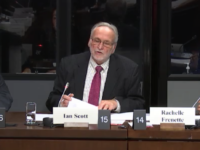
CRTC Chair Ian Scott returned to the Standing Senate Committee on Transport and Communications last night, presumably hoping that his fourth House and Senate committee appearance involving Bill C-11 might allow him to say what the government clearly would like, namely that the bill will not lead to the regulation of user content. Yet Scott has failed each time, because the bill plainly does contain that power. In this instance, Scott embarrassed himself, the CRTC, and the entire legislative process as he demonstrably failed to defend the independence of the CRTC and zig-zagged between actively promoting the bill, claiming that was not his role, and even bizarrely offering to draft potential amendments.

Recent Posts
 Regulator First, Rules Later: Bill C-34 Debate Shows the Government Wants a Digital Safety Commission Before It Figures Out What It Will Do
  Making the Case Against Its Own Bill: What the Government’s Bill C-34 Charter Statement Reveals About the Constitutional Vulnerability of the Social Media Ban
  “Position Has Not Changed”: The Canadian Government Reaffirms That Antisemitism Includes Anti-Zionism
  The Law Bytes Podcast, Episode 279: My Keynote on Digital Sovereignty: Control, Choice, and Connection
  The What, Me Worry? Consultation: Media Quietly Tells Government It Wants Even More Funding With Little Concern for Independence Risks
