








Bill C-34, the Safe Social Media Act, has quickly become a lightning rod for debate since its introduction earlier this month. The issue that invariably tops the list is the kids’ social media ban. Bill C-34, along with the recently introduced Bill C-36, will be covered from multiple angles in the weeks ahead. For the moment, I am pleased to rebroadcast a recent episode of the Globe and Mail’s The Decibel podcast. I was invited to appear on the program, where I was interviewed by Sherril Sutherland about Bill C-34, the ban, and online harms and safety more broadly. I am grateful to the Globe for granting permission to rebroadcast the episode on my podcast uncut, in its entirety.
Latest Posts

Midnight Madness: The Government Rushes Lawful Access Bill Through the House Without Debate or a Recorded Vote
Bill C-22, the lawful access bill, passed the House of Commons yesterday with the government invoking a single motion to approve several bills without further debate or individual votes as MPs raced for home for the summer. Bill C-22 will now head to the Senate, where it can expect a rougher ride when study begins in the fall. Rather than use the final days of the House session to answer the privacy, security, and oversight concerns raised by the Privacy Commissioner, academics, technology companies, and civil society groups, the government spent the time ensuring it would not have to, rushing the bill through committee, cutting off debate, and maligning critics with tactics that they once decried when in opposition.

One Step Forward, Two Steps Back: Bill C-36 Modernizes Canada’s Privacy Law, Then Delays It to 2030
Canada’s private sector privacy law is more than 25 years old and there is broad consensus that a modernization is long overdue. Bill C-36, tabled on Monday, is the government’s third attempt at updating the law, following the failed efforts with Bill C-11 in 2020 and Bill C-27 in 2022. My first post on the new bill focused on what I think remains both the most important development and the biggest mistake: the decision to push the Privacy Commissioner of Canada out of private-sector privacy and to place the file with an overloaded digital safety commission. For years, privacy critics have argued that, given the absence of order-making powers or serious penalties, Canada’s biggest shortcoming has been weak enforcement. Yet just as the government adds much-needed new rights and penalties to the privacy law framework, it undermines enforcement once again by introducing a new regulator that will take years to establish. The consequence is that, rather than updating the law for 2027, it is updating it for 2030 or later.

Gary Anandasangaree’s Vic Toews Moment Shows the Government Has Lost Its Way on Lawful Access
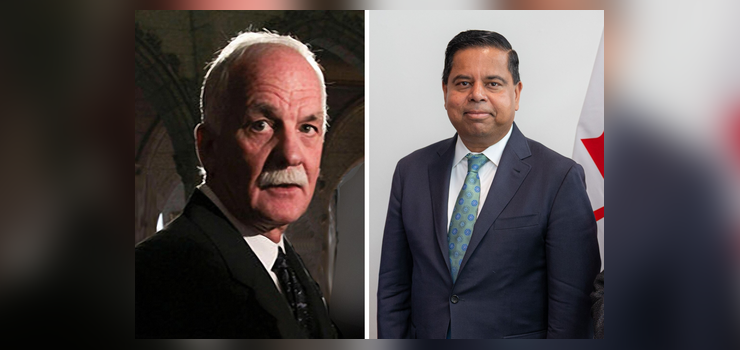
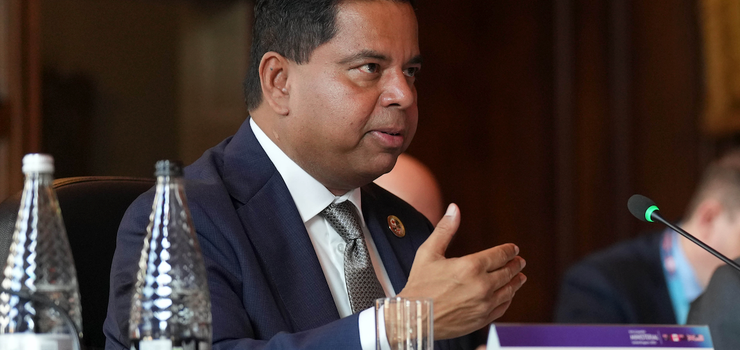
As the government prepares to shut down debate on lawful access and push Bill C-22 through committee without even discussing or debating dozens of potential amendments, Public Safety Minister Gary Anandasangaree’s responded by saying it was time for opposition parties to “choose” whether to stand with law enforcement and victims of crime. The response was telling as it evoked a similar response to another lawful access debate in 2012. At that time, the Conservatives were in power and Vic Toews was the Public Safety Minister. Toews infamously had the following exchange with Liberal MP Francis Scarpaleggia, who is now the Speaker of the House.
Government Moves to Shut Down Lawful Access Hearing In Order To Fast Track Passing the Bill This Week
The government is planning to shut down hearings into Bill C-22, the lawful access bill, with no further debate or discussion on potential amendments to the bill. It has just placed a motion on the Order Paper that would limit today’s committee meeting to only 30 minutes for standard clause-by-clause review. After that, it plans to cancel all further debate or discussion on any other amendments. The committee will instead be required to vote on all remaining amendments with no further debate, discussions or questions to officials. In fact, the substance of the amendments will remain secret and will not even be disclosed to the public. The government’s intent is clearly to complete clause-by-clause review tonight to ensure that the bill passes through the House of Commons by the end of the week
Yesterday, the government introduced privacy reforms that shuts down the Privacy Commissioner of Canada’s role in private sector privacy regulation. Today, it is shutting down hearings into one of the biggest privacy threats in years. Public Safety Minister Gary Anandasangaree had committed to amendments during the lawful access hearings, but this move means that only secret government amendments that will not be made public during the hearing will pass. Opposition parties have submitted many amendments based on testimony from the Privacy Commissioner, bar associations, security companies, and privacy experts. These include potential changes to the rules on mandatory metadata retention, risks to security and encryption, and privacy safeguards. All of these amendments will not even be made public, much less open to debate and discussion. Weeks of hearings and public concern tossed aside by the government in a rush to shut down debate and consideration of amendments to a deeply flawed, risky legislative plan.

Recent Posts
 The Law Bytes Podcast, Episode 273: Rebroadcast of the Globe and Mail’s The Decibel on Canada’s First Steps Towards a Social Media Ban
  Midnight Madness: The Government Rushes Lawful Access Bill Through the House Without Debate or a Recorded Vote
  One Step Forward, Two Steps Back: Bill C-36 Modernizes Canada’s Privacy Law, Then Delays It to 2030
  Gary Anandasangaree’s Vic Toews Moment Shows the Government Has Lost Its Way on Lawful Access
  Government Moves to Shut Down Lawful Access Hearing In Order To Fast Track Passing the Bill This Week
