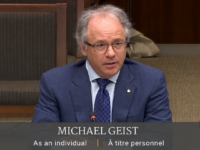
Fresh off appearing before a Senate committee on AI on Wednesday, yesterday I provided expert testimony to the Standing Committee on Public Safety and National Security as part of its study on Bill C-22, the government’s latest lawful access plan. Appearing alongside David Fraser and Robert Diab (the same trio that discussed the bill on my Law Bytes podcast), I opened my remarks by noting that technologies change, the governments may change, but the challenge with lawful access has always been the same: to give law enforcement and security agencies the tools they need to address serious crime while respecting Canadians’ privacy rights and the constitutional framework the Supreme Court has built around privacy in decisions such as Spencer and Bykovets. I focused on three major concerns with the bill, including mandatory metadata retention, the inadequacy of the systemic vulnerability safeguards, and the lowering of the production order threshold for subscriber information. My full opening statement is embedded below.
Committees
Why Social Media and AI Chatbot Bans for Kids Are Bad Policy: Making the Case at the Senate Social Affairs, Science and Tech Committee
The Standing Senate Committee on Social Affairs, Science and Technology is one of several committees in the House and Senate conducting hearings on artificial intelligence. I appeared before the committee yesterday (my fourth appearance on the issue in recent months), but rather than reiterate previous testimony on privacy, copyright, and transparency, I focused on the big issue of the moment: bans on social media and AI chatbots for children. The committee had been hearing from many supportive witnesses who emphasized the risk of harm associated with AI. Indeed, one Senator asked the panel before mine to raise their hands if they supported a ban, and virtually all hands went up. I was unsure about how my comments would be received, but I found the Senators open to debate on the issue. A video of my opening remarks, together with the transcript, is posted below. A future Law Bytes podcast episode will delve into the discussion that followed.
Addressing the AI Policy Challenge: My Appearance before the Standing Senate Committee on Transport and Communications
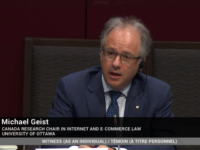
Earlier this week, I appeared before the Standing Senate Committee on Transport and Communications as part of its study on AI regulation. This follows earlier appearances before the House of Commons Heritage and Industry committees on the same issue. The hearing led to robust exchanges with multiple Senators on the intersection of AI policy with issues such as privacy, copyright, online harms, and sovereignty. I plan to post clips from the hearing in a future Law Bytes podcast, but in the meantime, my opening statement provides a good sense of my views on AI regulation with respect to privacy, copyright, and the need for an AI Transparency Act. A video of the opening statement is embedded below, followed by the text.

Setting Canada’s AI Policy Priorities: My Appearance Before the Standing Committee on Industry, Science and Technology
The Standing Committee on Industry, Science and Technology is one of several House and Senate committees currently grappling with legal, regulatory and policy challenges and opportunities presented by AI. I appeared before the committee yesterday alongside Yoshua Bengio and Colin Bennett. Bengio unsurprisingly garnered the lion’s share of the questions, but the committee did give me the chance to highlight my thoughts on policy priorities and to address a few questions. I plan to post some reflections on the policy tensions in the coming days. In the meantime, the video and text of my opening statement are posted below.
We Need More Canada in the Training Data: My Appearance Before the Standing Committee on Canadian Heritage on AI and the Creative Sector
The government, led by AI Minister Evan Solomon, is currently conducting a short consultation on AI regulation that has attracted criticism for its short time frame. At the same time however, the Standing Committee on Canadian Heritage has been working through a study on AI and the creative sector that may be more limited in scope, but has featured a broader range of perspectives. I had the opportunity to appear before the committee yesterday where I lamented that too often debates on new technology is framed “as a threat, emphasizes cross-industry subsidies, and misses the opportunities new technology presents. We therefore need risk analysis that rejects entrenching the status quo and instead assesses the risks of both the technology and the policy response. I’ll post the full discussion (which ventured into AI transparency, copyright, the news sector, and much more) in a future Law Bytes podcast episode. In the meantime, my opening statement is embedded and posted below.

Recent Posts
 “Position Has Not Changed”: The Canadian Government Reaffirms That Antisemitism Includes Anti-Zionism
  The Law Bytes Podcast, Episode 279: My Keynote on Digital Sovereignty: Control, Choice, and Connection
  The What, Me Worry? Consultation: Media Quietly Tells Government It Wants Even More Funding With Little Concern for Independence Risks
  Years of Uncertainty: Bill C-22’s Missing Regulations and Secret Ministerial Orders
  The Missing Charter Statement: Why Hasn’t the Government Explained How Bill C-34’s Social Media Ban Complies with the Charter?
