
The blog series on why Bill C-18, the Online News Act, is a bad solution to a real problem continues with the first of several posts on the eligibility rules, starting with the decision to make the CBC eligible for the system that could lead to mandated payments. The inclusion of the public broadcaster should be opposed by its critics and supporters since it harms both competition and the public interest role of the public broadcaster. Indeed, critics will rightly note the market distortion it creates for private entities who stand to lose further advertising-related revenues to the CBC, while supporters should be concerned that the bill undermines the CBC’s claim to a public interest role and makes an ad-free version of the service even less likely. [Previous posts in the series: the risk to the free flow of information stemming from mandatory compensation for linking, how the bill encourages clickbait and other low quality news given the absence of standards in the definition of “news content”, the unprecedented government intervention in a sector where independence is essential, how the bill undermines Canadian copyright law and Canada’s international copyright law obligations, and a Law Bytes podcast episode based on my appearance before the Standing Committee on Canadian Heritage.]
Latest Posts

Bill C-11 Goes Off The Rails Amid Charges of Witness Intimidation and Bullying by Government MPs
The Senate Bill C-11 hearings have provided a model for the much-needed, engaged, non-partisan inquiry that was largely missing from the House committee’s theatrics in which the government cut off debate on over 150 amendments. But this week those hearings attracted attention for another reason: serious charges of witness intimidation and bullying by government MPs, most notably Canadian Heritage Parliamentary Secretary Chris Bittle (yes, the same Bittle who last month suggested I was a racist and a bully for raising concerns about Minister Pablo Rodriguez silence over Canadian Heritage funding of an anti-semite as part of its anti-hate program).
The Globe and Mail reported late on Tuesday night that Bittle – together with his colleague, Liberal MP Lisa Hepfner – had sent a letter to the Lobbying Commissioner to seek an investigation into the funding of Digital First Canada, a group representing digital first creators. The letter may have been shopped around to other MPs as Liberal MP Anthony Housefather has told the Globe he did not sign it. DFC’s Executive Director, Scott Benzie, had appeared before the Heritage committee months ago and Bittle used his time to focus on the organization’s funding. Leaving aside the fact that government MPs reserve these kinds of questions only for critics of Bill C-11 (there were no similar questions this week from Ms. Hepfner to the Director of Digital Content Next, whose organization supports Bill C-18 and counts Fox News among its members), the timing of Globe story was incredibly troubling. The Lobbyist Commissioner letter was apparently filed nearly two months ago and Benzie had been assured that he was compliant with the law. Yet the story was presumably leaked to coincide with Benzie’s appearance before the Senate committee last night.
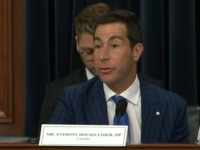
The Law Bytes Podcast, Episode 140: Anthony Housefather Reflects on the Fight Against Anti-Semitism Online and the Laith Marouf Incident
The Law Bytes podcast returns with a special episode focused on combatting online anti-semitism with a particular emphasis on an incident involving the department of Canadian Heritage and Laith Marouf, a well known anti-semite. As part of Heritage’s anti-hate program, the government had provided funding to the Community Media Advocacy Centre (CMAC), led by Marouf, to develop an anti-racism strategy for Canadian broadcasting. While there was years of evidence of Marouf’s anti-semitism, the department didn’t look or didn’t find it. The contract was cancelled after a public outcry, but even that led to concerns as it was left to Jewish MPs such as Anthony Housefather, Ya’ara Saks, and Melissa Lantsman to say something while many others remained silent.
Anthony Housefather, a Liberal MP from Montreal, not only spoke out on the Marouf situation but also called on all MPs to become more vocal. Housefather has been working on the online anti-semitism issue with politicians from around the world as part of an Inter-Parliamentary Task Force on Online Antisemitism and he joins me on the Law Bytes podcast to talk about the work of the task force and its recent hearing in Washington, DC, the Marouf incident, and the urgency for all to speak out more aggressively against anti-semitism.

Why the Online News Act is a Bad Solution to a Real Problem, Part Four: Undermining Canadian Copyright Law and International Copyright Treaty Obligations
The series on why Bill C-18, the Online News Act, is a bad solution in search of a real problem has thus far focused on three issues: the risk to the free flow of information stemming from mandatory compensation for linking, how the bill encourages clickbait and other low quality news given the absence of standards in the definition of “news content”, and the unprecedented government intervention in a sector where independence is essential. Today’s post raises an unlikely issue given that Bill C-18 is the responsibility of Canadian Heritage Minister Pablo Rodriguez, who also has part responsibility for copyright law in Canada. Buried within the bill is Section 24, a short provision with big copyright implications:
For greater certainty, limitations and exceptions to copyright under the Copyright Act do not limit the scope of the bargaining process.
What does this mean and why is it in the bill?

Why the Online News Act is a Bad Solution to a Real Problem, Part Three: Unprecedented Government Intervention into a Sector Where Independence is Essential
The first two posts in the series on why Bill C-18, the Online News Act, is a bad solution in search of a real problem focused on the risk to the free flow of information stemming from mandatory compensation for linking and how the bill encourages clickbait and other low quality news given the absence of standards in the definition of “news content.” The series continues by highlighting the remarkable extent to which the government and its regulator (the CRTC) intervene in the news sector, an approach that creates significant risks to an independent press.
The government appears to recognize the risks that come from intervention and have therefore sought to assuage concerns by describing the bill as “a market-based solution that involves minimal government intervention.” Yet the reality is Bill C-18 features an unprecedented level of government intervention into the market in the news sector. Just how extensive is the government’s involvement? Some of the provisions that delegate decision-making powers to the government or CRTC include:

Recent Posts
 Why Ottawa Will Likely Join the U.S. in Opposing the Quebec Online Streaming Law at the Centre of the Trade Battle
  Online Harms’ Forgotten Generation: Why the Government Needs to Pay Attention to Protecting Seniors
  Culture Off the Table? What the Collapsed Canada-U.S. Trade Talks Reveal About the Carney Government’s Cultural Policy
  Digital Trade Alignment: What May Be in Play in the Canada-U.S. Trade Deal
  TMU Picks Damage Control Over Fixing the Damage: Behind Its Shameful Response to the Devastating Benotto Report on Campus Antisemitism
